US Expulsions of Third-Country Nationals to Countries in Africa
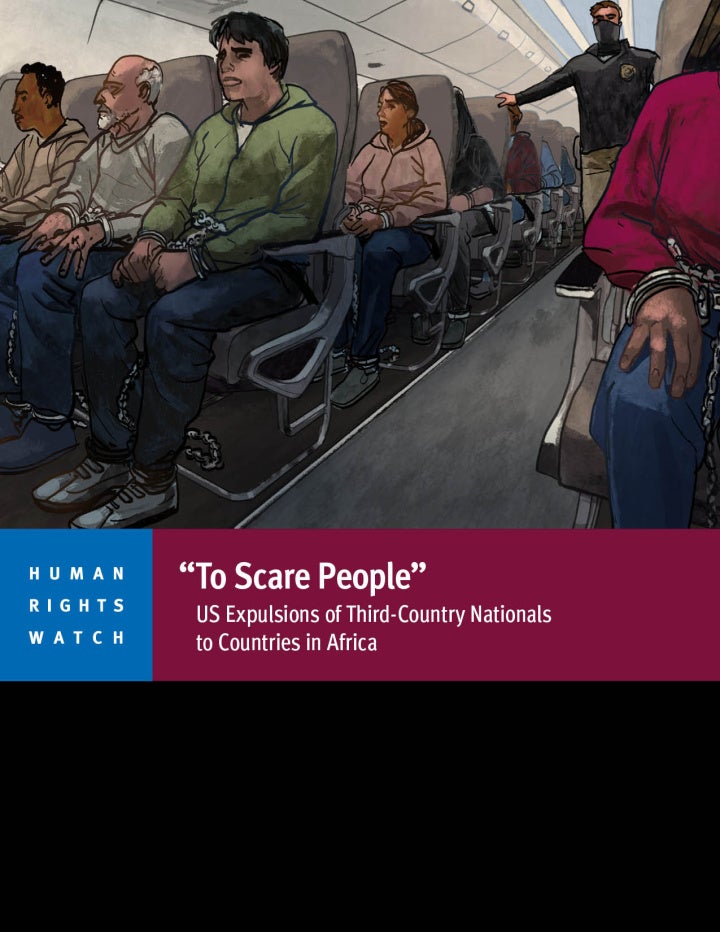
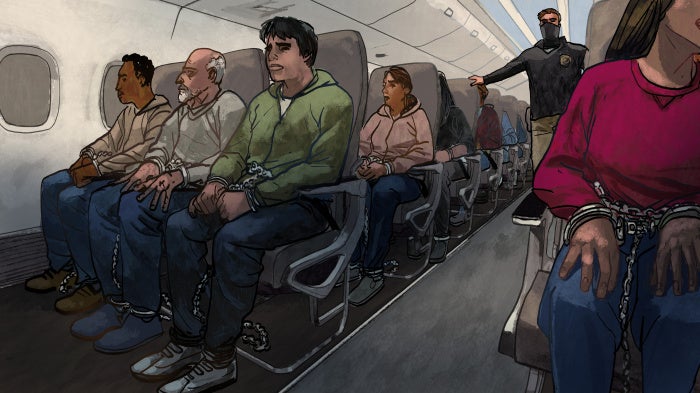
The 125-page report, “‘To Scare People’: US Expulsions of Third-Country Nationals to Countries in Africa,” documents that US authorities denied the more than 500 people transferred to third countries a meaningful chance to contest their removals or to articulate their fears of being removed to these countries. Some countries arbitrarily detained people they had accepted, and some have sent people onward to the risk of persecution or torture in their home countries, violating the international law principle of nonrefoulement.
Afghan warlords and political strongmen supported by the United States and other nations are engendering a climate of fear in Afghanistan that is threatening efforts to adopt a new constitution and could derail national elections scheduled for mid-2004.
Why Mexico’s First Real Effort To Address Past Abuses Risks Becoming Its Latest Failure
This 29-page report examines the shortcomings of the Special Prosecutor’s Office and concludes that its main problem has been the inadequate support it has received from the government. President Vicente Fox created the Special Prosecutor’s Office in November 2001 to investigate and prosecute human rights violations committed under previous governments.
The 32-page report provides detailed eyewitness accounts of how soldiers and police killed people in cold blood between November 21 and 23, during an operation intended to restore law and order. Fighting between Muslims and Christians broke out in the northern city of Kaduna in November 2002 following controversy around the Miss World beauty contest.
Coercion, Threats, and Vote-Buying in Cambodia's National Elections
In the run-up to Cambodia's July 27, 2003 parliamentary elections, Human Rights Watch has documented a troubling list of rights violations.1 These include the government's continuing failure to investigate cases of political violence, arbitrary restrictions on public rallies and party meetings, unfair and unequal access to the broadcast media, and numerous violations of the election law.
Sexual Violence and Abduction of Women and Girls in Baghdad
The insecurity plaguing Baghdad and other Iraqi cities has a distinct and debilitating impact on the daily lives of women and girls, preventing them from participating in public life at a crucial time in their country's history. Human Rights Watch interviewed rape and abduction victims and witnesses, Iraqi police and health professionals, and U.S.
Abductions, torture, recruitment of child soldiers, and other abuses have sharply increased in the past year in northern Uganda due to renewed fighting between Ugandan government forces and rebels, a coalition of national and international organizations. This 73-page report details how a slew of human rights abuses have resulted in a humanitarian crisis.
In this report Human Rights Watch looks specifically at non-violent activists who have been arrested, detained, and convicted under two groups of articles in the Indonesian Criminal Code (KUHP) that criminalize "insulting" the executive and "sowing hate" against the government.
The war in Congo has been misdescribed as a local ethnic rivalry when in fact it represents an ongoing struggle for power at the national and international levels, Human Rights Watch said in a new report released today.
How Human Rights Abuses are Fueling the AIDS Epidemic in Kazakhstan
Human rights abuse against injection drug users and sex workers in Kazakhstan is fueling one of the fastest growing AIDS epidemics in the world, Human Rights Watch said in this new report.The 54-page report, “Fanning the Flames: How Human Rights Abuses are Fueling the AIDS Epidemic in Kazakhstan,” documents instances of violent police brutality, lack of due process, harassment and stigmatizati
The U.S. government is moving closer to convening the military commissions authorized by President Bush in November 2001 to try suspected terrorists. Despite President Bush's oft-repeated insistence that the war on terror is a war to affirm and protect basic human rights, the rules for the proposed commissions fall far short of international due process standards.
June 20, 2003 will mark international refugee day - a day when governments should reaffirm their obligations to protect some of the world's most vulnerable people. Instead, European governments will meet on June 20 to debate the United Kingdom's (U.K.) proposal that promises to undermine those obligations.
With major military operations continuing in al-Falluja, U.S. authorities should investigate the apparent use of excessive force against Iraqi protesters there on April 28 and 30, Human Rights Watch urged in a new report released today. This challenges the U.S. military's assertion that its troops came under direct fire from individuals in the crowd of protesters on April 28.
Political Expression and Freedom of Assembly under Assault
This backgrounder summarizes the major human rights issues in the run-up to National Assembly elections scheduled for July 2003, and includes recommendations to the Cambodian government, the National Election Committee (NEC), the political parties, and Cambodia's international donors.