Hanoi’s Continuing Assault on Workers’ Right to Organize
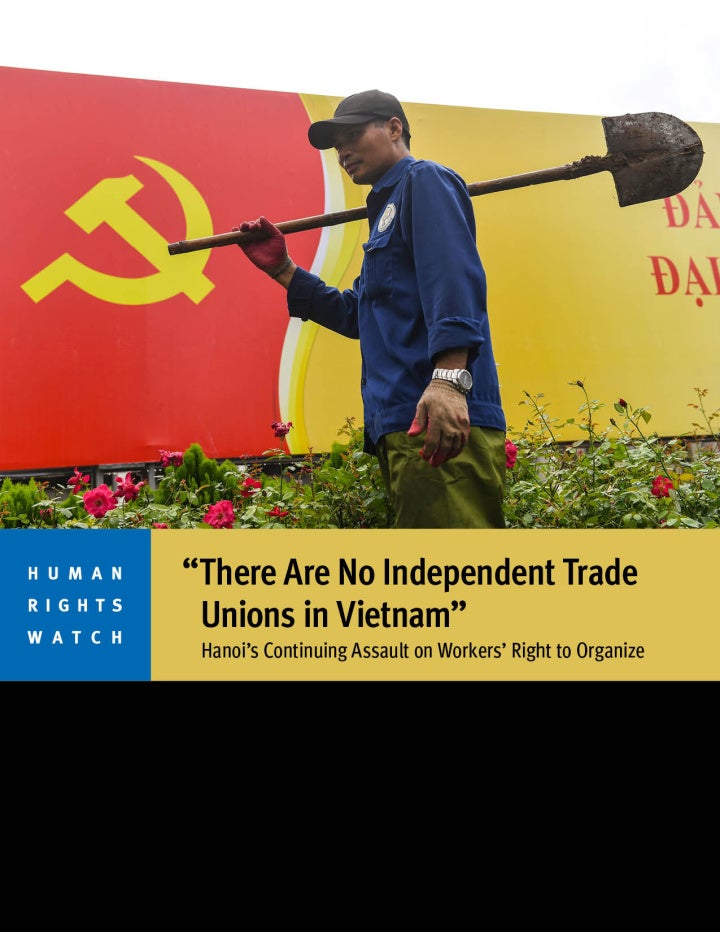
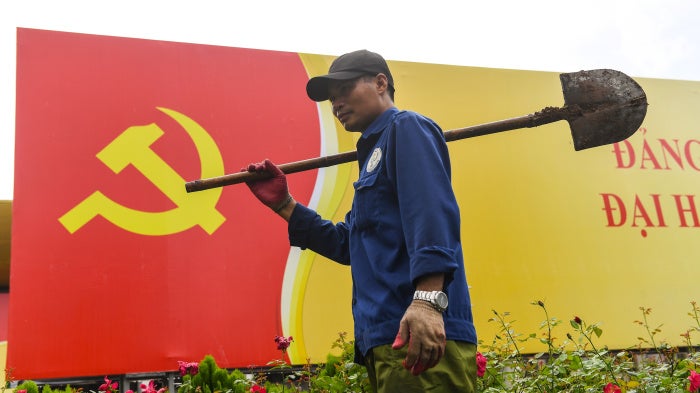
The 49-page report, “There Are No Independent Trade Unions in Vietnam: Hanoi’s Continuing Assault on Workers’ Right to Organize,” documents the Vietnamese governments’ continuing useof vague, overbroad criminal laws to suppress the activities of human rights and labor rights defenders, while maintaining an atmosphere of repression to thwart independent labor organizing. The government has issued decrees and articles in state-run media that reaffirm that all labor organizations in Vietnam are under the government’s authority, and portray independent trade unions as dangerous, anti-state entities.
The Greek government has taken significant steps to improve conditions for the Turkish minority in Western Thrace during the past year. Ethnic Turks can now buy and sell houses and land, repair houses and mosques, obtain car, truck and tractor licenses, and open coffee houses and machine and electrical shops.
On February 10-12, 1992, workers in the Medan [North Sumatra] Canning Company, which cans fish, went on strike. The strike was successful, and wages were raised after labor and management agreed on a settlement with the Ministry of Manpower.
In February, the Dominican Republic's telecommunications chief suspended the Creole-language news program of a popular Dominican radio station based in the southwest region of the country, near the Haitian border. After receiving complaints from Haiti's de facto military rulers, the Dominican authorities barred Radio Enriquillo from transmitting its news program in Creole, the Haitian language.
Haitianos Y Domínico-Haitianos En La República Dominicana
Durante la última década, el gobierno dominicano ha deportado a cientos de miles de haitianos a Haití, así como a un número desconocido de dominicanos de ascendencia haitiana.
Despite a series of promising political reforms in 1990 and 1991, the government of President César Gaviria Trujillo has been unable to stem the violence that accounts for more political murders in Colombia than any country in the hemisphere, with the possible exception of Peru.
This report, based on a five-week visit to Mindanao in January and February 1992, provides fresh evidence that the military has failed to control its militia, the Citizen Armed Force — Geographical Units (CAFGU).
Helsinki Watch urges the Spanish government to end its secretive policy with respect to prisons and describes problems ranging from overcrowding and periodic violence to forced idleness for inmates and very limited visiting privileges for a significant group of prisoners.
The Case of Jakarta, Jakarta and the Dili Massacre
Jakarta, Jakarta, better known as JJ, is a weekly magazine which its editors like to think of as Indonesia's answer to Paris-Match and its reporters treat as something more akin to New York's Village Voice. A brash, colorful, trendy magazine, JJ has been consistently on the limits of what Indonesian authorities regard as acceptable journalism.
Violations of Humanitarian Law and Human Rights in the Georgia-South Ossetia Conflict
Tensions between Georgians and Ossetians began in late 1989 and by 1991 took the form of armed conflict between South Ossetian and Georgian paramilitary groups. At the root of the conflict is South Ossetia's desire to separate from Georgia and be part of Russia. Throughout 1991 Helsinki Watch received alarming reports about human rights violations in the violent conflict.
Tensions between Georgians and Ossetians began in late 1989 and by 1991 took the form of armed conflict between paramilitary groups. At the root of the conflict is South Ossetia's desire to separate from Georgia and be part of Russia. The armed conflict included the shelling (by both sides) of Georgian and Ossetian villages, blockades and hostage taking.
The Human Cost of the Conflict & The Struggle for Relief
"The worst humanitarian disaster in the world today," were the words used to describe Somalia by Andrew Natsios, the former director of the U.S. Office of Foreign Disaster Assistance (OFDA).1 The International Committee of the Red Cross (ICRC), which is spending 20% of its entire worldwide budget on assistance to Somalia, has come to the same conclusion.
With the negotiated cease-fire agreement signed on January 16, 1992, in Mexico City, the twelve-year-old conflict in El Salvador has formally come to an end.
The Greek community in Turkey is dwindling, elderly and frightened. Its population has declined from about 110,000 at the time of the signing of the Lausanne Treaty in 1923 to about 2,500 today. Its fear stems from an appalling history of pogroms and expulsions suffered at the hands of the Turkish government.
Israel's Supreme Court to Rule on Legality of Interrogation Guidelines
The death of Palestinian detainee Mustafa Akawi on February 4 illustrates the untenable nature of Israel's claim that its use of "moderate physical pressure" during interrogation does not lead to torture. This claim is being challenged in an important Israeli Supreme Court case that is scheduled for argument next month.
Middle East Watch (MEW) conducted a fact-finding mission to Egypt in January and February 1992, to investigate arrest and detention practices and allegations of torture of individuals held in the custody of the security forces. Participating in the mission were Virginia N. Sherry, associate director of MEW, and John Valery White, an attorney and Orville Schell Fellow with Human Rights Watch.