Hanoi’s Continuing Assault on Workers’ Right to Organize
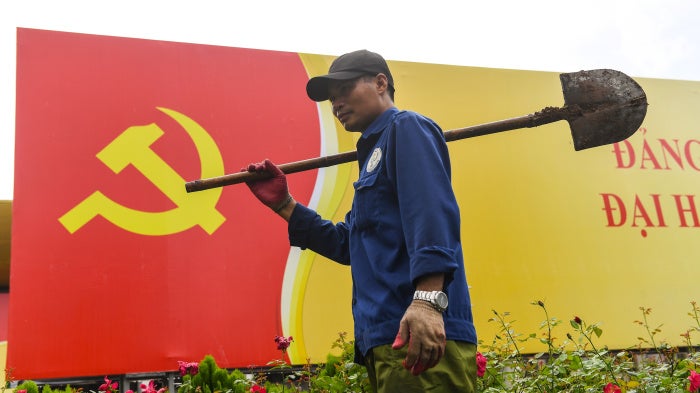
The 49-page report, “There Are No Independent Trade Unions in Vietnam: Hanoi’s Continuing Assault on Workers’ Right to Organize,” documents the Vietnamese governments’ continuing useof vague, overbroad criminal laws to suppress the activities of human rights and labor rights defenders, while maintaining an atmosphere of repression to thwart independent labor organizing. The government has issued decrees and articles in state-run media that reaffirm that all labor organizations in Vietnam are under the government’s authority, and portray independent trade unions as dangerous, anti-state entities.
While visiting over twenty prisons as well as lockups in at least five different cities throughout South Africa, we found significant improvements had been made since the political climate began to change in 1990.
A campaign to curb pornography has backfired dangerously in Canada, leading not toward its ostensible goal of gender equality, but to a weakening of fundamental liberties for women and gay men. The cornerstone of this campaign is R. v. Butler, an anti-pornography decision issued by the Canadian Supreme Court in 1992 that sets forth a litmus test for determining obscenity and has been used to prosecute a lesbian magazine, to destroy books intended for gay consumers, and to confiscate an array of political and erotic works.
Police and Death Squad Homicides of Adolescents in Brazil
Despite the considerable attention that has been brought to homicides of adolescents, impunity for those responsible for these abuses has in most respects, continued to prevail.
On January 3, 1994, a massacre in a Venezuelan prison left more than one hundred inmates dead and scores injured. While security personnel stood by, a group of prisoners set fire to a prison building, then shot and stabbed prisoners who tried to escape the inferno.
In two separate shipments in May 1992 and August 1993, eighteen tons of official Iraqi state documents captured by Kurdish parties in the 1991 uprising arrived in the U.S. for safekeeping and analysis. Our team has conducted research on these documents and catalogued a large percentage.
On February 22, 1993, the U.N. Security Council promised to create an international tribunal to try accused war criminals in the former Yugoslavia, but a year later the tribunal appeared to be part of a pattern of empty threats and broken promises.
This report provides an update on the human rights situation in Cuba. Again this last year, Human Rights Watch/Americas (formerly Americas Watch) has been handicapped in monitoring Cuba because of the regime's refusal to allow us to visit the country, to conduct inquiries and talk to victims, and to engage in a dialogue with the authorities.
Facing serious problems, the Former Yugoslav Republic of Macedonia is making the difficult transition from communism to democracy and a free market economy. It also faces the possibility of the Bosnian war overtaking the region.
Even as the Indonesian government repealed a controversial decree and stated it's concern for the welfare of workers, we continued to receive reports of labor rights violations. These violations include the harassment of union members and reports of bonded labor in Irian Jaya.
A Report on U.S. Compliance with the International Covenant on Civil and Political Rights
Last year, the United States formally adopted the International Covenant on Civil and Political Rights (ICCPR), undertaking a commitment to ensure the covenant's protections for "all individuals within its territory." the American Civil Liberties Union and Human Rights Watch have prepared this report - the first of its kind -covering race and sex discrimination, prisoners' rights, police brutality
Twenty-one people died in suspicious circumstances while in police custody in 1993. These deaths took place in police or gendarmarie stations throughout Turkey during the interrogation phase of investigations. They follow on the deaths of at least 17 people who died while under interrogation in police custody in 1992.
The Arms Trade and Human Rights Abuses in the Rwandan War
On October 1990, the Rwandese Patriotic Front launched an invasion from neighboring Uganda, aimed at overthrowing the Rwandan government. While the war has stopped in an uneasy peace, an estimated 4,500 people died in the conflict and nearly one million civilians are refugees.
Describing prison conditions under an acute crisis, this report covers not only decayed facilities, poor sanitation and overcrowding, but also prisons facing the economic and political disintegration of the state. Since 1990, a pattern of neglect and corruption has given way to complete abandonment.
Human Rights and Russian Military Involvement in the “Near Abroad”
The Russian Federation is engaged in military policies in several armed conflicts in the “near abroad” — the countries of the former Soviet Union — that simultaneously protect and violate human rights.