Hanoi’s Continuing Assault on Workers’ Right to Organize
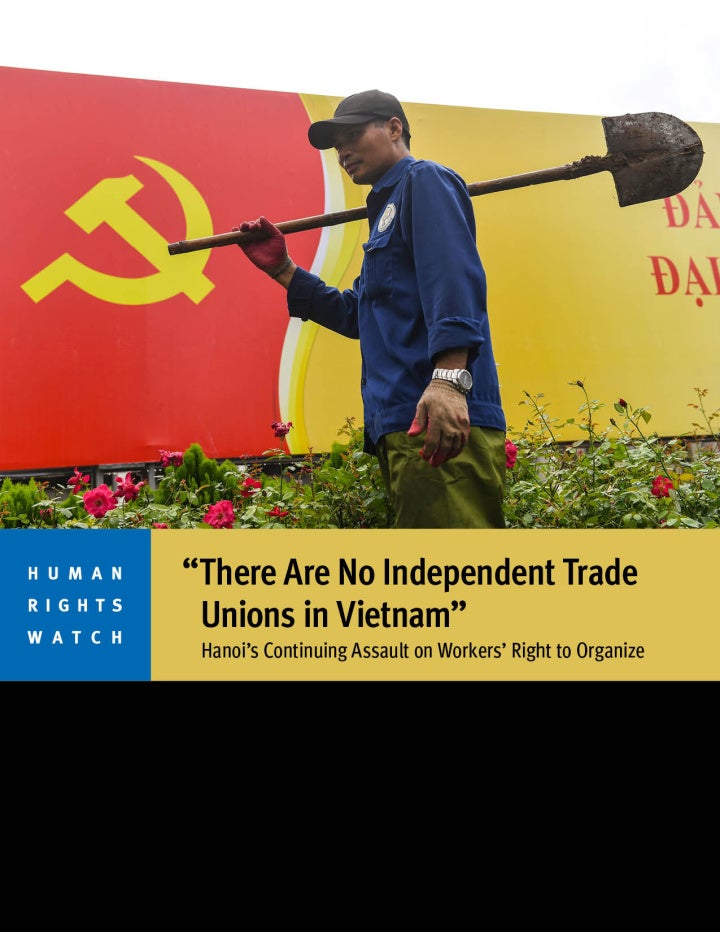
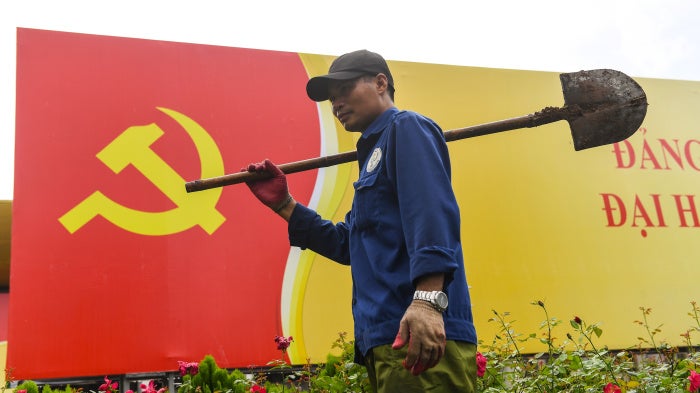
The 49-page report, “There Are No Independent Trade Unions in Vietnam: Hanoi’s Continuing Assault on Workers’ Right to Organize,” documents the Vietnamese governments’ continuing useof vague, overbroad criminal laws to suppress the activities of human rights and labor rights defenders, while maintaining an atmosphere of repression to thwart independent labor organizing. The government has issued decrees and articles in state-run media that reaffirm that all labor organizations in Vietnam are under the government’s authority, and portray independent trade unions as dangerous, anti-state entities.
This report documents a pattern of torture—according to internationally recognized definitions of the term—and mistreatment of security detainees by the Anti-Terror Branch (Teror 'le Mucadele Subesi) of the Security Directorate of Turkey’s Ministry of the Interior.
Disproportionate Sentences for New York Drug Offenders
In the past decade, the U.S. Congress and many state legislatures have established harsh criminal penalties for a wide range of drug offenses, often using the vehicle of mandatory minimum prison sentences. As a consequence, drug offenders in the United States face sentences that are uniquely severe among constitutional democracies.
A two-person Human Rights Watch delegation traveled to Guatemala in January 1997. The visit focused on reports of the discriminatory treatment of trade unionists at the assembly plants there of the U.S.-based corporation Phillips-Van Heusen (PVH), and allegations of obstacles posed by the company and the Guatemalan labor ministry to the union’s recognition for purposes of collective bargaining.
and Other Human Rights Obligations on the First Anniversary of its Accession to the Council of Europe
On February 28, 1996, the Russian Federation became a full member of the Council of Europe, an intergovernmental organization based in Strasbourg, France, which, among other goals, aims to protect human rights. Accession to the Council of Europe heightened expectations that the Russian Federation would take concrete steps to improve its poor human rights record in the year that has followed.
Between December 1996 and the beginning of March 1997, one of the worst outbreaks of communal violence in Indonesia in decades broke out in the province of West Kalimantan between indigenous Dayak people and immigrants from the island of Madura, off the coast of East Java.
On Sunday, January 27, the people of Chechnya held presidential and parliamentary elections, the first since the brutal war ended there last fall. These elections may mark the beginning of a new era for Chechnya after twenty months of war and destruction.
The Haitian National Police (Police Nationale d'Haïti, HNP) constitutes the first civilian, professional police force in Haiti’s 193-year history. In past decades, Haiti’s military controlled a subservient police, and both institutions engaged in widespread, systematic human rights abuses.
Reaping the Rewards of “Ethnic Cleansing” in Prijedor
The same warlords who took control of the town of Prijedor, in northwestern Bosnia and Hercegovina, through systematic policies of ethnic cleansing—including pre-meditated slaughter, concentration camps, mass rape, and the takeover of businesses, government offices, and all communal property—have retained total control over key economic, infrastructure, and humanitarian sectors of the communit
This report examines the context within which children and their parents must struggle to exercise their rights and looks in detail at the legal provisions which deny them even the most basic rights and freedoms. It also reports on the current situation of children in Burma and the daily practices used by the military and other government agents which violate international law.
The international community has appropriately reacted with horror to the present crackdown on anti-government demonstrators and the independent media in Belgrade. At the same time, however, it is poised to squander human rights leverage with the government of Slobodon Milosevic and abandon the Albanians of Kosovo.
Even as international attention focuses on the split in the Khmer Rouge organization and the hopes for peace that it has engendered, the human rights situation in Cambodia remains precarious and has in many respects steadily worsened over the course of 1996.
Being a woman prisoner in U.S. state prisons can be a terrifying experience. If you are sexually abused, you cannot escape from your abuser. Grievance or investigatory procedures, where they exist, often do not work, and correctional employees continue to engage in abuse because they believe they can get away with it. The sexual misconduct documented in “All Too Familiar” takes many forms.
The human rights abuses that constitute “ethnic cleansing” are still being used to intimidate and harass ethnic minorities in Bosnia-Hercegovina in the post-Dayton period. This has been observed by and is well known to the NATO-led Implementation Force (IFOR), international monitoring organizations and the governments that have sponsored the Dayton Peace Agreement.
On November 18, 1996, Zambians voted in parliamentary and presidential elections—the second multiparty elections since the end in 1991 of twenty-seven years of authoritarian and mostly single-party rule, under former president Kenneth Kaunda.