Hanoi’s Continuing Assault on Workers’ Right to Organize
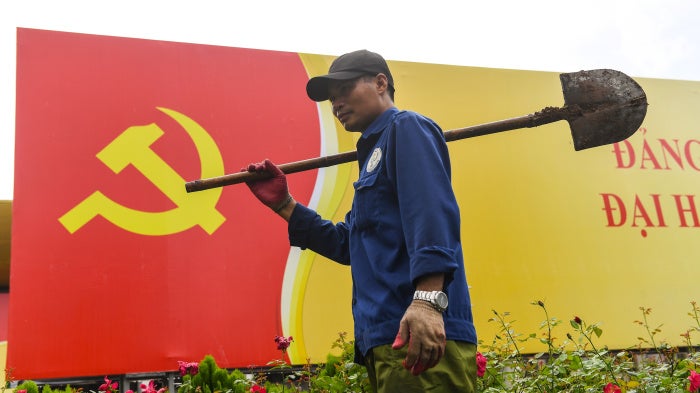
The 49-page report, “There Are No Independent Trade Unions in Vietnam: Hanoi’s Continuing Assault on Workers’ Right to Organize,” documents the Vietnamese governments’ continuing useof vague, overbroad criminal laws to suppress the activities of human rights and labor rights defenders, while maintaining an atmosphere of repression to thwart independent labor organizing. The government has issued decrees and articles in state-run media that reaffirm that all labor organizations in Vietnam are under the government’s authority, and portray independent trade unions as dangerous, anti-state entities.
The absence of legal guarantees is one of the main causes of Saudi Arabia’s serious human rights problems. Without specific legal protections, neither the government nor judges, not to mention ordinary citizens, can know with certainty what is permissible and what is forbidden.
This 84-page report is based primarily on Human Rights Watch’s first-ever trip to Libya, made in mid-2005, which the organization praised as a welcome step towards transparency. The authorities provided access to a wide range of high-level officials, as well as police stations, an immigration detention center and five prisons, where 32 prisoners were interviewed in private.
This report examines the evolving role in the Darfur conflict of the African Union Mission in Sudan (AMIS), from its inception as a ceasefire monitoring body in June 2004 to its current incarnation as a major operation with a mandate to protect civilians that includes armed troops, unarmed civilian police, unarmed military observers, and support teams.
At the Sixth Summit of the African Union (A.U.) in Khartoum on January 23 and 24, Human Rights Watch calls on the Assembly of African Heads of State and Government to put the protection of civilians and the prosecution of human rights abusers at the top of its agenda.
The Supreme Court of Rwanda is scheduled to rule January 17 on the bid by former president Pasteur Bizimungu and seven others to have their convictions on charges of having formed a criminal association quashed.
This report describes trends in human rights abuses in Côte d’Ivoire by state security and militia forces and by rebel forces, and examines the human rights and humanitarian consequences of the “no war no peace” stalemate.
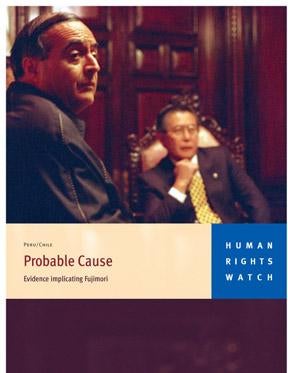
This 22-page report focuses specifically on information implicating Fujimori in five criminal cases currently pending in Peru, including human rights violations as well as acts of corruption that undermined Peru’s democratic institutions.
This 60-page report documents cases of girls as young as five working 100 or more hours per week, without rest breaks or days off, for as little as six and a half Moroccan dirhams (about 70 U.S. cents) a day.
In June 2005, Iranians elected Mahmoud Ahmadinejad, who had campaigned on a platform of improving economic conditions, as their new president. Ahmadinejad assumed his new post in early August 2005 with the backing of those political factions in Iran who most vigorously opposed political and social reforms initiated by his predecessor, Mohammad Khatami.
Some twenty-four million citizens of the Democratic Republic of Congo (DRC) have registered to vote in the first nation-wide elections to be held in more than forty years. In the press to get the Congolese to the polls, donor nations and others in the international community must not neglect continuing efforts to establish the rule of law, freedom of expression, security, and good governance.
The United States is holding an unknown number of terrorism suspects in secret overseas locations, and refusing either to acknowledge the detentions or to give information on the fate or the whereabouts of these detainees. The following questions and answers address legal issues concerning U.S. detainees disappeared into secret prisons.
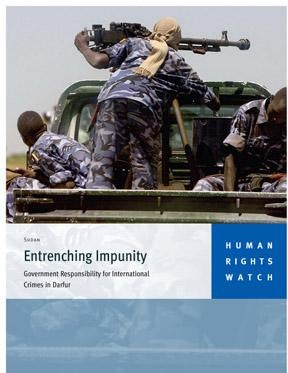
Government Responsibility for International Crimes in Darfur
This 85-page report documents the role of more than a dozen named civilian and military officials in the use and coordination of “Janjaweed” militias and the Sudanese armed forces to commit war crimes and crimes against humanity in Darfur since mid-2003.
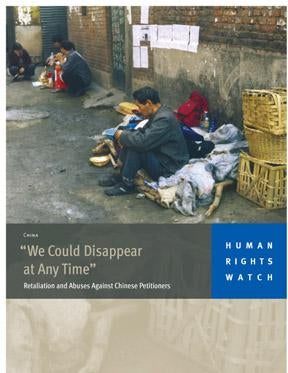
Retaliation and Abuses Against Chinese Petitioners
This 89-page report is the first in-depth look at the treatment of Chinese citizens who travel to Beijing to demand approval of or answers to their complaints of mistreatment by officials. Research was carried out in China. Petitioners, many of them rural people with minimal education or resources, often come to Beijing fleeing local violence and seeking a venue of last resort.