The Inhumane Effects of White Phosphorus Munitions and the Need for Stronger Law
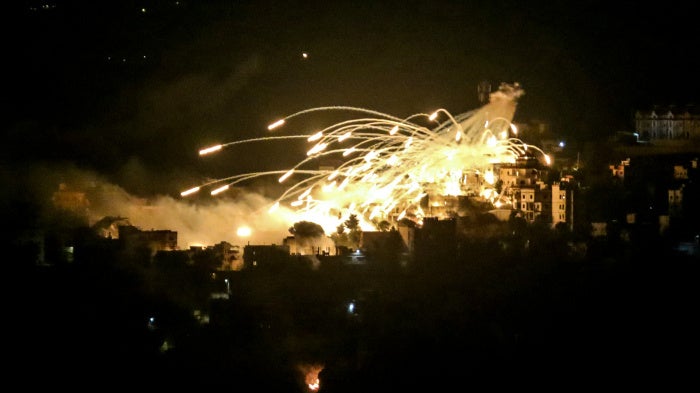
The 45-page report, “Uncontrolled Burn: The Inhumane Effects of White Phosphorus Munitions and the Need for Stronger Law,” documents 23 verified incidents of Israeli use in southern Lebanon between March and May 2026. The report also details the horrific harm the munitions have caused in armed conflicts in recent years. White phosphorus munitions, which produce fire when their payload is exposed to oxygen, are not currently regulated by a specific treaty.
Between April 29 and May 28, in a move unprecedented since Lebanon’s civil war, the Hrawi government shut down 4 news organizations and filed criminal charges against 4 journalists for violating Lebanon’s restrictive press regulation. The recent measures recall the fall of 1976, when the newly-arrived Syrian troops forcibly shut down 5 newspapers in Beirut.
A narrative account of the Iraqi government’s organized attempt to eradicate the Kurds living in northern Iraq, this report captures in riveting detail the multiple phases of the Anfal campaign. Anfal, meaning "the spoils," is the name of the eighth sura of the Koran. It is also the name given by the Iraqis to a series of military actions that lasted from February 23 until September 6, 1988.
For three years, President Mobutu has blocked a peaceful movement for democratic change in Zaire, dividing the opposition to his rule. His efforts are now bearing fruit as ethnic and regional violence emerge in a number of regions throughout the vast central African country.
On March 4, 1993 President Chiluba declared a state of emergency, alleging the existence of a plot to overthrow the government by illegal means. The plot, known as the “Zero Option Plan,” was said to have been devised by members of the opposing United National Independence Party with support form the governments of both Iraq and Iran.
The Human Rights Watch Global Report on Prisons summarizes six years of work by the Prison Project and divisions of Human Rights Watch in investigating prison conditions in some twenty countries worldwide.
In 1990, the Economic Community Cease-fire Monitoring Group entered Liberia as a peacekeeping force, temporarily stopping the bloodshed and ethnic killing. However, Ecomog has not integrated human rights protection and promotion into its activities, leaving it embroiled in a conflict with few immediate prospects for resolution.
In this report, we examine five of the largest UN field operations in recent years, in Cambodia, El Salvador, Iraq, Somalia and the former Yugoslavia. These operations span a broad range of regions and circumstances. Yet with the exception of El Salvador, they have in common the low priority given to human rights.
More than 300 Tutsi and members of political parties opposed to Rwandan President Juvenal Habyarimana were massacred in northwestern Rwanda in late January 1993 by private militia at the direction of local and central government authorities.
Prior to the June 12 presidential elections, the Nigerian military government stepped up attacks on civil institutions, raising fears about its intentions to leave office as promised and, if it does leave, about the future stability of the country.
The violations of human rights taking place in today's Uzbekistan are uncannily familiar. Perhaps most striking is the gulf between the government's stated and legal commitment to human rights protection, and its actual record.
Human Rights Abuses Along the U.S. Border with Mexico Persist Amid Climate of Impunity
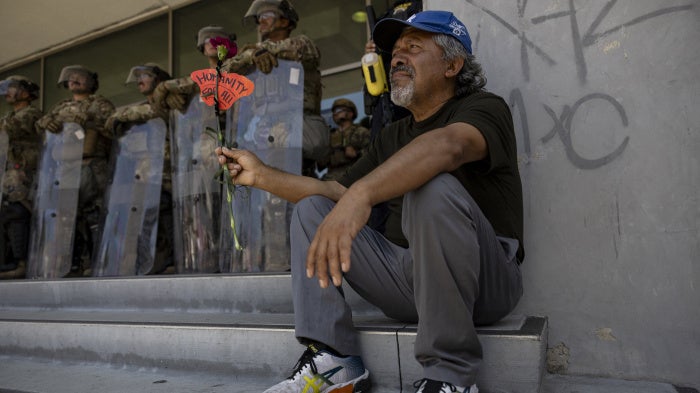
A follow-up on human rights violations along the U.S. border with Mexico, this report concludes that serious abuses by U.S. immigration law enforcement agents continue and that current mechanisms intended to curtail abuses and discipline officers are woefully inadequate.
Describing serious human rights abuses leading up to the elections in May 1993, this report criticizes the international community and the U.N. Transitional Authority in Cambodia for tolerating the bombing of opposition party offices and for encouraging members of the Khmer Rouge to participate in the elections despite their having slaughtered ethnic Vietnamese.
Torture and Police Killings In Sao Paulo and Rio De Janeiro after Five Years
An update of a 1987 Americas Watch report, Urban Police Violence in Brazil describes incidents of torture and extra-judicial killings by police and updates specific cases previously reported.
Continuing human rights abuses in Northern Ireland include killings by paramilitary groups and security forces, street harassment by security forces, ill-treatment in detention, problems in obtaining a fair trial, the abandonment of normal policing in some troubled areas and harassment by paramilitary organizations.
Since January 1990, the north Indian state of Jammu and Kashmir has been the site of a brutal conflict between Indian security forces and armed Muslim insurgents demanding independence or accession to Pakistan.