War Crimes and Crimes Against Humanity in Burkina Faso by All Sides
The 316-page report, “‘None Can Run Away’: War Crimes and Crimes Against Humanity in Burkina Faso by All Sides,” documents the devastating impact on civilians of an armed conflict that has received scant global attention. Researchers documented 57 incidents involving Burkinabè military forces and allied militias known as the Volunteers for the Defense of the Homeland (VDPs), and the Islamist armed group Jama’at Nusrat al‑Islam wa al‑Muslimin (JNIM) since the current military junta seized power in September 2022. Human Rights Watch issued a question and answer document to explain the legal issues involved.
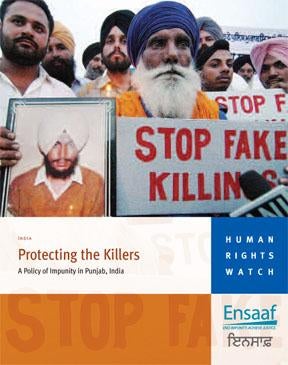
This 123-page report examines the challenges faced by victims and their relatives in pursuing legal avenues for accountability for the human rights abuses perpetrated during the government’s counterinsurgency campaign in the Punjab.
State Repression of Human Rights Activism in Syria
This 46-page report documents the restrictions imposed on activists by examining the legal environment in which they operate and the government practices to which they are subject.
This 123-page report documents the most important human rights dimensions of the Nigerian crisis of governance: politicians and other political elites openly encouraging systemic violence; the corruption that fuels and rewards Nigeria’s vi
Submission from Human Rights Watch to the Committee on the Rights of the Child
In this submission to the Committee on the Rights of the Child, Human Rights Watch provided information to the Committee on violations of the Convention on the Rights of the Child by the Bhutanese government against ethnic Nepali children in Bhutan and Bhutanese refugees in Nepal.
Denial of Access to Emergency Obstetric Care and Therapeutic Abortion in Nicaragua
This 18-page report documents how this ban on abortion has made women afraid to seek even legal health services. Fearing prosecution under the new law, doctors are unwilling to provide necessary care. The report is based on interviews with officials, doctors from the public and private health systems, women in need of health services, and family members of women who died as a result of the ban.
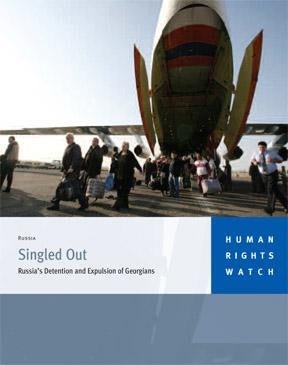
This 78-page report documents the Russian government’s arbitrary and illegal detention and expulsion of Georgians, including many who legally lived and worked in Russia.
Indicators for Evaluating Progress in the HRC Group of Experts Process
On September 24, 2007, the Human Rights Council will consider an interim report by the Group of Experts (GOE) appointed on Darfur. The GOE compiled existing recommendations on Darfur in its June report, and has been working with the government of Sudan to foster their implementation.
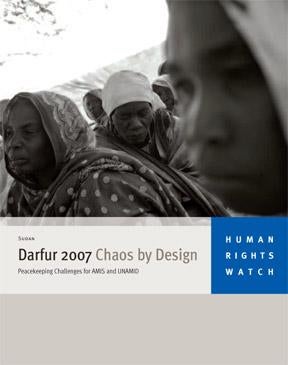
This 76-page report describes the current human rights situation in Darfur. Recent case studies from across Darfur illustrate how the proliferation of armed actors and the government’s failure to strengthen the rule of law – particularly the police – are contributing to the abuses.
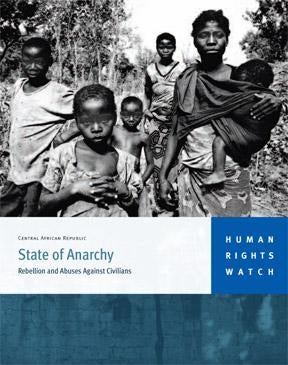
This 108-page report is based on three weeks of on-the-ground research. It documents the human rights abuses and breaches of the laws of war committed in northern CAR by both rebel groups and the government forces, and also documents attacks by banditry groups in the northwest known as zaraguinas, who often kidnap children for ransom.
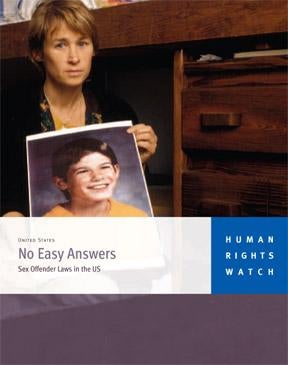
This 146-page report is the first comprehensive study of US sex offender policies, their public safety impact, and the effect they have on former offenders and their families.
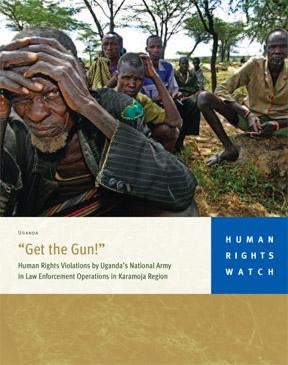
Human Rights Violations by Uganda’s National Army in Law Enforcement Operations in Karamoja Region
This 97-page report is based on some 50 eyewitness accounts of law enforcement operations carried out by the Uganda Peoples’ Defence Forces (UPDF) between September 2006 and January 2007, and on visits to the sites of six of these operations.
As it enters its second year, the Council must take hold of the many situations that “require the HRC’s attention,” and take action of some sort to address them. The HRC’s efforts to address these situations will provide an important indication of its ability to fulfil the purpose for which it was created.
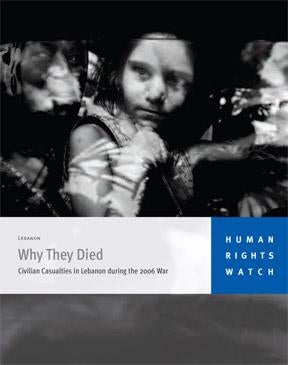
Civilian Casualties in Lebanon during the 2006 War
In this 249-page report Human Rights Watch examines military operations by Israeli and Hezbollah forces in Lebanon during the armed conflict that lasted from July 12 until August 14, 2006. In five months of research, Human Rights Watch investigated 94 cases of air, artillery and ground attacks by the Israel Defense Forces (IDF) to discern the circumstances surrounding the deaths of 510 civilians and 51 combatants, nearly half the at least 1,125 Lebanese deaths during the conflict. Of the approximately 510 Lebanese civilian deaths investigated by Human Rights Watch, at least 300 were women or children.
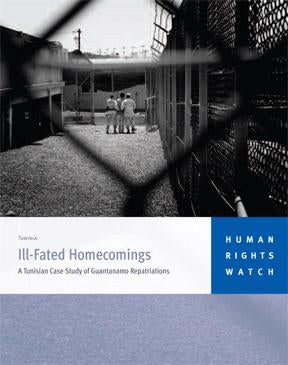
This 43-page report describes the experiences of the two Tunisians returned home 11 weeks ago and urges the US government to set up a process that would give detainees advance notice of their transfer, and allow them the opportunity to contest it before a federal court if they fear torture or ill-treatment upon return to their home countries.
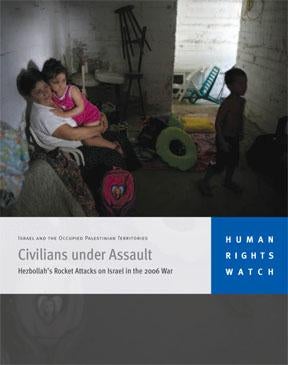
Hezbollah’s Rocket Attacks on Israel in the 2006 War
This 128-page report presents more than 20 case studies based on extensive field research in northern Israel into rocket attacks that killed or injured civilians in Jewish, Arab and mixed villages, towns and cities. It also draws evidence of Hezbollah’s intent behind these rocket attacks from more than 100 Hezbollah communiques and declarations.