To view the videotaped remarks, please click here.
Thank you for inviting us to present on this critical topic.
The Horn is currently facing an incredibly complex and dramatic rights and humanitarian reality. I will seek to highlight key conflict-related trends focusing on conflict-related sexual violence in Sudan and Ethiopia, and briefly conclude with recommendations.
Sudan’s conflict remains marked by widespread war crimes, mass displacement and a continuing flow of weapons to abusive warring parties.
The frontlines shift—with Kordofan and Blue Nile the epicenters for much of 2026—but the parties’ conduct has not.
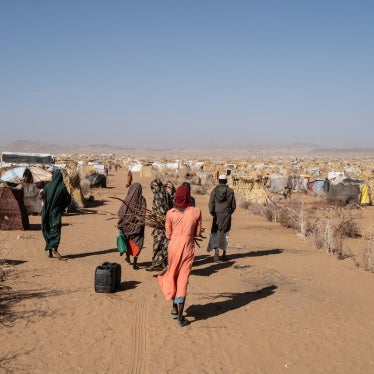
Civilians have nowhere safe to go in what remains the world’s largest humanitarian crisis.
Warring parties have increasingly used drones. The UN reported over 300 people killed in drone attacks in the first three weeks of October, including attacks on displacement camps, markets and health facilities, with many of the victims being women and children.
The Rapid Support Forces (RSF) have repeatedly struck power stations disrupting an already ravaged health system and the money transfers people rely on for food and medical supplies.
The RSF, SAF and affiliated forces have abused detainees, including women, with SAF forces arbitrarily arresting people often targeting them because of their ethnicity, activism or local aid work.
Sexual violence, most notably by the RSF, has been widespread and systematic throughout this conflict.
The very modus operandi of the RSF during their takeover and control of territory has been to systematically attack civilians including through rape, and notably gang rape, against women and girls. We’ve documented this in Khartoum, in Gezira state; in the Kordofan region and formed a critical part of the RSF and its allies’ campaign of ethnic cleansing against non-Arab communities in the capital of West Darfur in 2023.
During the RSF’s heinous takeover of El Fasher in October 2025, the RSF committed multiple massacres and the subjected women and girls to widespread sexual violence notably as they tried to flee. I spoke to many survivors in eastern Chad.
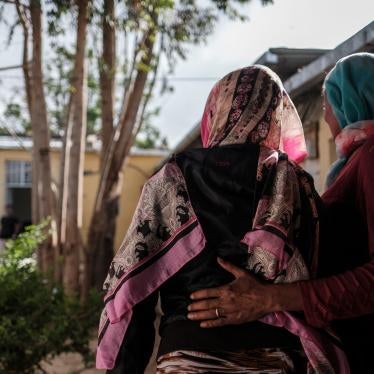
One young woman who was abducted by the RSF from her home during the takeover told me that her husband who tried to intervene was killed in front of her. She was held for ten days with her baby, repeatedly gang-raped, in the context of sexual slavery along with a 13-year-old girl who died from the rape.
RSF fighters also ran a massive abduction-for-ransom racket, killing those who couldn’t pay. Thousands of civilians, including women, may still languish in RSF dungeons in El Fasher, in Nyala.
These trends take place against a backdrop of decades of impunity for sexual violence in conflict-affected areas in Sudan, and widespread repression against women activists.
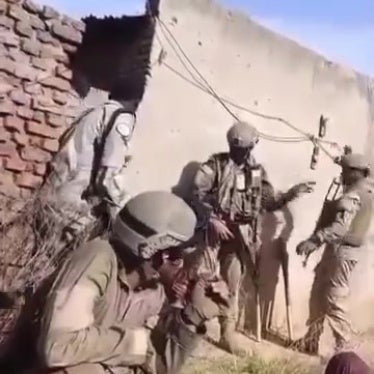
Despite the well-documented heinous crimes, external backers have continued to provide military support to the abusive warring parties. In particular, we have documented how a UAE-based company has apparently deployed Colombian private military contractors to support the RSF’s takeover of El Fasher.
Turning to Ethiopia, where since January 2026, a prolonged political dispute between the TPLF and the Ethiopian federal government over the November 2022 truce morphed into more widespread military confrontation in late September.
Since April, the Tigrayan authorities and forces have been abducting and unlawfully recruiting civilians, targeting men and boys, some as young as 15, and punishing parents who tried to protect their children from recruitment.
In western Tigray, Amhara authorities and security there have continued to subject Tigrayan civilians to a campaign of ethnic cleansing.
Since August, apparent government airstrikes, including drone strikes, have escalated in Tigray. We investigated one likely government strike which we found to be indiscriminate injuring 13 civilians and damaging civilian infrastructure on August 20.
Tensions with Eritrea spiraled in October
Many civilians still bear the scars of the earlier conflict, during which mass killings, sexual violence and the deliberate destruction of civilian infrastructure were widespread, and the government imposed a devastating siege on the region.
The UN Human Rights Council mandated independent investigation into events in Ethiopia, which the EU had helped establish, had found that in just seven health facilities, 10,000 women and girls had sought treatment for sexual violence during the conflict and its immediate aftermath. Sexual violence, including sexual slavery, formed part of the crimes against humanity committed against Tigrayans in Western Tigray at the height of the ethnic cleansing campaign there.
International scrutiny on the context is largely inexistent with a highly restricted media environment, nonexistent public UN reporting, and as key Western actors including the EU have normalized relations with the Abiy Ahmed government.
Impunity for past and more recent crimes prevails. The Ethiopian government has largely shelved its transitional justice process. Eritrea never held its forces to account for widespread killings, sexual violence, and pillage.
EU Response
Regrettably, EU institutions have not acted in a sufficiently bold manner to ensure civilians are protected and those responsible for these grave crimes, including gender-based violence, held to account.
Key Recommendations
- The EU should move beyond efforts to protect civilian infrastructure in Sudan led by the EU special rapporteur on the Horn to pave the way for the deployment of a physical protection force. The EU should be working with its partners – notably the AU and UN - to advance concrete options and measures for the protection of civilians and civilian infrastructure, with a clear mandate and expertise on SGBV.
- In the meantime, the EU should take immediate, concrete steps to track and respond to attacks on local aid responders.
- The EU and its member states should publicly condemn the UAE’s ongoing military support to the RSF and sanction UAE-based companies involved in this support, including Global Security Services Group (GSSG), which is apparently hiring and deploying Colombian mercenaries to fight alongside the RSF, and investigate airlines and airport operators involved in the UAE air bridge to the RSF.
- The EU should take concrete steps to press for accountability. It should support efforts to ensure that there are international investigations covering the whole of Sudan, starting with an expansion of the ICC jurisdiction and full support to the existing fact-finding mission.
- The EU should call on warring parties in Ethiopia to adhere to international humanitarian law, protect civilians, ensure communication networks are not disrupted and immediately allow safe, unhindered and timely access to humanitarian assistance and independent human rights monitors.
- The EU should demonstrate its readiness to initiate new actions at the UN Human Rights Council given the dire situation.
- The EU should continue to press Ethiopia to roll out a credible, robust transitional justice process.