A Cambodian government-controlled court sentenced two journalists to fourteen years in prison for treason after they appeared in a photograph with Cambodian soldiers near the disputed Thai-Cambodian border.
The journalists, Phorn Sopheap of the Battambang Post TV Online and Pheap Pheara of TSP 68 TV Online, were arrested last July and charged with “supplying a foreign state with information prejudicial to national defense” under article 445 of Cambodia’s Criminal Code. The sentence was announced on February 20, after a one-day trial in December.
The photo, taken near Ta Krabei Temple in Oddar Meanchey province, appears to show anti-personnel landmines in the background. The temple is near the site of clashes between Cambodian and Thai forces in July and December 2025.
Thai government agencies and media outlets had earlier published the photograph, saying it shows that Cambodian soldiers had laid new landmines in the area in violation of international law.
Thailand and Cambodia have both ratified the 1997 Mine Ban Treaty, which comprehensively prohibits any production, transfer, stockpiling, or use of antipersonnel mines. Thailand has alleged that Cambodian forces used landmines in the recent fighting that injured Thai soldiers. Cambodia denied such allegations, claiming the mines were from decades-old conflicts.
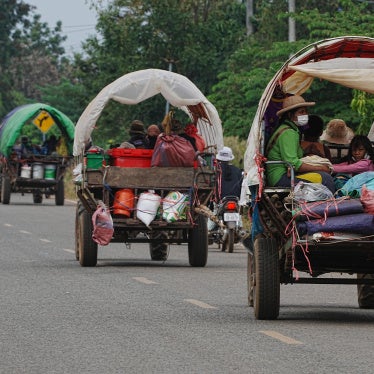
Cambodian authorities have recently detained and charged at least two other journalists for reporting on the border conflict. On August 27, Meas Sara was charged with incitement after live-streaming interviews with Cambodian villagers displaced by the fighting. On February 13, Luot Sophal, a journalist with the independent Srotop Yuvakvey news, was arrested and charged with incitement to commit a felony and demoralizing the armed forces after reporting on an alleged water shortage facing frontline Cambodian troops.
The authorities have targeted journalists as a part of a broader crackdown on freedom of speech since the border conflict started.
Despite this, the Cambodian government has been eager to court the attention of international media, with Prime Minister Hun Manet granting a rare interview to Reuters about the situation on the border just days after Sophal’s arrest. Cambodian leaders should recognize that the best way to ensure Cambodia’s side of the story receives press coverage is to stop baselessly charging journalists for their reporting.