(Beirut) – The United States transferred 5,700 detainees held for alleged ISIS affiliation from Northeast Syria to Iraq, where they are at risk of enforced disappearance, unfair trials, torture, ill-treatment, and violations of the right to life, Human Rights Watch said today.
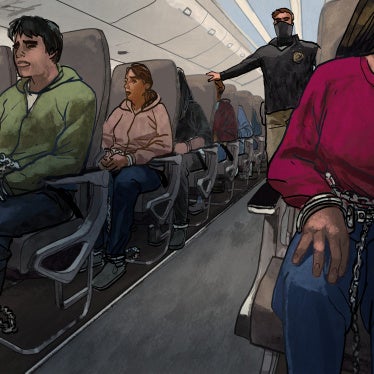
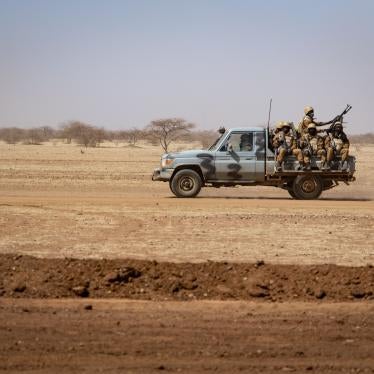
The United States began transferring the detainees, including Syrians, Iraqis, and third country nationals, on January 21, 2026, amid a Syrian government military offensive to claim control of Northeast Syria from the Kurdish-led Syrian Democratic Forces (SDF). The United States conducted transfer flights under its military’s Operation Inherent Resolve, which is responsible for counterterrorism operations in the region. Iraqi officials have said the United States agreed to cover the cost of jailing the detainees in Iraq and processing their future trials, the New York Times reported.
“Regardless of their affiliation or alleged actions, these detainees have been held for years without due process, and they are now held in another country without proper safeguards,” said Sarah Sanbar, Iraq researcher at Human Rights Watch. “Victims of ISIS crimes deserve genuine justice, and that requires fair trials for the accused.”
Given the substantial risk of torture in Iraq, these transfers appear to violate the principle of non-refoulement in international law: not returning anyone to a country where they would face abuse. In light of Iraq’s well-documented due process violations in counterterrorism proceedings, the United States’ role in detaining these people and carrying out these cross-border transfers may make it complicit in any resulting abuses, Human Rights Watch said.
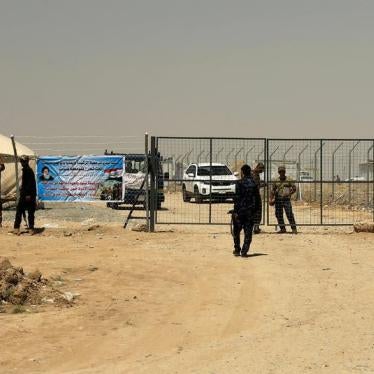
Iraqi authorities are holding transferred detainees in Nasiriyah and Karkh prisons, The National reported, while awaiting the results of investigations carried out by the Supreme Judicial Council. The council said that among those transferred are senior ISIS leaders accused of genocide and the use of chemical weapons.
ISIS committed numerous atrocities in Iraq between 2014 and 2017. Transferred detainees found to have participated in such crimes should be tried and held to account in trials that are fair and that respect due process guarantees, Human Rights Watch said.
Human Rights Watch asked the US Central Command (CENTCOM) if detainees were provided with access to legal counsel, judicial review, or an opportunity to challenge their transfer. CENTCOM declined to comment.
This includes ensuring that all detainees are only held according to law and for a legal reason. All detainees should be brought promptly before a court or similar judicial authority to review the legality and necessity of their continued detention and to order their immediate release if detention is not justified. Countries whose nationals are being transferred to Iraq should repatriate their citizens and try them if there is any evidence of wrongdoing.
“This is not a thoughtful effort to bring about justice and accountability while respecting rights and norms,” Ian Moss, former deputy coordinator for counterterrorism at the US State Department responsible for ISIS detainees and associated family members, told Human Rights Watch. “This is an expedient attempt to wash one’s hands of the situation.”
The last time Iraq undertook terrorism trials on such large a scale was in 2018-2019, after Iraqi government forces retook territories held by ISIS. The authorities rounded up tens of thousands of men for trials that severely violated their rights. Many were sentenced to death after a 10-minute trial, without a lawyer present, and solely based on the testimony of an anonymous informant or a confession extracted under torture.
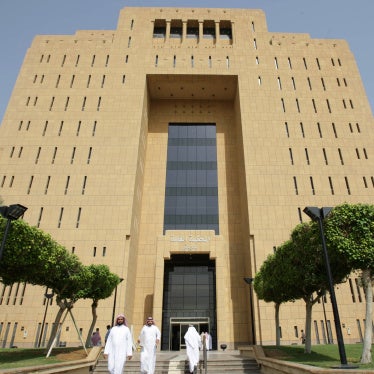
Human Rights Watch has extensively documented systemic issues in Iraq’s judiciary, particularly in counterterrorism trials, including the routine use of torture-tainted confessions, reliance on secret informants, denial of due process, and a lack of judicial independence.
Without credible guarantees and demonstrated reforms, including independent investigations into torture allegations, access to legal counsel, judicial review of all detention, monitoring of trials by independent observers, and fair trial safeguards, Iraq risks repeating the same rights violations, Human Rights Watch said.
Iraq’s prison system, too, is rife with enforced disappearance, torture, and ill-treatment. Iraq’s prisons are overcrowded, and reports of prison conditions are dire. A large influx of prisoners is likely to put further strain on the prison system, putting both prisoners and staff at risk.
As of February 2026, Iraq has 30 prisons housing roughly 67,000 inmates, including about 1,600 foreign nationals, according to Iraq’s Justice Ministry. However, these figures do not include prisons in the Kurdistan Region or detainees held by security forces and various armed groups elsewhere in Iraq.
On February 8, Iraq’s Supreme Judicial Council announced that the suspects—who hold citizenship of 42 countries—will be prosecuted under Iraqi law, and that none will be extradited until investigations into their alleged crimes are fully completed.
Iraq extensively relies on use of the death penalty, particularly in counterterrorism cases. An estimated 8,000 prisoners are on death row. On February 10, Iraq executed six people, its first mass execution since implementation of the death penalty was paused following passage of a General Amnesty Law in January 2025.
In June 2024, a group of United Nations experts said that Iraq’s systematic executions based on torture-tainted confessions and an ambiguous counterterrorism law amount to arbitrary deprivation of life under international law and may amount to a crime against humanity.
Iraq still does not have a law criminalizing core international crimes, including war crimes, crimes against humanity, and genocide. ISIS fighters instead are tried under Iraq’s 2005 Anti-Terrorism Law, which sentences defendants to death for affiliation with a terrorist group.
In 2017, the UN mandated an investigative team, known as UNITAD, to collect, preserve, and store evidence of alleged war crimes, crimes against humanity, and genocide committed by ISIS in Iraq. Issues in Iraq’s legal system meant that this evidence was not shared with Iraqi authorities.
Iraq should enact comprehensive domestic legislation that criminalizes genocide, crimes against humanity, and war crimes in line with international law, to deliver justice that reflects the gravity and systematic nature of ISIS-committed crimes, Human Rights Watch said. Cases concerning crimes by ISIS in Iraq and Syria have moved forward in Portugal, Germany, and other European jurisdictions.
States whose nationals are transferred from northeast Syria to Iraq remain legally bound to take steps to try to prevent torture, unfair trials, and executions against their nationals. Those who substantially and knowingly contribute to such violations including assisting in transfers without credible safeguards are likely to be complicit in them.
Iraqi government spokesperson Basem al-Awadi said on January 29, 2026, that the transfer of Islamic State detainees from Syria to Iraq is a “preemptive step to defend Iraqi national security,” given the risk of prison breaks amid hostilities.
“We appreciate Iraq’s leadership and recognition that transferring the detainees is essential to regional security,” Admiral Brad Cooper, CENTCOM commander, said on February 13.
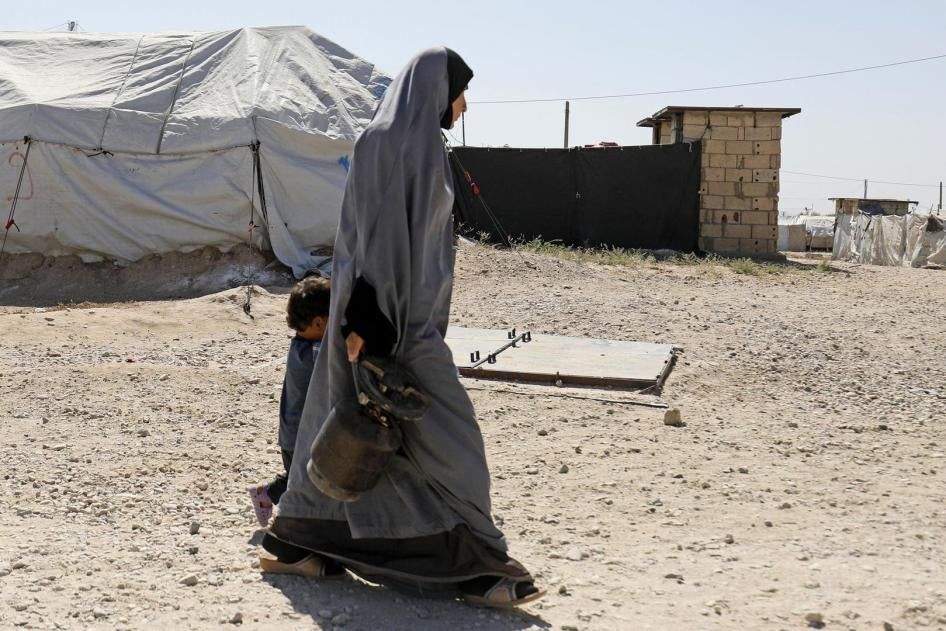
The US announcement contained no mention of the more than 28,000 people, allegedly relatives of ISIS members, who remain unlawfully detained in life-threatening conditions in the al-Hol and Roj camps in northeast Syria. About 12,500 are foreigners from more than 60 countries.
Human Rights Watch wrote to Iraq’s Supreme Judicial Council, the Justice Ministry, and the National Security Agency, but all declined to comment.
“Iraq is dealing with a problem the international community should have solved years ago,” Sanbar said. “The government needs to stop kicking the can down the road, take accountability for its citizens, and give ISIS victims genuine justice through fair trials.”