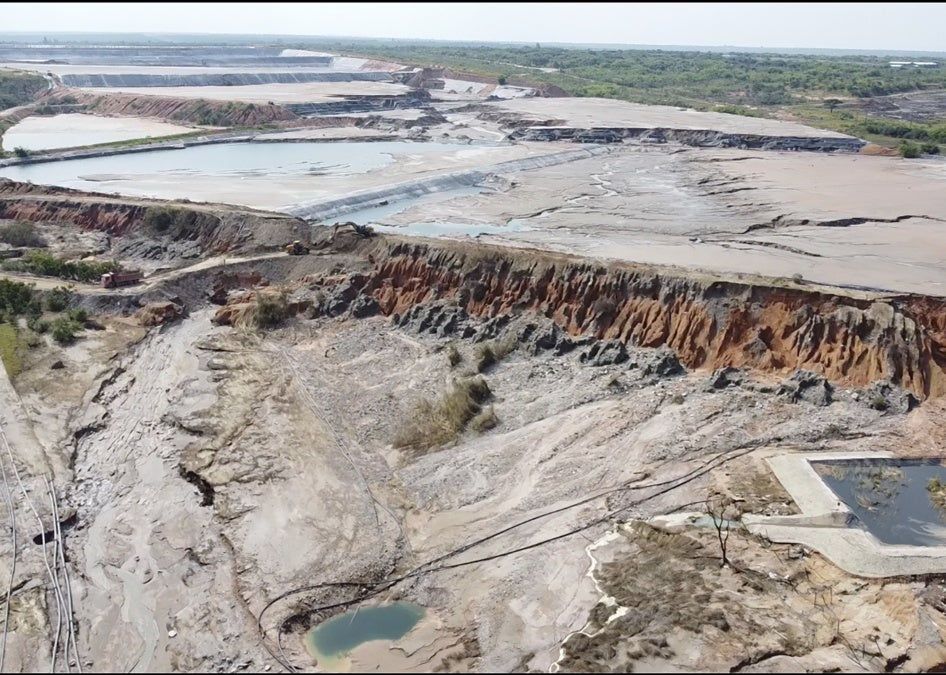
When 29-year-old Norbert Amoya went to fetch water from a river in northern Zambia earlier this year, he found large numbers of dead fish and the water had a strange smell, he told a journalist. The cause was a major mining disaster.
On February 18, a dam at a Chinese copper mine had burst and sent toxic waste flowing into a tributary of Zambia’s largest river, threatening the ecosystem, imperiling the livelihood of millions, and putting communities at grave risk of cancer and other ill-health. While the Chinese company has paid compensation to some residents, the long-term impact on the ecosystem and peoples’ livelihoods remains devastating. Such disasters can be prevented.
On 8-12 December, states came together for the United Nations Environment Assembly, the world’s top environmental policymaking body and deliberated on how to do so. The Colombian government took the lead by proposing a new global treaty to address environmental risks in mining, including human rights due diligence and traceability in mineral supply chains.
Many other governments, including Armenia, Ecuador, Oman, and pollution-affected Zambia, joined the initiative, which calls for the “environmentally sound management of minerals and metals.”
As the demand for minerals for energy transition, defense, and other technology rises, it is vital for governments around the world to protect the environment and ensure human rights safeguards in the supply chains of all metals and minerals, whether mined legally or illegally, in industrial or small-scale operations, for the energy transition or another purpose. Mandatory rules are urgently needed.
As US environmental protections and the EU supply chains law are being weakened, this initiative is a bold move. Civil society groups in mining-affected areas and international non-governmental organisations, including Human Rights Watch, have supported the initiative for a global treaty.
As a first step, Colombia and its allies proposed a UN working group to explore options for binding and non-binding measures. Such working groups have previously been successful at kick-starting treaty processes, for example a UN treaty obliging governments to protect people from toxic mercury.
But there was pushback, and negotiations at the summit were tough. Some countries, including Saudi Arabia, Iran, and Russia opposed any binding measures, and even the appointment of a working group. As a compromise, states decided to convene “dialogues” among governments and other stakeholders to discuss key issues like resource recovery from mining waste and best practices for the environmentally sound management of minerals and metals.
These are important, positive small steps—but mandatory rules will be needed to ensure all actors in mining and mineral supply chains respect rights and environment. Voluntary measures by businesses are not sufficient to protect human rights and the environment, as investigations by Human Rights Watch and other organizations have repeatedly shown.
The toxic spill in northern Zambia is just one of several serious mine accidents. A 2019 dam collapse at an iron ore mine in Brazil released several million cubic meters of toxic mine sludge and killed at least 270 people. Just four months before the disaster, the Brazilian subsidiary of a German auditing firm had declared the dam stable. The mining company had pressured the auditors to certify the dam's safety despite obvious risks, an investigation by Brazil's Congress found.
In other instances, toxic pollution and environmental destruction cause harm over longer periods. Exposure to mercury and other toxic metals in the context of mining has caused grave health risks for local communities in Peru, Ethiopia, and Ghana. Mining has also caused serious destruction of the Amazon forest, which absorbs carbon dioxide from the atmosphere every day, helping to cool the planet, with incalculable consequences for the climate crisis. A recent study found an increase in deforestation in Peru. Indigenous Peoples as stewards of the environment are often particularly affected by mining, and their rights violated.
And mining continues to contribute to violence by state security forces, armed groups, or criminal groups. In Venezuela’s Bolivar state, residents live in fear of violence by armed groups involved in illicit gold trade, including amputations. Summary executions and forced child labor by armed groups are still happening today. Human Rights Watch has also documented serious violence in mining areas in Peru, Zimbabwe, and the Central African Republic.
Going forward, governments should make sure that the dialogues on the environmental impacts of mining are robust, focus on human rights, and define steps towards binding rules.
Nsama Chikwanka, an activist from Zambia who attended UN negotiations, told Human Rights Watch in light of the recent mining disaster: “Without common, enforceable standards, we get a race to the bottom that harms people and nature. For Zambia’s mining regions, this isn’t abstract: it’s clean water, safer tailings, and fairer deals.”