(Washington, DC) – Armed groups in Colombia’s southern state of Putumayo, have tightened their control over citizens’ daily lives and committed grave abuses against civilians, particularly in Indigenous communities, Human Rights Watch said today.
Since 2023, the government has been in peace talks with several armed groups that control parts of Putumayo, which is on the Ecuador border. While some negotiating parties have reached agreements to destroy weapons and replace coca crops with food, armed groups continue to establish control over and abuse people living in the area. The armed groups have killed community leaders, recruited children, restricted people’s movement, and punished those who violate their rules with fines and forced labor.
“Armed groups in Putumayo are using the peace talks as an opportunity to tighten their control over the population,” said Juanita Goebertus, Americas director at Human Rights Watch. “While the peace talks focus on decreasing coca crops, armed groups are imposing their own rules in Putumayo and severely punishing those who disobey.”
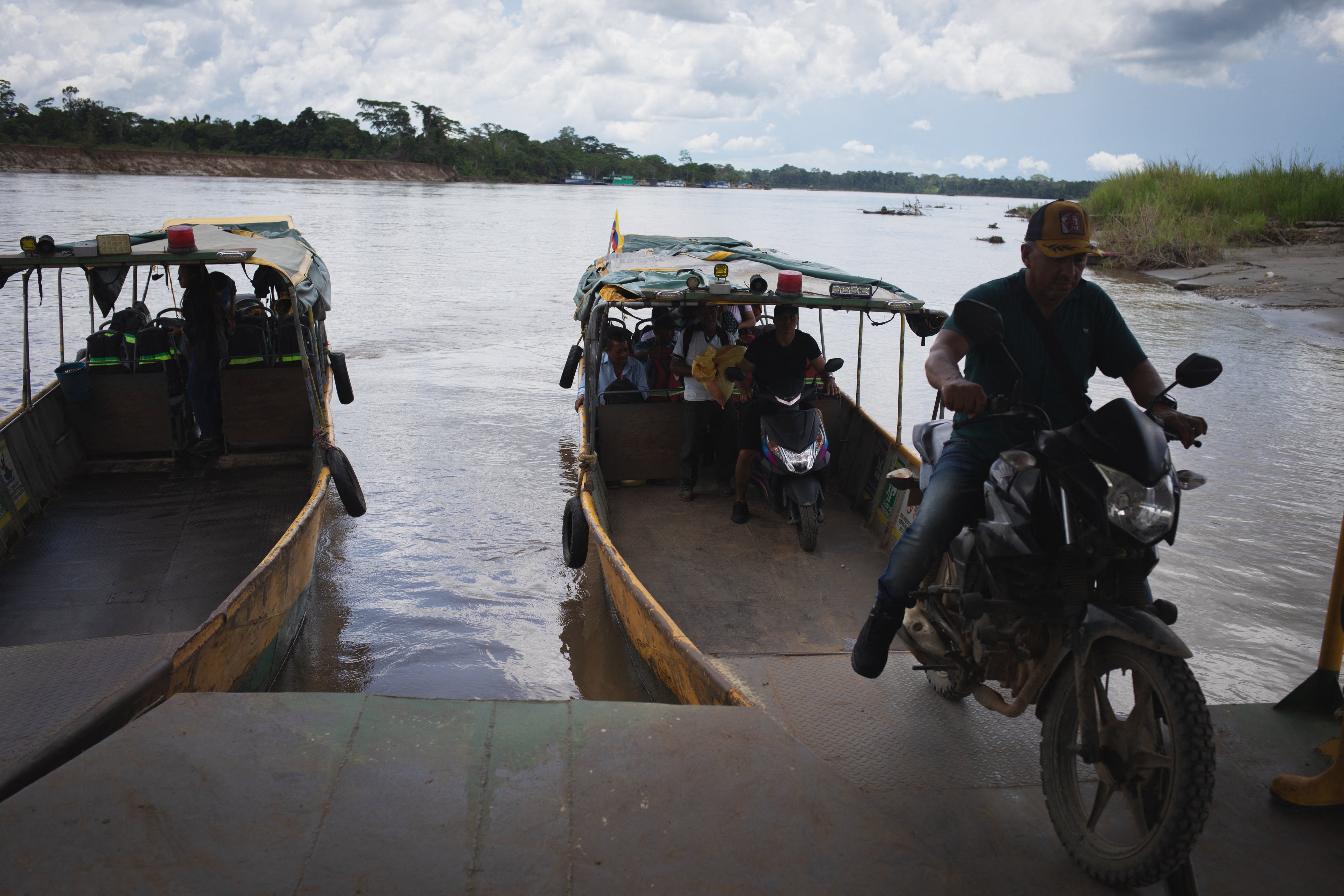
In September 2025, Human Rights Watch visited Puerto Asís, Mocoa, Orito, and La Hormiga in Putumayo, and interviewed 45 people, including victims, human rights defenders, Indigenous authorities, aid workers, and government officials. Most of them feared reprisals by armed groups and spoke on condition of anonymity.
Putumayo is a strategic location for drug production and trafficking, as well as for illegal mining. The state has Colombia’s second-largest production of coca, the raw material used to produce cocaine, surpassed only by neighboring Nariño.
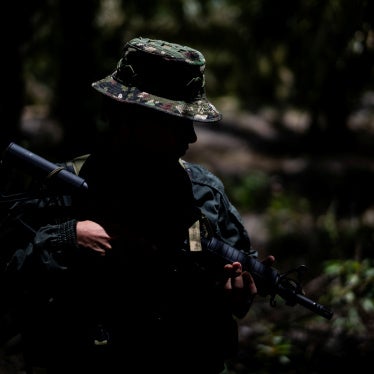
Currently, two of the three armed groups in Putumayo are in peace negotiations with the government. One is the Border Commands, part of a coalition known as the National Coordinator of the Bolivarian Army (CNEB), which operates mainly in southern Putumayo along the Ecuadorian border. The second is the Raúl Reyes Front, part of the General Staff of Blocs and Fronts (EMBF), which is in northern Putumayo, bordering Colombia’s Caquetá and Cauca states.
The Carolina Ramírez Front, part of a group known as the Central General Staff (EMC), operates in eastern Putumayo, near Caquetá and Amazonas states. It engaged in peace talks with the government between November 2023 and April 2024 but is not currently part of the negotiations.
While officially reported homicides have dropped to the lowest point in a decade, residents told Human Rights Watch that armed groups often force communities to collect and bury the bodies of those the groups kill, apparently to conceal the crimes. Humanitarian workers and local authorities said the groups have been targeting community and Indigenous leaders. Human Rights Watch has documented several such cases.
In one recent case, on September 7, Jhon Fredy Rico, a member of a Community Action Board in Puerto Guzmán, was killed shortly after he dropped his son off at a soccer match. Local leaders and humanitarian workers said they believed Border Commands members had killed him in retaliation for participating in an event connected to the peace negotiations between the government and an opposing group.
The armed groups impose their “rules” over entire communities and threaten anyone who reports their crimes and abuses. They have pressed communities to participate in meetings related to peace talks, attend social gatherings, and participate in protests in defense of the armed group’s interests, community leaders and humanitarian workers said.
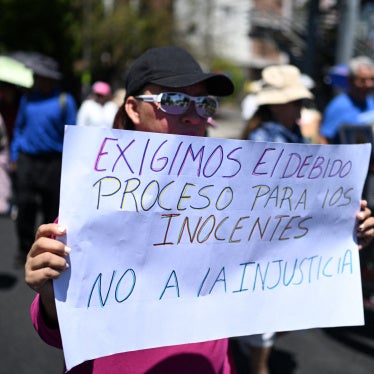
In February, community leaders reported that residents were forced to take to the streets in support of the talks with the CNEB and to demand the release of Geovany Andrés Rojas, known as “Araña,” the top commander of the Border Commands, who was arrested in Bogotá on February 13. Community leaders said that the group also prohibits protests against oil companies in parts of Putumayo.
Armed groups also coerce people to plant coca and sell it to them, even as they reach agreements with the government to replace coca with food, Indigenous authorities and humanitarian workers said.
Those interviewed described a series of other abuses, including:
- Recruiting children through social media and from rural boarding schools, and threatening teachers or relatives who report these cases. The Colombia Ombudsperson’s Office registered 25 cases of child recruitment between 2024 and 2025, though those interviewed said the true scale is far larger because most cases go unreported.
- Restricting cultural and spiritual practices of Indigenous peoples including the Awá, Nasa, and Siona communities. “Spiritual activities can no longer be held at night due to curfews imposed by the Border Commands,” an Indigenous leader said.
- Imposing curfews and barring people from leaving their community because of clashes or threats. Between April and November, 2025, the Carolina Ramírez Front confined roughly 350 people from the Indigenous communities of Umancia and Guaquira, in the municipality of Puerto Leguízamo, making it harder for them to obtain food and other essential goods.
- Imposing forced labor as a punishment and forcing people to build rural roads that the groups use to gain support from local communities, in the absence of government authorities and public services. These roads have also led to significant illegal logging.
- Pressuring Indigenous governors to include their members in community censuses, an apparent effort to make sure they are subject to Indigenous justice systems, instead of the national justice system, if they are arrested.
- Requiring individuals in rural areas controlled by the Border Commands to carry an identification card issued by Community Action Boards and local Indigenous authorities. “The identification card is more important than the national ID issued by the government,” because you cannot move freely without it, an Indigenous leader said.
“The government needs to urgently address the situation in Putumayo and implement a robust justice and security strategy to protect the population, particularly Indigenous peoples,” Goebertus said.