In March, Japan’s Diet enacted a landmark budget measure eliminating tuition fees for all public high school students, removing previous income thresholds. The action was built upon the 2019 decision to offer pre-primary education free to all children.
These developments also affirm Japanese society’s shared responsibility to support its youngest members, and a recognition of the benefits that a widely educated population can bring to communities, economies, and nations.
Now, Japan has earned the moral authority to assume leadership on the world stage on this important issue.
Coinciding with Japan’s domestic milestone is an effort at the United Nations to draft a new international human rights treaty—technically a “fourth optional protocol” to the 1989 Convention on the Rights of the Child—to enshrine free pre-primary education, beginning with at least one year, and free secondary education, as a binding right for all children around the world. The working group was established at the UN Human Rights Council in July 2024, and its first meeting is planned for this September. International human rights standards will make a big step forward if this treaty is realized.
The initiative builds upon recommendations including by the UN’s two specialized agencies on children and education—UNICEF and UNESCO—to develop a legally binding instrument on early childhood education.
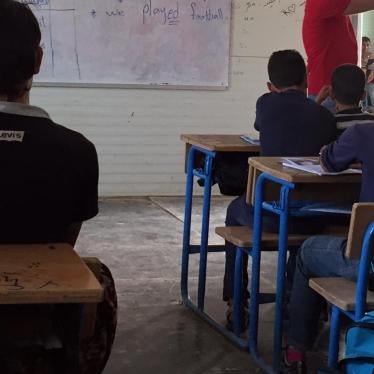
Around 175 million children remain out of school at the pre-primary level and 179 million at the secondary level.
The cost continues to be one of the most common and widespread barriers. The evidence shows that countries that do offer free education have far higher enrollments, and increased access for children from more marginalized families.
However, about 70 percent of the world’s children live in countries that—unlike Japan today—do not guarantee both free pre-primary and free secondary education.
More than 50 countries have already publicly expressed their support for the initiative. The process for the new treaty is being led by a cross-regional group of countries, including Sierra Leone, the Dominican Republic, and Luxembourg.
International leadership on this issue by Sierra Leone, one of the world’s lowest income countries, is particularly powerful—backed, as it is, by recent domestic law changes guaranteeing 13 years of free education from pre-primary through secondary. It demonstrates that expanding access to free education is principally a question of courageous political prioritization, rather than the size of national budgets. Having now demonstrated domestic commitment to free education from pre-primary though secondary education, Japan can invite the world to join it on the same journey.
There is an international contribution that is not just about giving money, but also about contributing to the formation of rules. Championing this new treaty would not only reflect Japan’s own values and achievements but also strengthen its role as a constructive voice for global consensus in advancing children’s rights.
Kanae Doi is Japan director at Human Rights Watch.