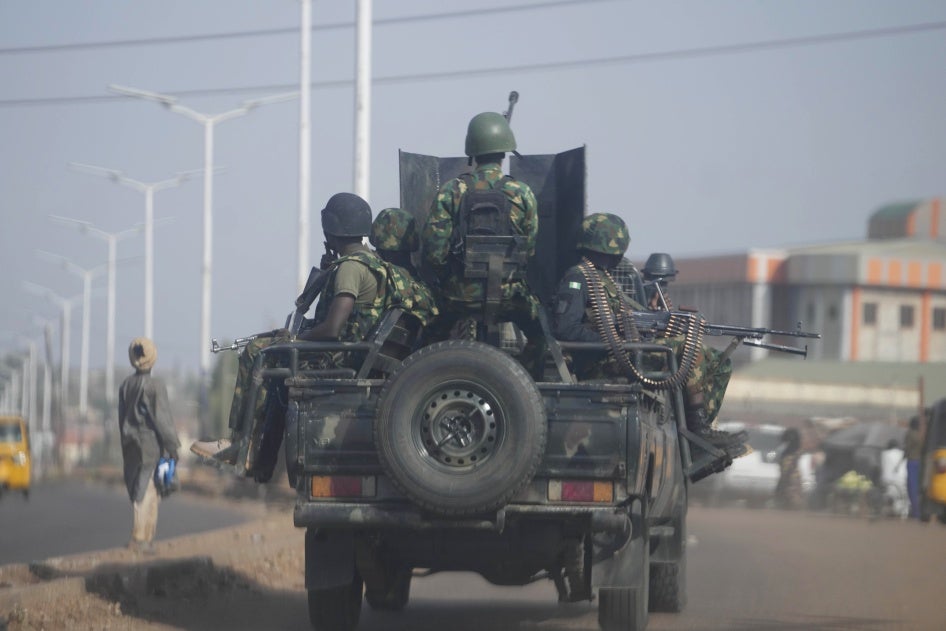
The US State Department approved another potential multi-million-dollar weapons sale to Nigeria on August 14, citing support for the country’s efforts to fight terrorism and illicit trafficking. Yet the announcement is conspicuously silent on the Nigerian military’s record of serious human rights abuses and on what safeguards, if any, will be implemented to ensure accountability and prevent further violations.
The proposed sale includes munitions, precision bombs, and precision rockets and related equipment for an estimated cost of US$346 million. It follows another $997 million package approved in 2022, which included 12 AH-1Z attack helicopters. Although the 2022 deal was initially held up in the US Senate due to rights concerns, procurement of the helicopters is reportedly now underway. When considering the new arms deal, Congress should not treat it as a routine security transaction.
Security concerns across Nigeria are real and widespread. In the Northwest, violent raids, killings, and kidnappings for ransom by criminal gangs continue to destabilize communities. In the Northeast, the Islamist armed group Boko Haram and its splinter factions continue their brutal insurgency against the government while terrorizing civilians and committing abuses. In the Southeast, separatist armed groups routinely terrorize and attack communities and kill residents.
However, in responding to these threats, Nigerian security forces have been repeatedly implicated in serious rights violations, including unlawful killings, arbitrary detention, torture, and conflict-related abuses. The US State Department documented many of these abuses in its own 2024 Human Rights Report on Nigeria, released just last week. Military airstrikes have also repeatedly resulted in the deaths of people mistakenly identified as threats, without accountability. Despite ongoing calls for justice, meaningful reform remains absent.
Under US law, security assistance is prohibited to foreign forces implicated in gross human rights violations. Before this sale proceeds, US lawmakers should ensure US law is followed. They should require clear, enforceable accountability measures for all military operations, including during the use of airstrikes, alongside concrete safeguards to ensure compliance with international human rights law.
The United States should require such conditions before selling weapons to the Nigerian armed forces.