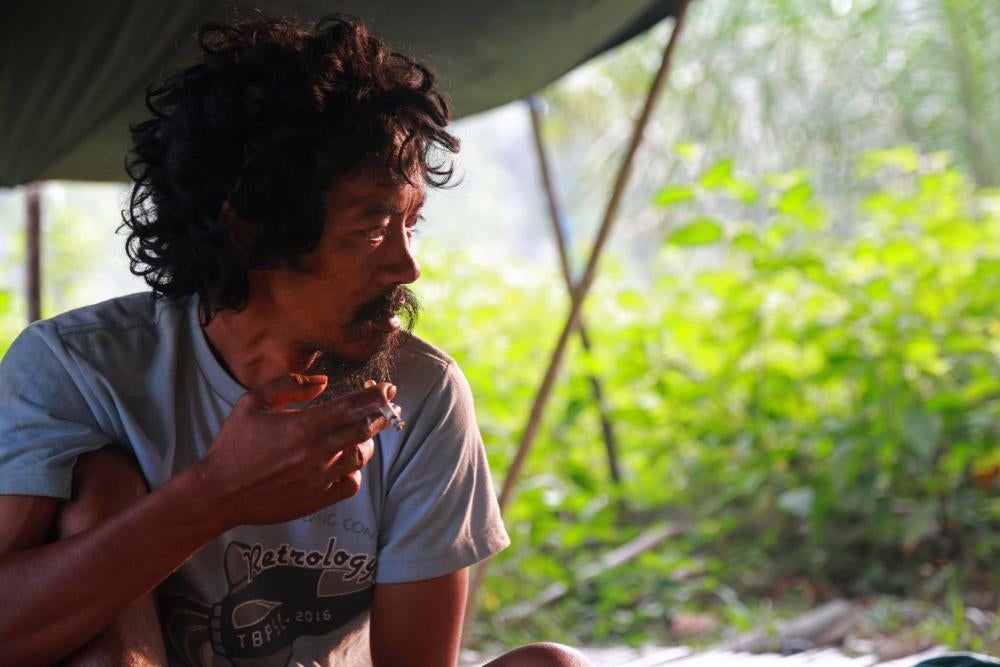
 Meriau, headman of a rombongon (group) of about six families living in the middle of an oil palm plantation, said: “This used to be my rice field. That is why I don’t leave this place.” He refuses to leave the area and says he was not consulted before the plantation was established. Sarolangun regency, Jambi, September 2018.
© 2018 Pailin Wedel for Human Rights Watch
Meriau, headman of a rombongon (group) of about six families living in the middle of an oil palm plantation, said: “This used to be my rice field. That is why I don’t leave this place.” He refuses to leave the area and says he was not consulted before the plantation was established. Sarolangun regency, Jambi, September 2018.
© 2018 Pailin Wedel for Human Rights Watch
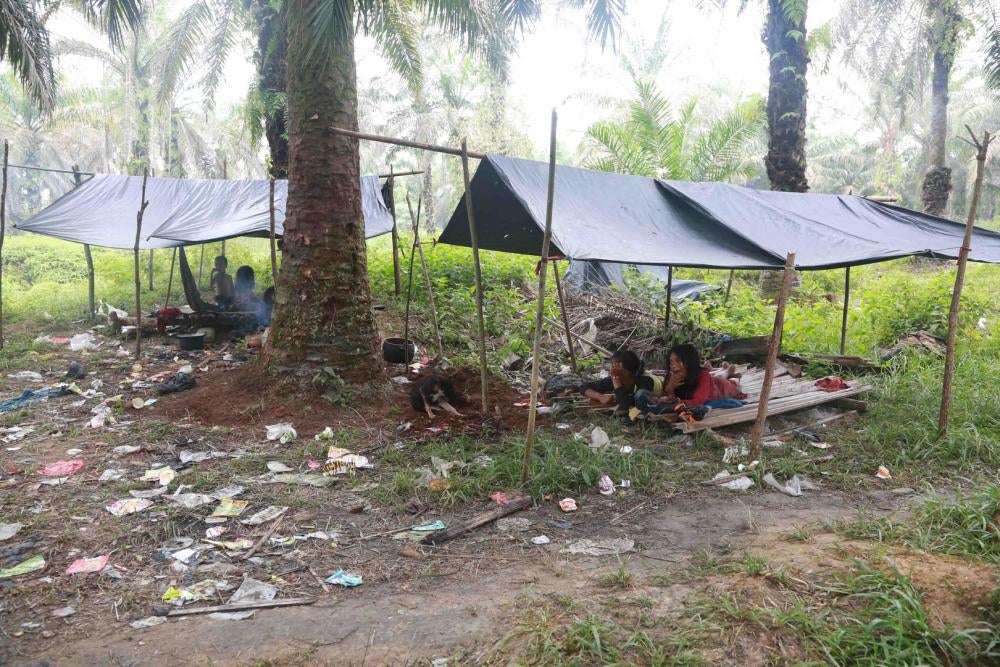 Orang Rimba families sit beneath pitched sudungs (a sheet of plastic tied to posts) in an oil palm plantation. They hurriedly move when discovered and chased by company employees. Sarolangun regency, Jambi, September 2018.
© 2018 Pailin Wedel for Human Rights Watch
Orang Rimba families sit beneath pitched sudungs (a sheet of plastic tied to posts) in an oil palm plantation. They hurriedly move when discovered and chased by company employees. Sarolangun regency, Jambi, September 2018.
© 2018 Pailin Wedel for Human Rights Watch
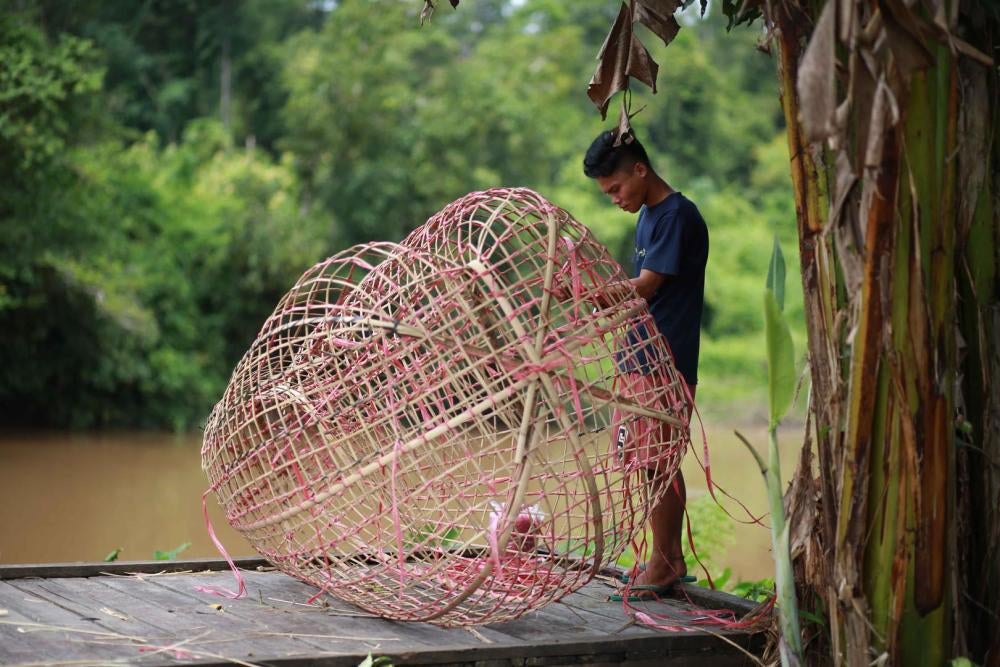 A man weaves a pukat (fishing net). Residents said the average catch progressively declined after the plantation’s operations, although there could be various reasons for the drop off. Bengkayang regency, West Kalimantan, September 2018.
© 2018 Pailin Wedel for Human Rights Watch
A man weaves a pukat (fishing net). Residents said the average catch progressively declined after the plantation’s operations, although there could be various reasons for the drop off. Bengkayang regency, West Kalimantan, September 2018.
© 2018 Pailin Wedel for Human Rights Watch
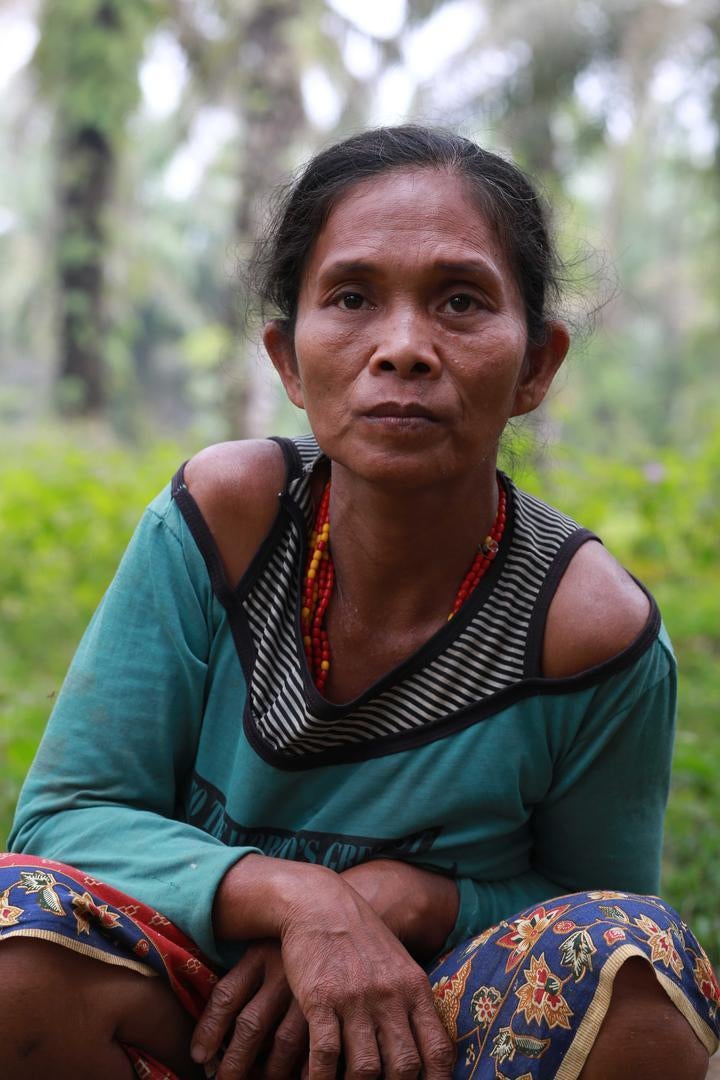 Maliau, an elderly Orang Rimba mother of nine children, struggles to survive off land that once sustained her people, but which has since been decimated by an oil palm plantation that began operating in the area nearly three decades ago. “Life was better before,” Maliau said. “Women could find many types of food. Some wove mats from leaves and baskets. We made lamps from gum resin. Now we cannot find materials to make these.” Sarolangun regency, Jambi, September 2018.
© 2018 Pailin Wedel for Human Rights Watch
Maliau, an elderly Orang Rimba mother of nine children, struggles to survive off land that once sustained her people, but which has since been decimated by an oil palm plantation that began operating in the area nearly three decades ago. “Life was better before,” Maliau said. “Women could find many types of food. Some wove mats from leaves and baskets. We made lamps from gum resin. Now we cannot find materials to make these.” Sarolangun regency, Jambi, September 2018.
© 2018 Pailin Wedel for Human Rights Watch
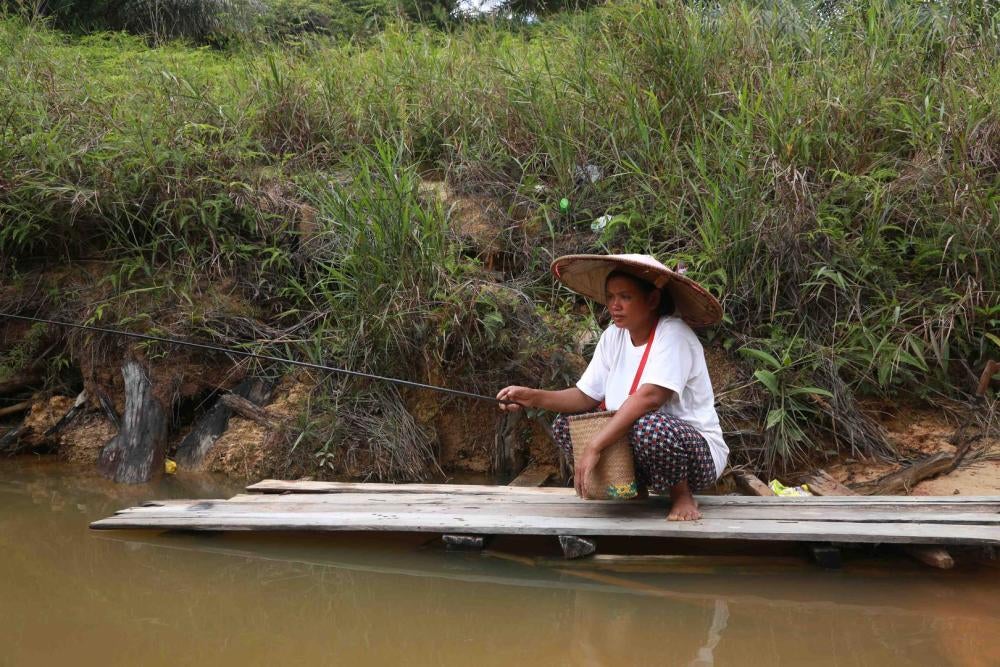 Leni, a displaced Iban Dayak woman, said her family was resettled in the middle of the palm plantation with restricted access to land for gardening. She fishes in a stream in the oil palm plantation. Residents said the fish population in nearby Semunying and Kumba Rivers has dropped since the oil palm plantation was established in 2004. Bengkayang regency, West Kalimantan, September 2018.
© 2018 Pailin Wedel for Human Rights Watch
Leni, a displaced Iban Dayak woman, said her family was resettled in the middle of the palm plantation with restricted access to land for gardening. She fishes in a stream in the oil palm plantation. Residents said the fish population in nearby Semunying and Kumba Rivers has dropped since the oil palm plantation was established in 2004. Bengkayang regency, West Kalimantan, September 2018.
© 2018 Pailin Wedel for Human Rights Watch
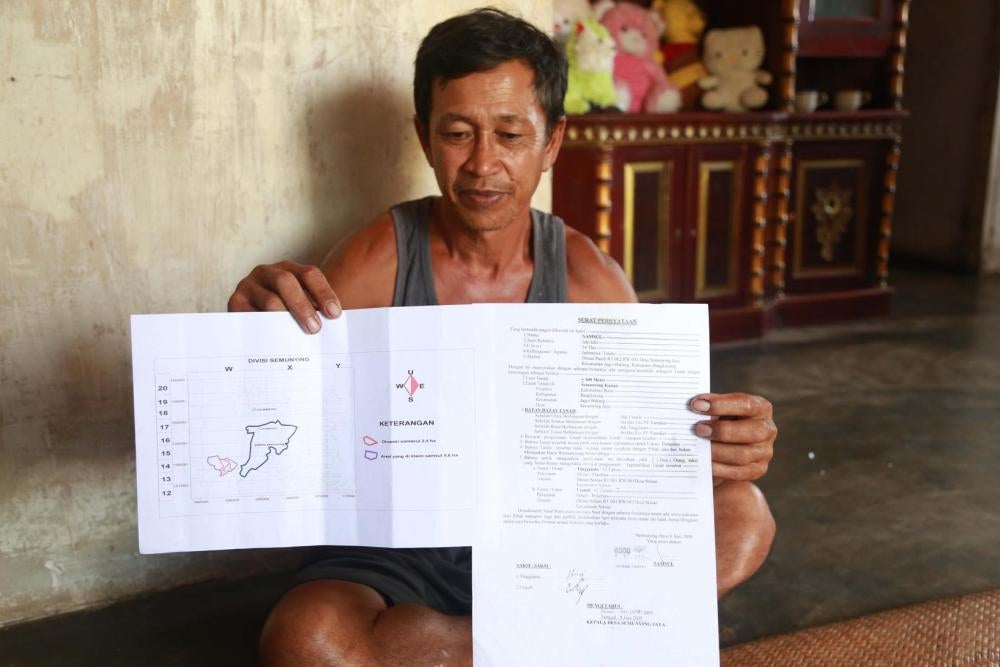 A displaced resident in Semunying holds an agreement with the company that promised to exchange a house and yard for a new one a few kilometers from his village. Residents say company representatives made oral promises, such as a community plantation and amenities including health clinics and schools, which have not materialized. Many of those who signed the “agreement” said they felt compelled to do so because their forests were already cleared. Bengkayang regency, West Kalimantan, September 2018.
© 2018 Pailin Wedel for Human Rights Watch
A displaced resident in Semunying holds an agreement with the company that promised to exchange a house and yard for a new one a few kilometers from his village. Residents say company representatives made oral promises, such as a community plantation and amenities including health clinics and schools, which have not materialized. Many of those who signed the “agreement” said they felt compelled to do so because their forests were already cleared. Bengkayang regency, West Kalimantan, September 2018.
© 2018 Pailin Wedel for Human Rights Watch
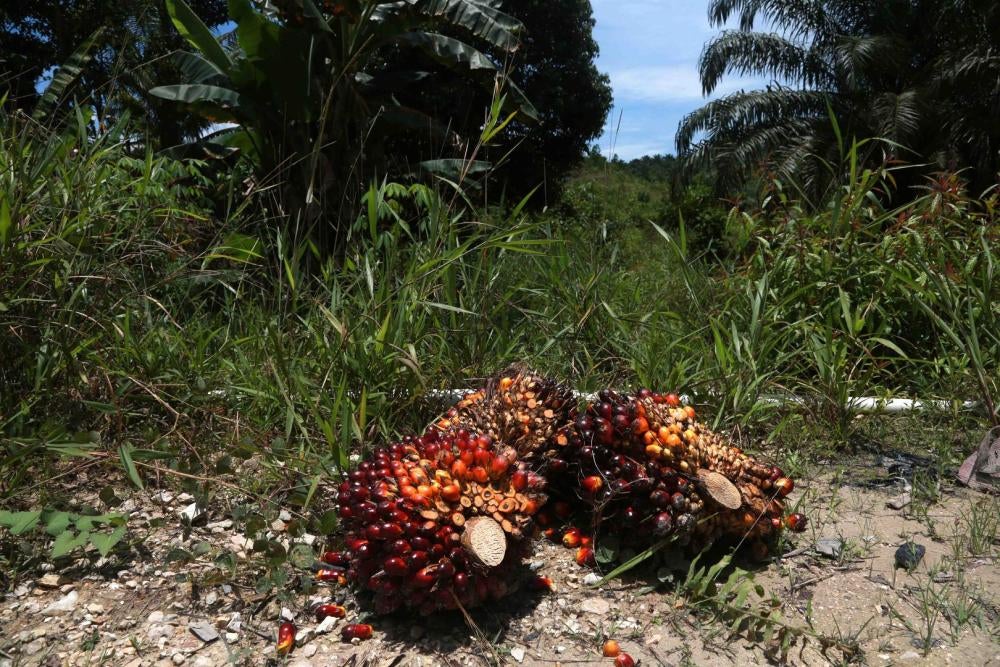 Oil palm fruit bunches harvested by plantation lie awaiting transportation to mill. Bengkayang regency, West Kalimantan, September 2018.
2018 Pailin Wedel for Human Rights Watch
Oil palm fruit bunches harvested by plantation lie awaiting transportation to mill. Bengkayang regency, West Kalimantan, September 2018.
2018 Pailin Wedel for Human Rights Watch
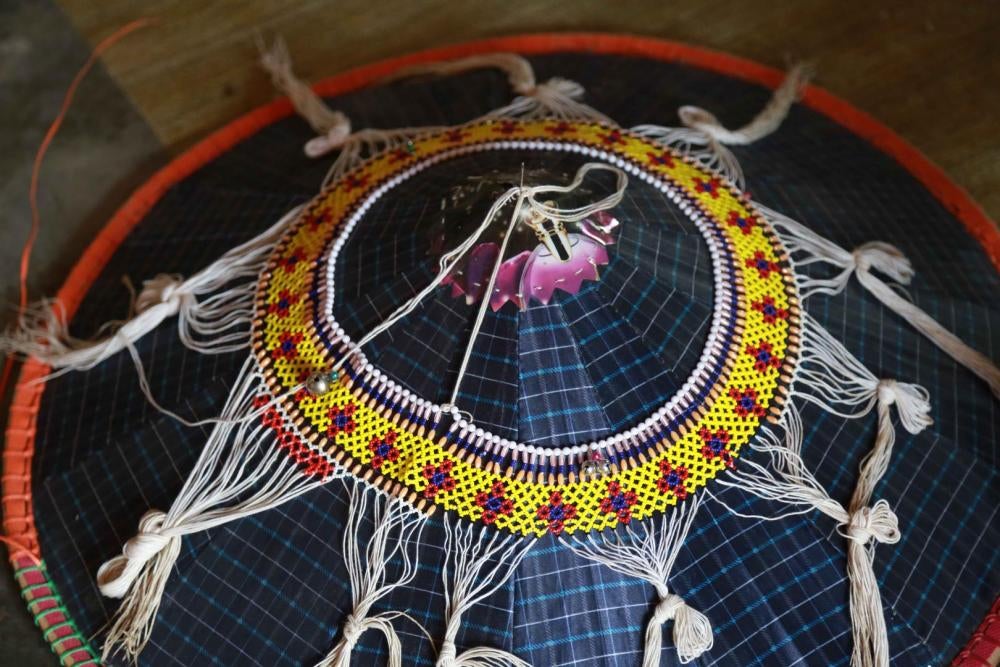 An unfinished Iban Dayak beaded necklace lies pinned to a traditional conical hat. The loss of the forest and displacement has negatively affected inter-generational crafts that had cultural significance for Iban women. Bengkayang regency, West Kalimantan, September 2018.
© 2018 Pailin Wedel for Human Rights Watch
An unfinished Iban Dayak beaded necklace lies pinned to a traditional conical hat. The loss of the forest and displacement has negatively affected inter-generational crafts that had cultural significance for Iban women. Bengkayang regency, West Kalimantan, September 2018.
© 2018 Pailin Wedel for Human Rights Watch
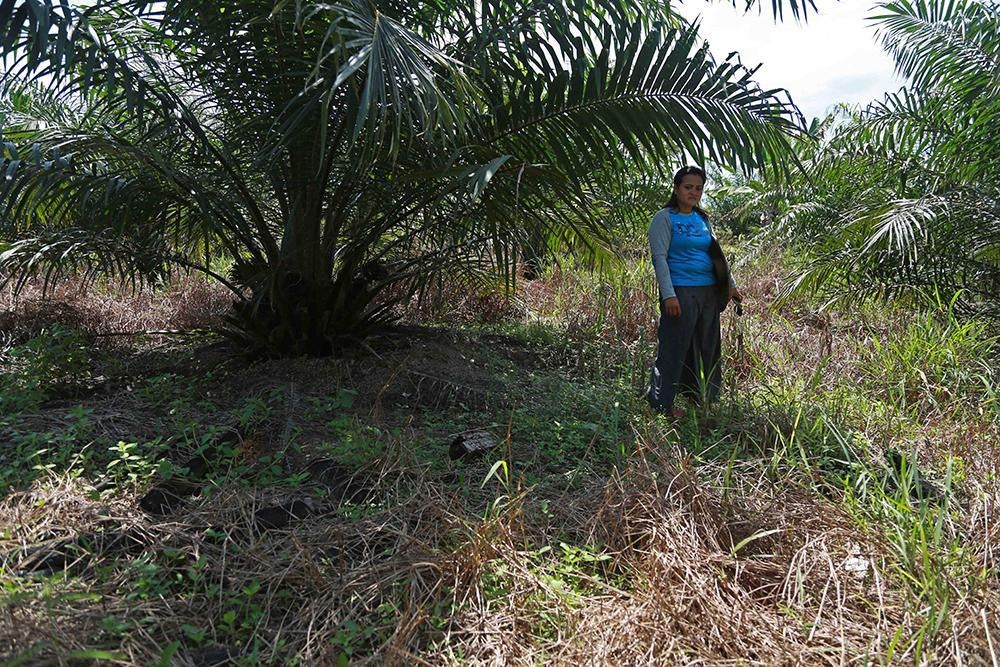 Francesca, a 28-year-old mother of two, stands on the site of her former home. She and her husband refused relocation. She said that company representatives torched her home in 2010, rendering them homeless. Bengkayang regency, West Kalimantan, September 2018.
© 2018 Pailin Wedel for Human Rights Watch
Francesca, a 28-year-old mother of two, stands on the site of her former home. She and her husband refused relocation. She said that company representatives torched her home in 2010, rendering them homeless. Bengkayang regency, West Kalimantan, September 2018.
© 2018 Pailin Wedel for Human Rights Watch
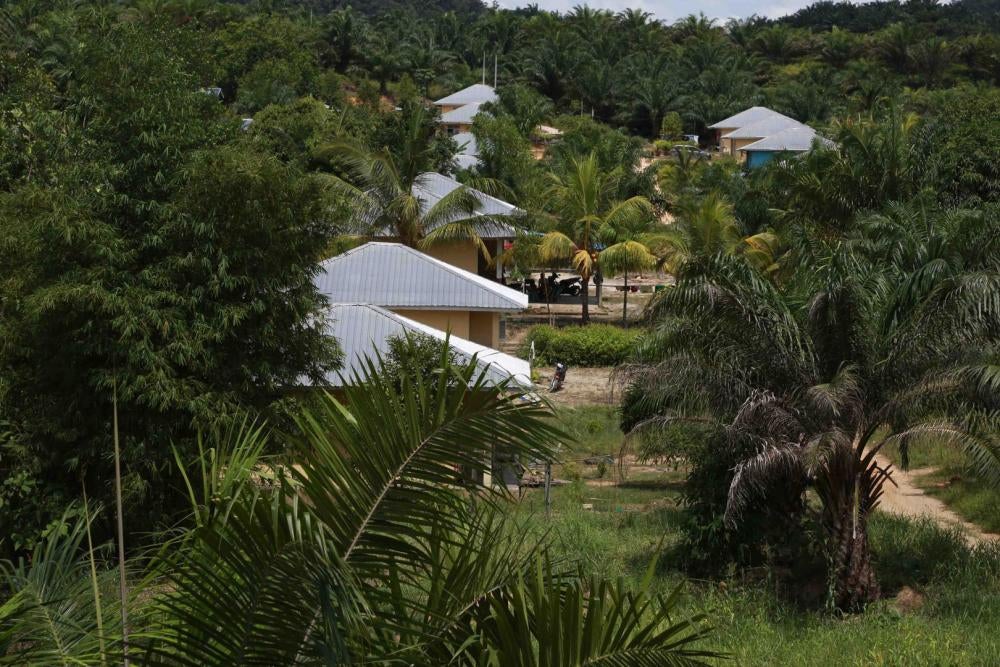 Residents of Semunying were relocated a few kilometers into the oil palm plantation. Their community is now surrounded by oil palm trees. Bengkayang regency, West Kalimantan, September 2018.
2018 Pailin Wedel for Human Rights Watch
Residents of Semunying were relocated a few kilometers into the oil palm plantation. Their community is now surrounded by oil palm trees. Bengkayang regency, West Kalimantan, September 2018.
2018 Pailin Wedel for Human Rights Watch
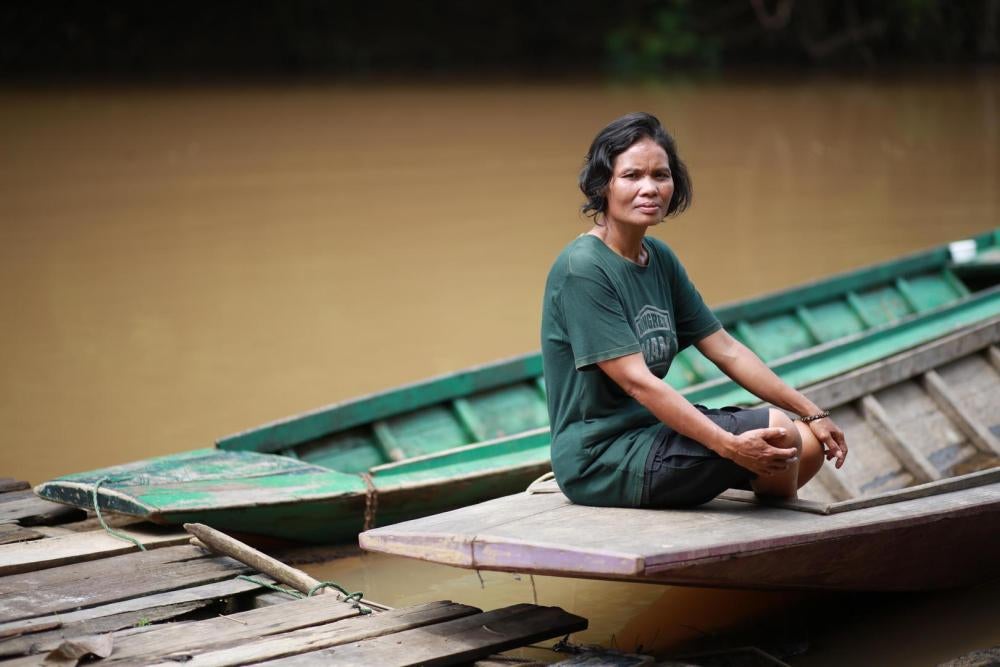 Kinda, 48, a resident of Dusun Pareh, said, “The water [in the river] is contaminated.” Some residents believe the Kumba River they previously relied on for water to drink, cook, and perform household chores has been contaminated, based on their observations of the color of the water and their perceived skin sensitivities to it. Bengkayang regency, West Kalimantan, September 2018.
© 2018 Pailin Wedel for Human Rights Watch
Kinda, 48, a resident of Dusun Pareh, said, “The water [in the river] is contaminated.” Some residents believe the Kumba River they previously relied on for water to drink, cook, and perform household chores has been contaminated, based on their observations of the color of the water and their perceived skin sensitivities to it. Bengkayang regency, West Kalimantan, September 2018.
© 2018 Pailin Wedel for Human Rights Watch
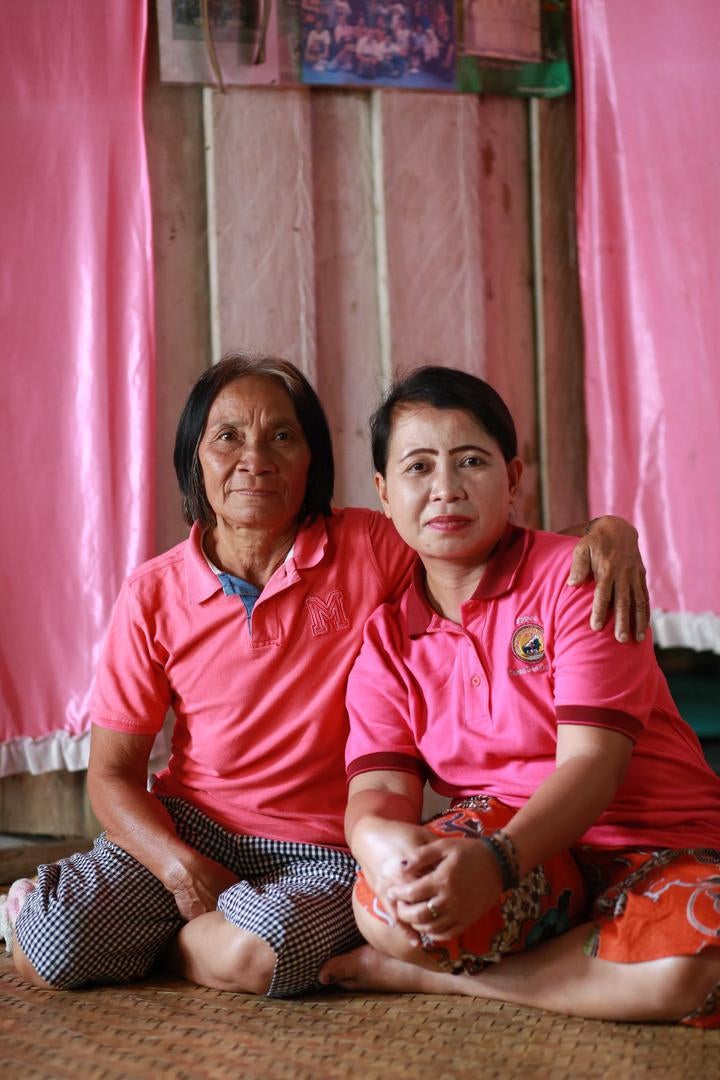 Margareta (right), 40, a community leader in Dusun Pareh, sits with her mother. “Our identity as Iban Dayak is almost lost now, we have no forest,” she said. Bengkayang regency, West Kalimantan, September 2018.
© 2018 Pailin Wedel for Human Rights Watch
Margareta (right), 40, a community leader in Dusun Pareh, sits with her mother. “Our identity as Iban Dayak is almost lost now, we have no forest,” she said. Bengkayang regency, West Kalimantan, September 2018.
© 2018 Pailin Wedel for Human Rights Watch