Skip to cookie privacy notice
Skip to main content
العربية
简中
繁中
English
Français
Deutsch
日本語
Português
Русский
Español
More
languages
Search
Donate Now
Countries
Topics
Reports
Videos & Photos
Impact
Take Action
About
Join Us
Give Now
Close
Search
Search
Primary navigation
Countries
Africa
All Africa
African Union
Angola
Burkina Faso
Burundi
Cameroon
Central African Republic
Chad
Côte d'Ivoire
Democratic Republic of Congo
Equatorial Guinea
Eritrea
Eswatini (formerly Swaziland)
Ethiopia
Gambia
Ghana
Guinea
Kenya
Liberia
Malawi
Mali
Mauritius
Mozambique
Niger
Nigeria
Rwanda
Senegal
Sierra Leone
Somalia
South Africa
South Sudan
Sudan
Tanzania
Uganda
Zambia
Zimbabwe
Americas
All Americas
Argentina
Bolivia
Brazil
Canada
Chile
Colombia
Costa Rica
Cuba
Dominican Republic
Ecuador
El Salvador
Guatemala
Haiti
Honduras
Jamaica
Mexico
Nicaragua
Panama
Paraguay
Peru
Uruguay
Venezuela
Asia
All Asia
Afghanistan
Australia
Bangladesh
Bhutan
Brunei
Cambodia
China and Tibet
Fiji
India
Indonesia
Japan
Laos
Malaysia
Maldives
Myanmar (Burma)
Nauru
Nepal
North Korea
Pakistan
Papua New Guinea
Philippines
Singapore
South Korea
Sri Lanka
Taiwan
Thailand
Timor-Leste
Vietnam
Europe/Central Asia
All Europe/Central Asia
Albania
Armenia
Azerbaijan
Belarus
Belgium
Bosnia and Herzegovina
Bulgaria
Croatia
Czech Republic
Denmark
European Union
France
Georgia
Germany
Greece
Holy See
Hungary
Ireland
Italy
Kazakhstan
Kyrgyzstan
Latvia
Lithuania
Netherlands
Norway
Poland
Portugal
Romania
Russia
Serbia/Kosovo
Spain
Sweden
Switzerland
Tajikistan
Türkiye
Turkmenistan
Ukraine
United Kingdom
Uzbekistan
Middle East/North Africa
All Middle East/North Africa
Algeria
Bahrain
Egypt
Iran
Iraq
Israel/Palestine
Jordan
Kuwait
Lebanon
Libya
Mauritania
Morocco/Western Sahara
Oman
Qatar
Saudi Arabia
Syria
Tunisia
United Arab Emirates
Yemen
United States
All United States
Criminal Justice
Democracy
Economic Justice
Immigrants’ Rights and Border Policy
Racial Justice
US Foreign Policy
Topics
Arms
Children's Rights
Crisis and Conflict
Disability Rights
Economic Justice and Rights
Environment and Human Rights
Free Speech
Health
LGBT Rights
Refugees and Migrants
Rights of Older People
International Justice
Technology and Rights
Terrorism / Counterterrorism
Torture
United Nations
Women's Rights
Reports
Video & Photos
Impact
Take Action
Join Us
Our Committees
Film Festival
Legacies for Justice
About
Newsletters
Careers
About Us
People
Social Media
Human Rights Education
Partners
Financials and Fundraising Policy
Accessibility
Contact
Give Now
Make a One-time Gift
Give Monthly
Gifts in Wills and Trusts
Partners for Justice
Stock or Wire Transfer
Give from Your IRA
Search
Search
English
Choose your language
Close
العربية
简中
繁中
English
Français
Deutsch
日本語
Português
Русский
Español
Donate Now
Open the main menu
Trending
The Trump Administration and Human Rights
Iran
Israel/Palestine
Russia-Ukraine War
Sudan
Would you like to read this page in another language?
Yes
No, don't ask again
✕
Close
July 22, 2019
Available In
English
Русский
Syria: Dire Conditions for ISIS Suspects’ Families
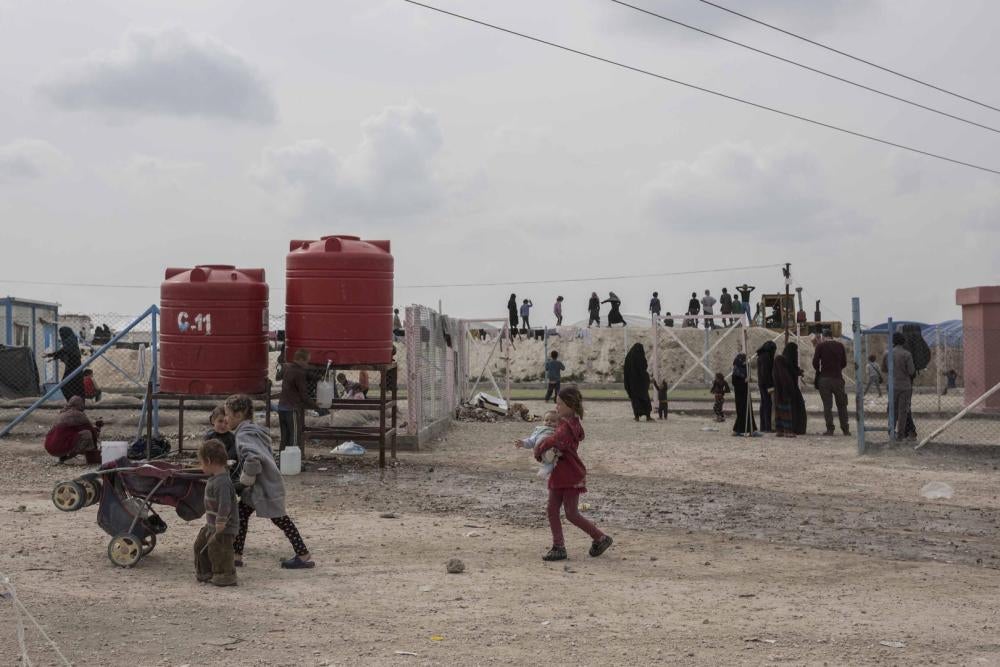
Children can be seen throughout al-Hol annex caring for other children. More than two-thirds of the foreigners in the annex are younger than 12, and most children are younger than 5. Children often lug jugs of water to their tents from large tanks. Camp inhabitants and aid workers told Human Rights Watch that both sources of water are often contaminated. © 2019 Sam Tarling
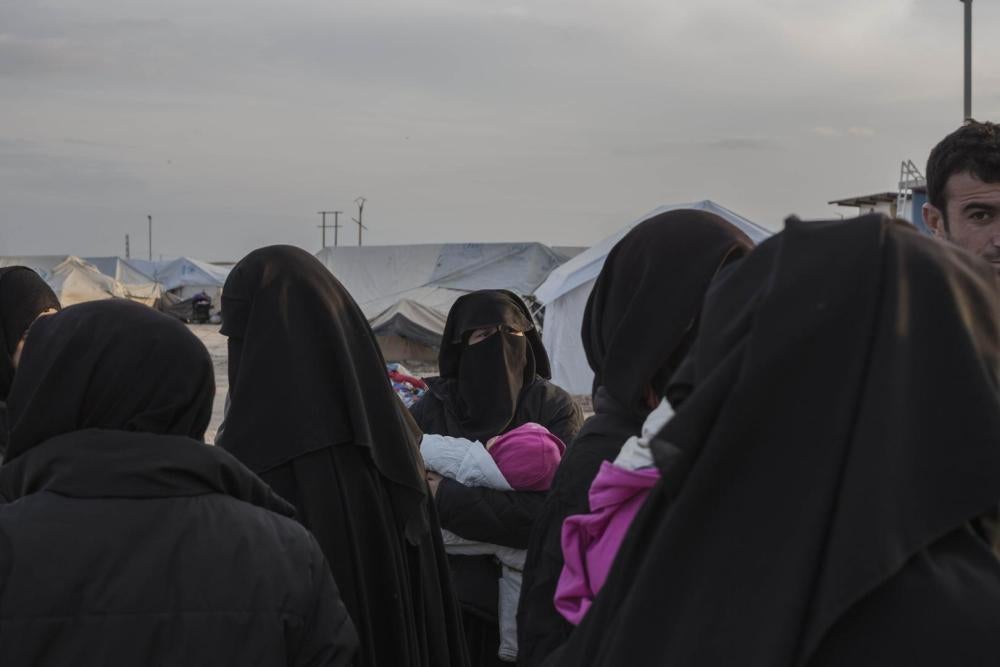
A mother holds her infant at al-Hol annex. Some women with risky pregnancies are giving birth in their tents without a doctor or midwife. Aid workers said one reason is that security guards sometimes delay the women’s requests to go to a hospital, or the women arrive at a hospital only to be turned away because it is full. © 2019 Sam Tarling
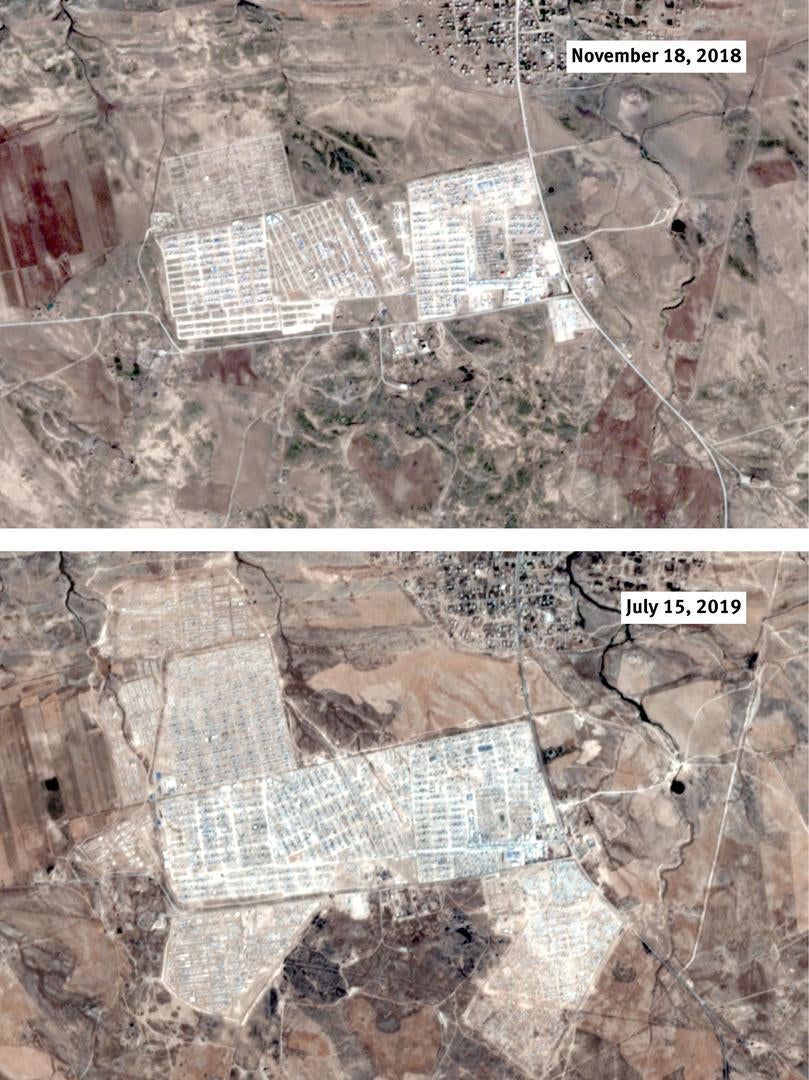
Al-Hol camp in northeast Syria has rapidly expanded with the influx of more than 63,000 women and children displaced by the offensive against the Islamic State (also known as ISIS) in Baghouz between December 2018 and April 2019. The area at lower right shows the annex, now housing more than 11,000 non-Iraqi foreigners. © 2019 Planet Labs
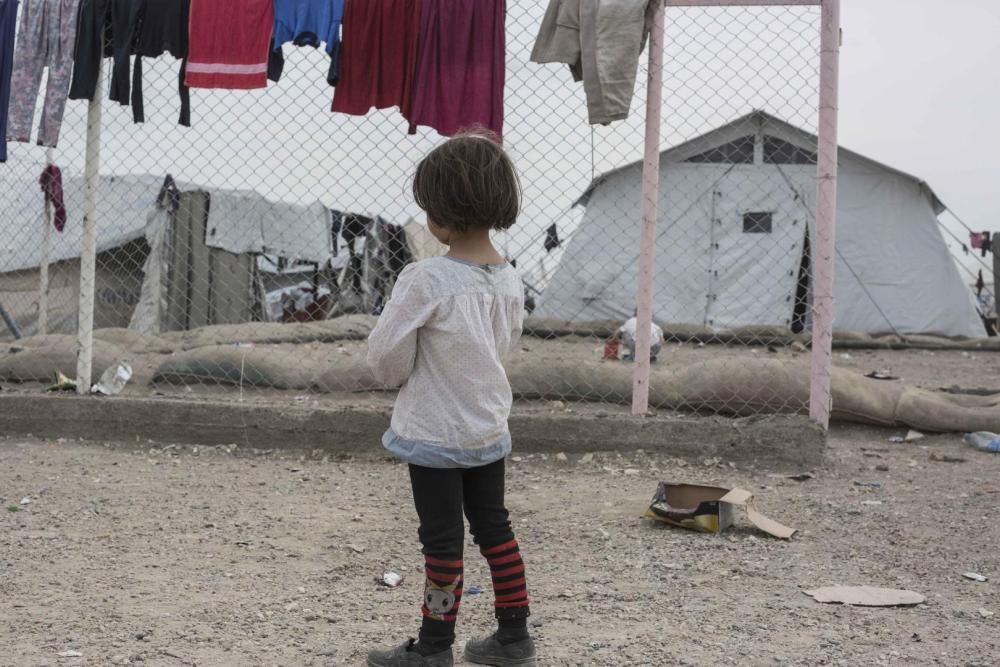
A girl stands in the annex of al-Hol camp in northeast Syria, where more than 11,000 women and children from nearly 50 nationalities are confined as family members of Islamic State (also known as ISIS) suspects. The Kurdish-led coalition controlling northern Syria wants home countries to take the women and children back. But most governments have only repatriated small numbers of their citizens. © 2019 Sam Tarling
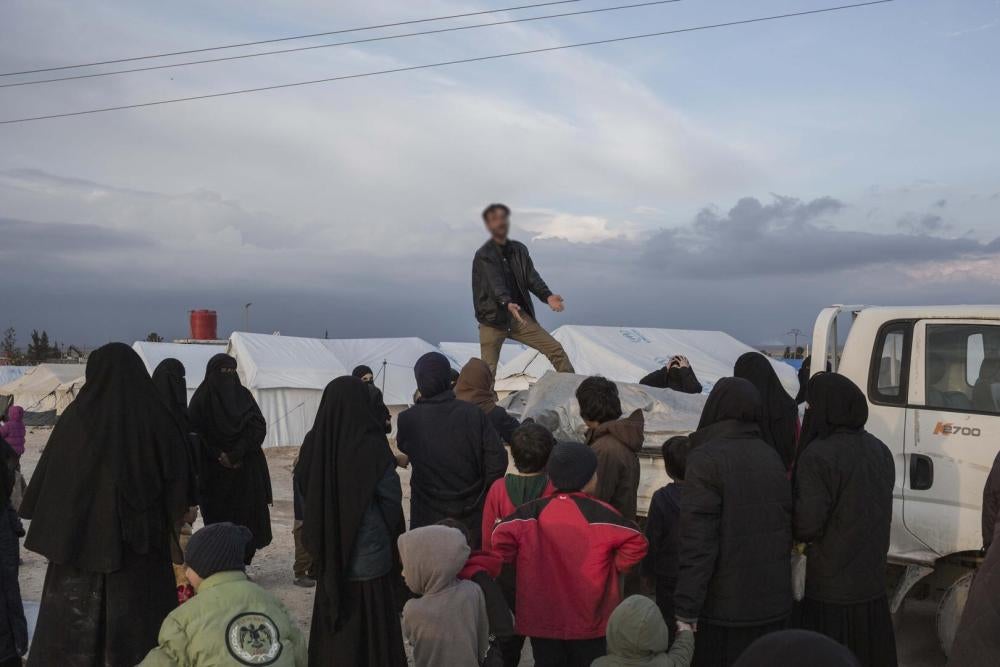
Women and children newly arrived at al-Hol annex confront an aid worker who is handing out tents. The women said they had waited all night for shelter. All camp inhabitants now have tents. But many are torn or are winter tents that retain heat, making them almost inhabitable in the summer which temperatures sometimes rise to 50 degrees Celsius. © 2019 Sam Tarling
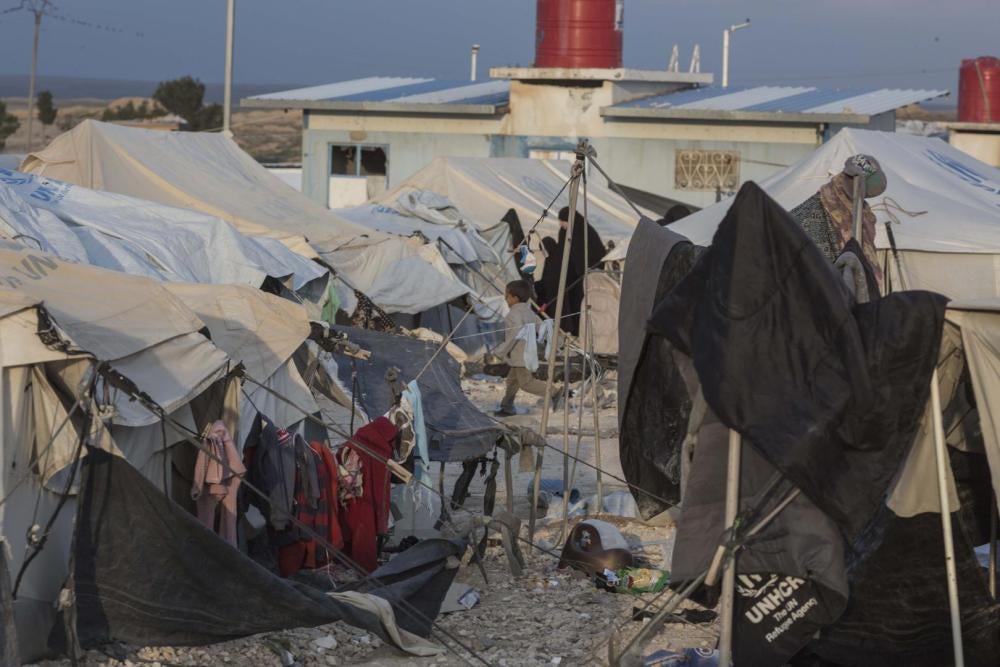
Conditions are dire throughout al-Hol camp and particularly in the annex. Human Rights Watch found overflowing latrines and sewage trickling into tents, and emaciated children sifting through garbage or laying limp on tent floors, with dirt and flies on their bodies. Children are dying from acute diarrhea and flu-like infections, according to aid groups. © 2019 Sam Tarling
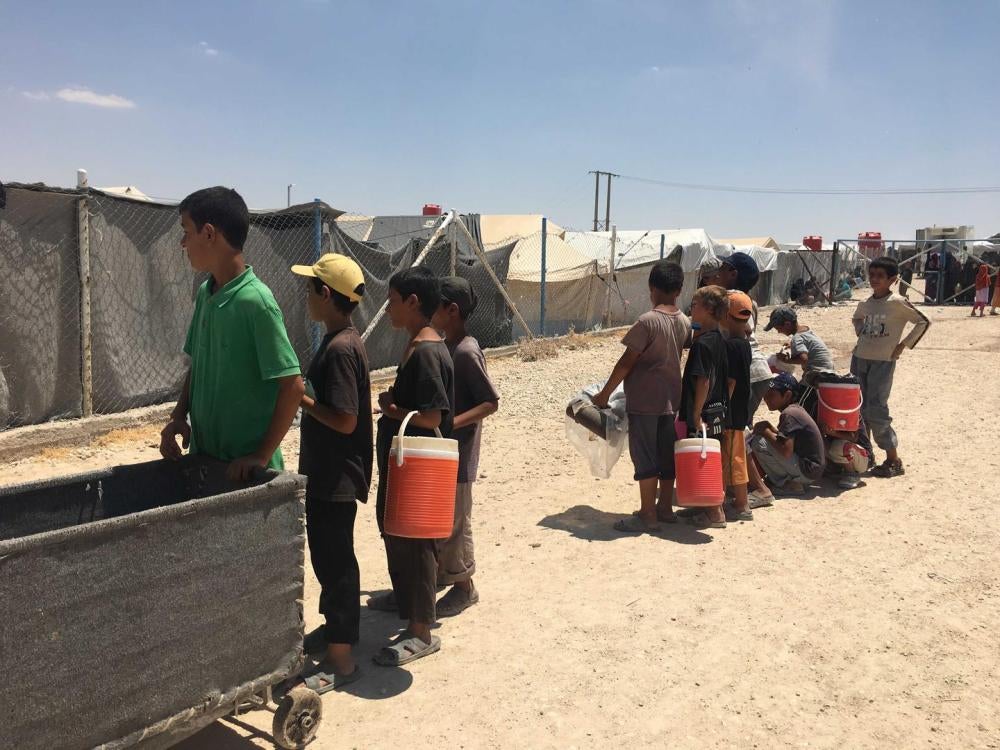
Children at al-Hol annex queue for permission to fetch rations from the main area of the camp. Women in the annex said that sometimes by the time they or their children arrive, the food is gone and they need to return the following day. © 2019 Letta Tayler/Human Rights Watch
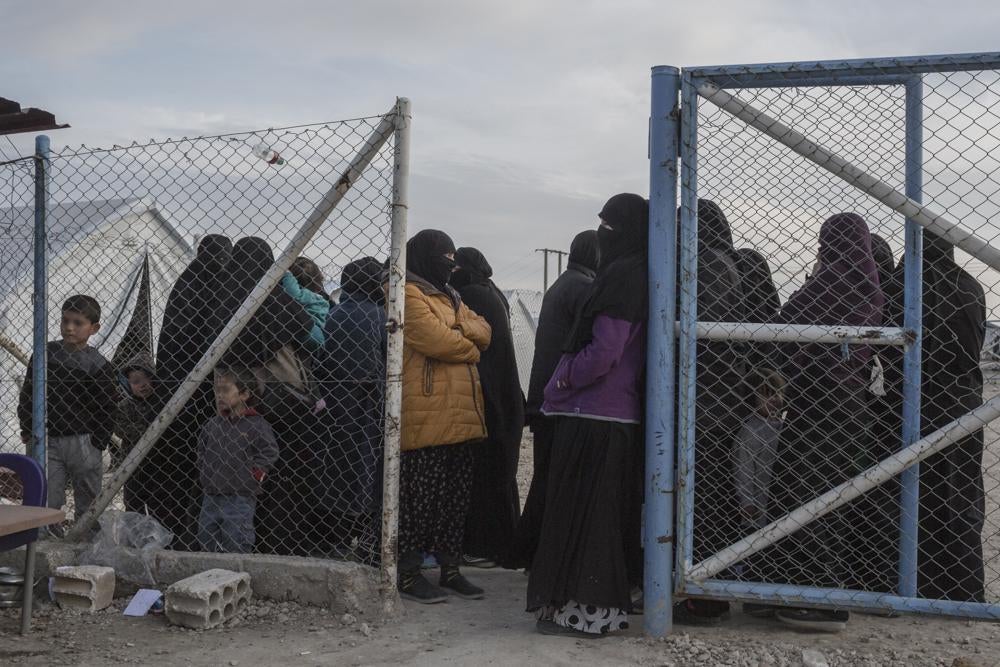
A chain-link fence flanked by armed guards separates the annex from the main sections of al-Hol. The Kurdish-led Autonomous Administration for Northeast Syria is confining 62,000 Syrian and Iraqi family members of ISIS suspects in the main sections, also without charge. Annex inhabitants must wait for armed escorts to bring them to hospitals, even for emergencies. © 2019 Sam Tarling
Region / Country
Middle East/North Africa
Syria
Tags
ISIS
Topic
Terrorism / Counterterrorism