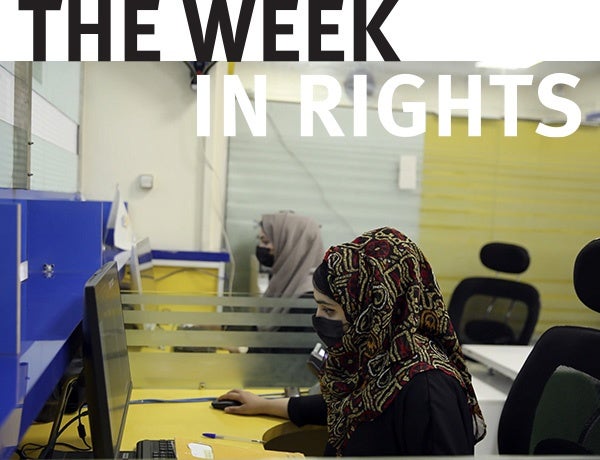
When the Taliban began shutting down internet access across Afghanistan in September, they inflicted serious harm to people’s rights and livelihoods, impeding access to education, banking, media, and healthcare services.
While the internet was later restored, these shutdowns impose hardships on all levels of the population, and they can further silence and isolate women and girls.
Taliban officials claimed they initiated the shutdowns to prevent “immorality,” which has been used as a frequent tool of oppression applied predominantly to women and girls.
As Human Rights Watch Women’s Rights researcher Sahar Fetrat wrote this week, “When the Taliban say ‘immorality,’ they often mean immorality caused, seen, or promoted by women, or men being corrupted through the fault of women.”
As the Taliban curtail physical spaces of resistance, women and girls with access to the internet have relied on it to resist imposition of what many call “gender apartheid.” Activists use the internet to document abuses and connect with allies abroad amidst declining global attention on Afghanistan.
>> Read how these shutdowns have become yet another way for the Taliban to control women and girls
Beyond that, the shutdowns prevented Afghan students from accessing online classes. This also particularly affected women and girls already denied secondary and higher education by the Taliban’s ban on education.
Access to the internet enables a broad range of human rights.
Cutting off an already isolated population from the rest of world severely imperils these rights.