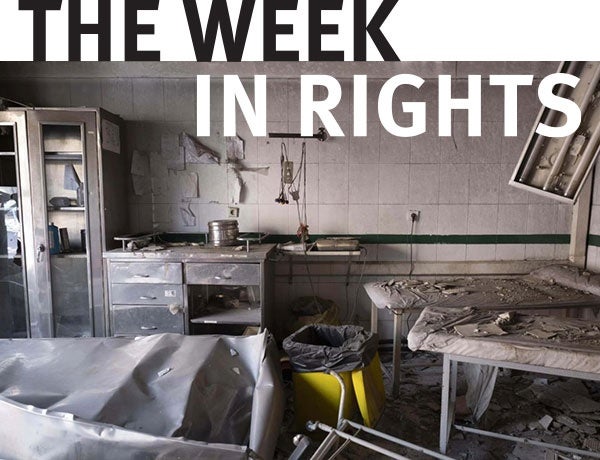
On June 23, amid hostilities between Israel and Iran, Israeli airstrikes hit several buildings across Iran’s Evin Prison complex, killing at least 80 people, including prisoners, their family members, and prison staff. The attack, which occurred in the absence of any evident military target, is an apparent war crime.
Over 1,500 prisoners are believed to have been held at the notorious prison at the time of the attack, including many activists and dissidents held by the Iranian government in violation of their rights.
>> Read new Human Rights Watch reporting on the deadly strikes
But despite repeated calls and pleas by prisoners and their families, Iranian authorities failed to take any measures to protect detainees’ lives before or after the attack. Following the attack, the authorities have ill-treated survivors and continued to hold them in cruel and unsafe conditions. This treatment bears all the hallmarks of Iranian authorities’ extensive repression, in particular during times of crisis.
Even before the attack, prisoners faced abysmal conditions that put their lives at risk, such as poorly ventilated, filthy, and overcrowded rooms, a lack of access to clean, potable water, and adequate facilities to maintain personal hygiene.
Following the attack, prisoners were forced to leave the prison facilities at gunpoint, with little or no time to pack their belongings. The security forces shackled male prisoners in pairs and marched them onto buses for hours-long journeys.
Amid transfers back to the prison, the authorities have not revealed information about the fate and whereabouts of some detainees held by security and intelligence bodies. In some cases, these amount to enforced disappearances.
>> Read our full report on abuses at Evin Prison since the Israeli Attack