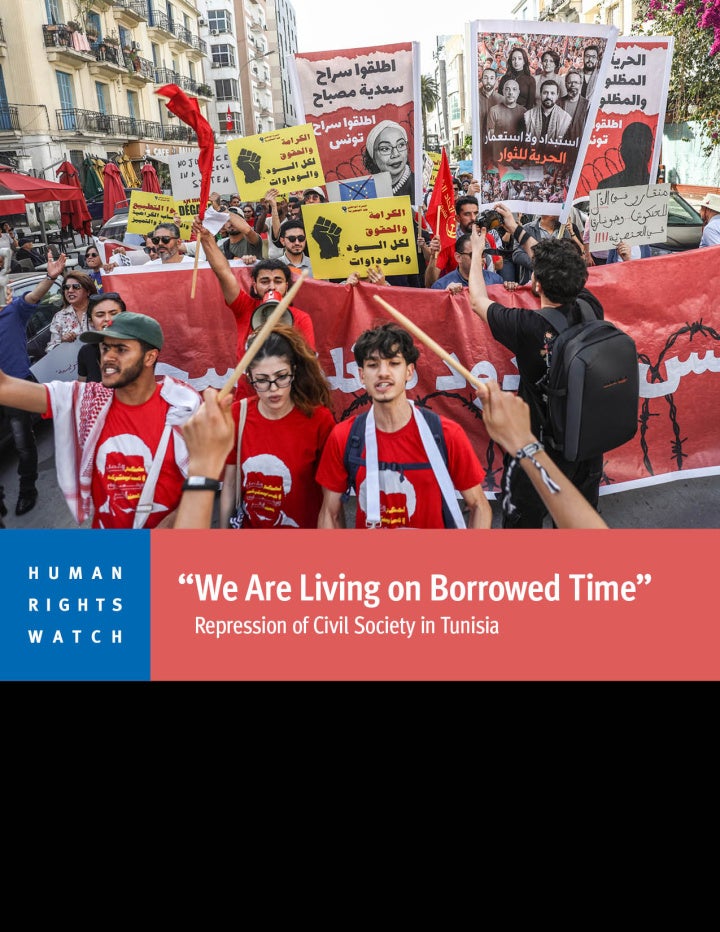
The 49-page report, “‘We Are Living on Borrowed Time’: Repression of Civil Society in Tunisia” documents the Tunisian authorities’ escalating repression of local and international civil society groups, workers, members, and affiliates through the weaponization of abusive prosecutions, arbitrary arrests, detention, financial and criminal investigations, mass suspensions, and threats of dissolution.
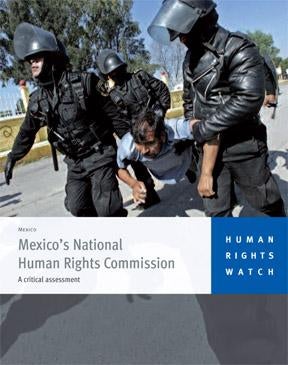
This 128-page report examines the commission's work on more than 40 human rights cases, including recent abuses by soldiers involved in law enforcement operations, police crackdowns against demonstrators in Guadalajara and San Salvador de Atenco, and the killings of women in Ciudad Juárez over the past decade, among others. The report also examines the commission’s role in addressing abusive laws, including restrictions on freedom of expression, and responding to important reforms, such as the Mexico City abortion law passed in 2007.
Iran’s Broadening Clampdown on Independent Activism
This 51-page report documents the expansion in scope and number of the individuals and activities persecuted by the Iranian government over the last two years.
In this new briefing paper, Human Rights Watch said that while Berdymukhamedov has begun to reverse some of the most ruinous social policies of Niazov’s rule and to end the country’s international isolation, the government remains one of the most repressive and authoritarian in the world.
This briefing paper examines the implications of military interference for human rights, as well as a number of other current human rights concerns, including restrictions on freedom of speech and the press, the harassment and prosecution of Kurdish political parties, ongoing problems of impunity for state officials, and police ill-treatment.
A Briefing Paper by the Egyptian Initiative for Personal Rights and Human Rights Watch
In this 13-page briefing paper, Human Rights Watch and the EIPR said that Egypt’s terrible human rights record made that country a poor choice for membership. They nevertheless welcomed the Egyptian government’s public pledges to improve its practices domestically and to strengthen the capacity of the council.
This briefing paper documents how the government barred at least 12 students from university registration this past year, despite the fact that graduate programs had accepted them on the basis of successful competitive entrance examinations.
An Analysis of the Uzbek Government’s June 30, 2006 Aide-Memoire
In this 16-page briefing paper, Human Rights Watch analyzes an Uzbek government memorandum from June 2006, which was prepared in response to a December 2005 UN General Assembly resolution that was critical of Uzbekistan’s human rights record.
Corporate Complicity in Chinese Internet Censorship
China’s system of Internet censorship and surveillance, popularly known as the “Great Firewall,” is the most advanced in the world. In this 149-page report, Human Rights Watch documents how extensive corporate and private sector cooperation – including by some of the world’s major Internet companies – enables this system of censorship.
On September 30, 2005, the Danish newspaper Jyllands-Posten published twelve cartoon depictions of the Prophet Mohammed that its editors said they solicited as part of an experiment to overcome what they perceived as self-censorship reflected in the reluctance of illustrators to depict the Prophet.
On November 23, 2005, the State Duma, Russia’s parliament, is scheduled to consider a draft law that would dramatically restrict the work of nongovernmental organizations (NGOs) working in Russia.
Respect for human rights in the November 2005 parliamentary elections in Azerbaijan fell far short of international standards, with serious violations occurring both prior to and on election day. These shortcomings once again underscored the urgent need for major reforms in the areas of freedom of expression and assembly, the electoral law and its implementation, and accountability mechanisms.
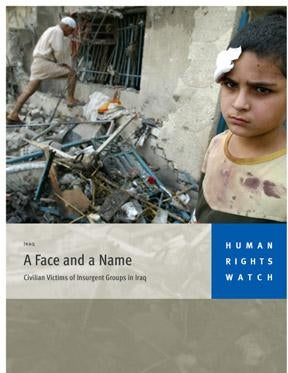
This report is the most detailed study to date of abuses by insurgent groups. It systematically presents and debunks the arguments that some insurgent groups and their supporters use to justify unlawful attacks on civilians.
This report documents an underlying climate of fear among many voters and candidates, especially in remote, rural areas—an atmosphere that has negatively impacted the political environment in the lead-up to the elections.
Out of Sync with SADC Standards and a Threat to Civil Society Groups
The government of Zimbabwe drafted the 2004 Non-Governmental Organizations (NGO) Bill after a four-year period of deteriorating relations with oppositional civil society organizations, including NGOs, churches, trade unions, and the independent media. The Bill will adversely affect, and effectively eliminate, all organizations involved in promoting and defending human rights.
Two years after the April 4, 2002, ceasefire agreement between the Angolan government and the opposition National Union for the Total Independence of Angola (UNITA), Angola is in transition. Although no date has been set for the first national elections since 1992, these are widely expected to be held no later than 2006.