Systemic Age and Gender Discrimination Against Women at Work in South Korea
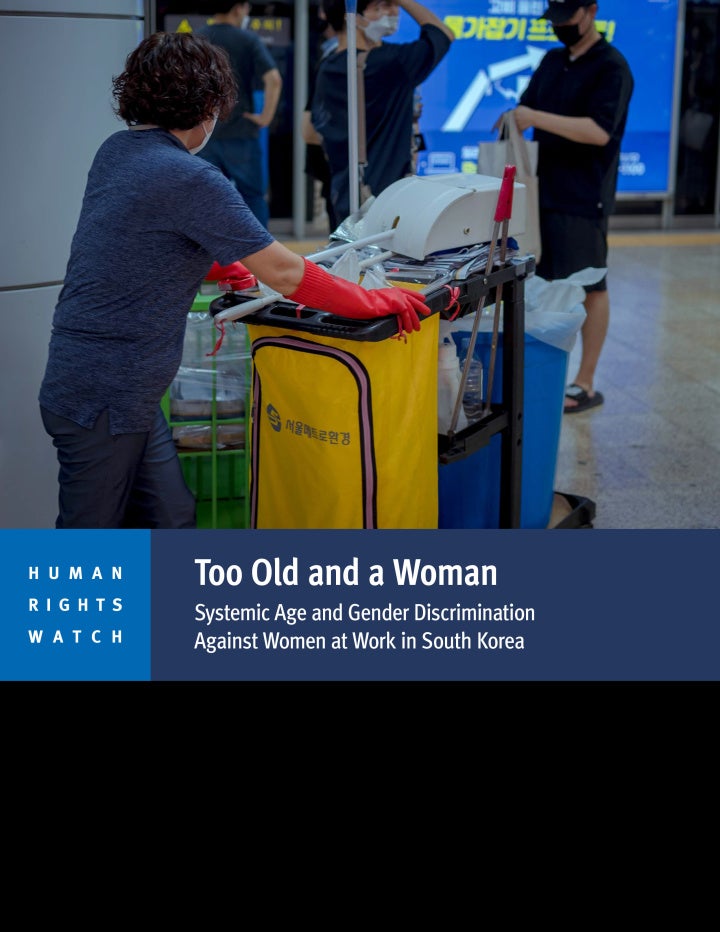
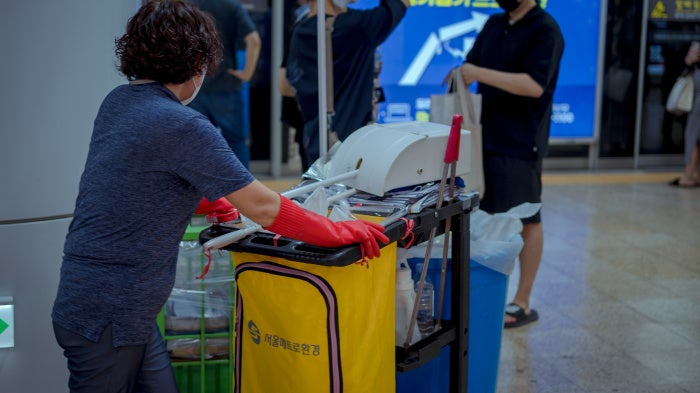
The 92-page report, “Too Old and a Woman: Systemic Age and Gender Discrimination Against Women at Work in South Korea,” documents that social attitudes toward education, unfair treatment in hiring, disrupted careers due to family responsibilities, limited promotion opportunities, glass ceilings, and sexual harassment create a disadvantage for South Korean women throughout their working lives. As women get older, their work opportunities narrow to a handful of low-paid, insecure jobs, and the gender pay gap increases. By the time they are eligible for pensions, women face a significant gender pension gap.
Abuse of Domestic Workers with Special Visas in the United States
The special visas granted to foreigners who work as household domestics in the U.S. leave them vulnerable to serious abuse, Human Rights Watch charged in a report released today. Thousands of these workers, typically women, enter the United States every year to work for diplomats, officials of international organizations, foreign businesspeople, and U.S. citizens temporarily back in the U.S.
The Unfulfilled Promise of NAFTA’s Labor Side Agreement
On the eve of the Quebec summit of Western hemisphere leaders, Human Rights Watch called for the creation of an independent oversight agency to spur remedial action for workers' rights violations."Trading Away Rights: The Unfulfilled Promise of NAFTA's Labor Side Agreement," analyzes the twenty-three complaints filed under the accord since it came into force in 1994.
On April 3, 2000, the International Monetary Fund (IMF) and the Angolan government announced the beginning of a Staff Monitored Program (SMP). This program is an ambitious agreement to implement a wide range of economic and institutional reforms in Angola that could lead to further lending and cooperation with the IMF and World Bank, but it is unclear whether the government will be able to comply with its requirements.
Workers' basic rights are routinely violated in the United States because U.S. labor law is so feebly enforced and so filled with loopholes, Human Rights Watch said in this report. Human Rights Watch examined workers' rights to organize, to bargain collectively, and to strike under international norms. It found widespread labor rights violations across regions, industries and employment status.
On April 3, 2000, as part of a larger agreement between the International Monetary Fund (IMF) and the government of Angola to reform the economy, the IMF and government reached an agreement to monitor oil revenues that would be supervised by the World Bank.
On November 4, 1999, an armed gang killed seven Nigerian policemen in the community of Odi, Bayelsa State, in the oil producing Niger Delta region in the far south east of the country. Five other police were killed in subsequent days.
The Global Use of Child Soldiers: An estimated 300,000 children under the age of eighteen are currently participating in armed conflicts in more than thirty countries on nearly every continent. While most child soldiers are in their teens, some are as young as seven years old.
The Niger Delta has for some years been the site of major confrontations between the people who live there and the Nigerian government's security forces, resulting in extrajudicial executions, arbitrary detentions, and draconian restrictions on the rights to freedom of expression, association, and assembly.
Human Rights, Justice, and Toxic Waste in Cambodia
In November 1998, nearly 3,000 tons of Taiwanese toxic waste were dumped in a field in the southern port of Sihanoukville. At the time, there was no law banning such dumping, but Minister of Environment Mok Mareth said publicly and repeatedly that toxic waste imports were prohibited in Cambodia and a national policy to that effect was in force. Local people panicked:thousands fled the city.
Corporate Responsibility and Human Rights Violations in Nigeria’s Oil Producing Communities
This report is an exploration of human rights violations related to oil exploration and productionin the Niger Delta, and of the role and responsibilities of the major multinational oil companies inrespect of those violations.
Continued Sex Discrimination in Mexico’s Maquiladora Sector
In this report Human Rights Watch documents the Mexican government's failure to enforce its own labor laws in the export processing (maquiladora) sector. In violation of Mexican labor law, maquiladora operators oblige women to undergo pregnancy testing as a condition of work. Women thought to be pregnant are not hired.
The collapse of the Asian economy has given rise to massive layoffs of workers and wage and benefit cuts, not only in those countries worst affected by the economic crisis, but region-wide.
A two-person Human Rights Watch delegation traveled to Guatemala in January 1997. The visit focused on reports of the discriminatory treatment of trade unionists at the assembly plants there of the U.S.-based corporation Phillips-Van Heusen (PVH), and allegations of obstacles posed by the company and the Guatemalan labor ministry to the union’s recognition for purposes of collective bargaining.
Mexico, the United States, and Canada broke new ground in January 1994 when they brought into force a labor rights side agreement to accompany the North American Free Trade Agreement (NAFTA).