The 75-page report, “No Money, No Care: Obstetric Violence in Sierra Leone,” documents cases of verbal abuse, medical neglect, and abandonment of women and girls facing serious obstetric complications, practices that experts interviewed say are common. Many women interviewed said they were shamed and mistreated by healthcare providers for expressing pain, needing help, or for not having enough money to pay fees. Others described humiliating experiences in which healthcare providers treated them brusquely or withheld important health information. Some cases documented constitute obstetric violence, a largely unaddressed form of gender-based violence prevalent across the world.
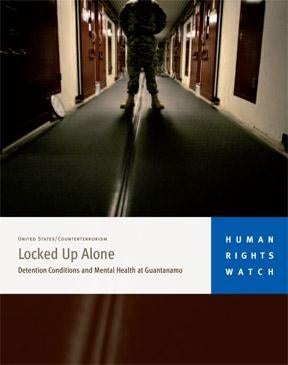
Detention Conditions and Mental Health at Guantanamo
This 54-page report documents the conditions in the various “camps” at the detention center, in which approximately 185 of the 270 detainees are housed in facilities akin to “supermax” prisons even though they have not yet been convicted of a crime.
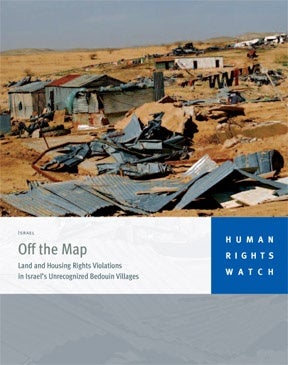
Land and Housing Rights Violations in Israel’s Unrecognized Bedouin Villages
This 130-page report documents how discriminatory Israeli laws and practices force tens of thousands of Bedouin in the south of Israel to live in “unrecognized” shanty towns where they are under constant threat of seeing their homes demolished and their communities torn apart.
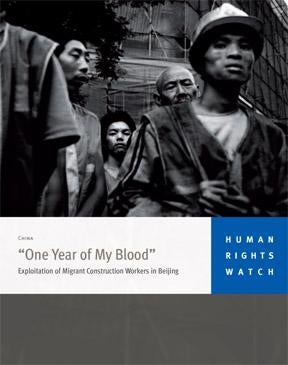
Exploitation of Migrant Construction Workers in Beijing
This 61-page report documents the Chinese government’s failure to fulfill long-repeated promises to protect the rights of migrant construction workers, as well as to end deprivations caused by the discriminatory nature of China’s household registration (hukou) system. An estimated 1 million migrant construction workers, hailing from other parts of China, make up nearly 90 percent of Beijing’s construction workforce.
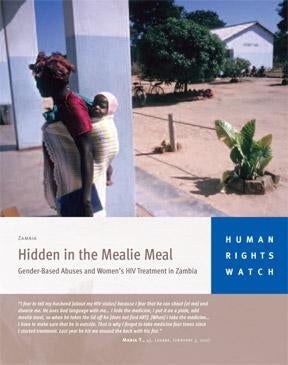
Gender-Based Abuses and Women’s HIV Treatment in Zambia
While acknowledging the significant overall progress made by the Zambian government in scaling up HIV treatment generally, this report documents how the government has fallen short of its international legal obligations to combat violence and discrimination against women.
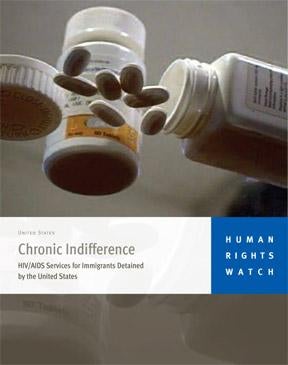
HIV/AIDS Services for Immigrants Detained by the United States
This 71-page report documents the experiences of HIV-positive detainees in immigration custody whose HIV treatment was denied, delayed, or interrupted, resulting in serious risk and often damage to their health.
Barriers to HIV/AIDS Treatment for People Who Use Drugs in Thailand
This 57-page report found that routine police harassment and arrest – as well as the lasting effects of former Prime Minister Thaksin Shinawatra’s 2003 drug war – keeps drug users from receiving lifesaving HIV information and services that Thailand has pledged to provide.
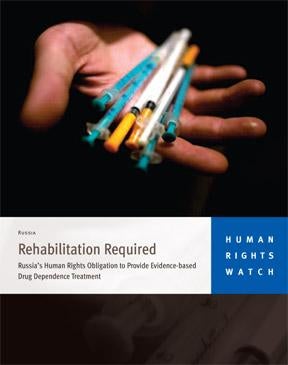
Russia’s Human Rights Obligation to Provide Evidence-based Drug Dependence Treatment
<table cellpadding="3" cellspacing="0"><tr><td><img src=" http://www.hrw.org/images/home/2007/100//russia17278.jpg" align="left" border="0" /></td> <td valign="top"> In this 110-page study, Human Rights Watch found that the treatment offered at state drug treatment clinics in Russia was so poor as to constitute a violation of the right to health.</td></tr></table>
Denial of Access to Emergency Obstetric Care and Therapeutic Abortion in Nicaragua
This 18-page report documents how this ban on abortion has made women afraid to seek even legal health services. Fearing prosecution under the new law, doctors are unwilling to provide necessary care. The report is based on interviews with officials, doctors from the public and private health systems, women in need of health services, and family members of women who died as a result of the ban.
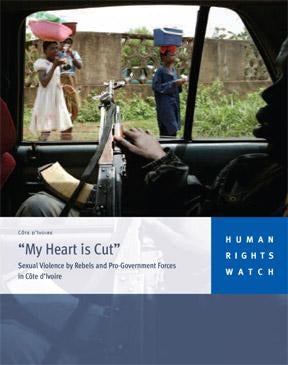
Sexual Violence by Rebels and Pro-Government Forces in Côte d’Ivoire
Pro-government and rebel forces in Côte d’Ivoire have subjected thousands of women and girls to rape and other brutal sexual assaults with impunity. This 135-page report details the widespread nature of sexual violence throughout the five-year military-political crisis. The report, which is based on interviews with more than 180 victims and witnesses, documents how women and girls have been subjected to individual and gang rape, sexual slavery, forced incest and other egregious sexual assaults.
The management of infectious disease in prisons is a human rights imperative as well as a matter of public health. Given the high level of HIV infections among those who enter prison, making condoms readily accessible to inmates is an effective and inexpensive measure that corrections officials should take to limit the spread of infection.
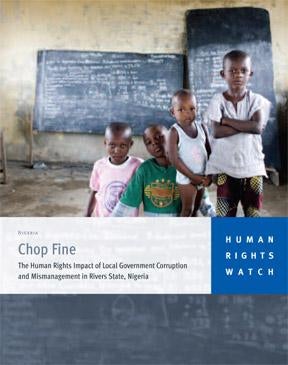
The Human Rights Impact of Local Government Corruption and Mismanagement in Rivers State, Nigeria
This 107-page report details the misuse of public funds by local officials in the geographic heart of Nigeria’s booming oil industry, and the harmful effects on primary education and basic health care. The report is based on scores of interviews in Rivers state with government and donor agency officials, civil servants, health care workers, teachers, civil society groups and local residents.
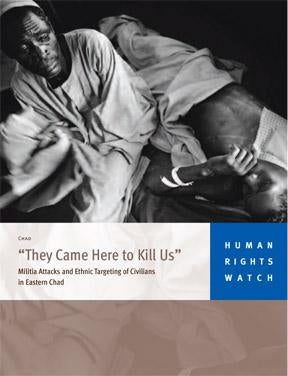
Militia Attacks and Ethnic Targeting of Civilians in Eastern Chad
This 70-page report documents a drastic deterioration in the human rights situation in eastern Chad, where more than 300 civilians were killed and at least 17,000 people displaced in militia violence in November 2006 alone. In most instances, civilians were targeted on the basis of ethnic identity.
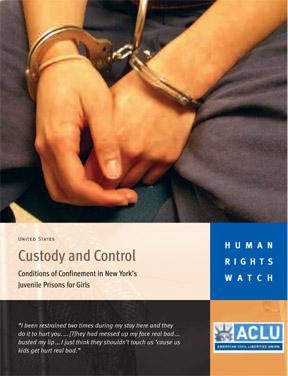
Conditions of Confinement in New York’s Juvenile Prisons for Girls
This 136-page report provides an in-depth look at the abuses and neglect suffered by girls confined in two remote New York State juvenile facilities known as Tryon and Lansing. The facilities are operated by the New York Office of Children and Family Services (OCFS) and are the only two higher-security facilities in New York State holding girls.
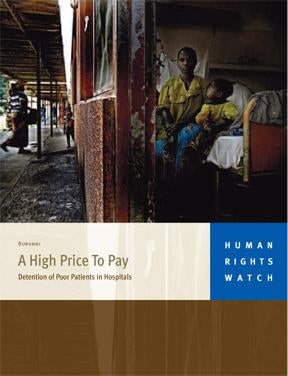
This 75-page report documents how Burundian hospitals in 2005 detained hundreds of indigent patients, sometimes in inhumane conditions. Many of those detained were women giving birth who unexpectedly needed caesarian deliveries.
The 2006 U.N. High Level Meeting on HIV/AIDS and Its Failure to Address the Human Rights Abuses Fueling the Pandemic
In this report, Human Rights Watch examines how the declaration from the United Nations High Level Meeting on HIV/AIDS addresses such critical issues as women’s and children’s rights, abuses faced by socially marginalized populations, and access to treatment.