Reports

Obstetric Violence in Sierra Leone

The 75-page report, “No Money, No Care: Obstetric Violence in Sierra Leone,” documents cases of verbal abuse, medical neglect, and abandonment of women and girls facing serious obstetric complications, practices that experts interviewed say are common. Many women interviewed said they were shamed and mistreated by healthcare providers for expressing pain, needing help, or for not having enough money to pay fees. Others described humiliating experiences in which healthcare providers treated them brusquely or withheld important health information. Some cases documented constitute obstetric violence, a largely unaddressed form of gender-based violence prevalent across the world.

Pregnant women sit in the waiting area at the pre-natal clinic of the Princess Christian Maternity Hospital
A woman looks out of the window of a damaged building

Search

  • September 23, 2009

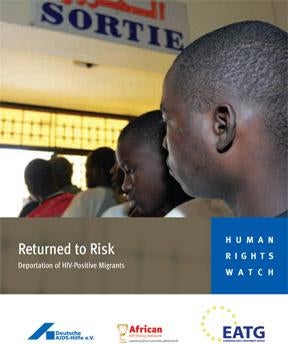
    Deportation of HIV-Positive Migrants

    This 27-page report was prepared by Human Rights Watch, Deutsche AIDS-Hilfe, the European AIDS Treatment Group, and the African HIV Policy Network.
  • August 10, 2009

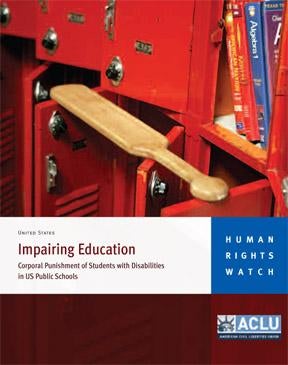
    Corporal Punishment of Students with Disabilities in US Public Schools

    In this 70-page report, the ACLU and Human Rights Watch found that students with disabilities made up 18.8 percent of students who suffered corporal punishment at school during the 2006-2007 school year, although they constituted just 13.7 percent of the total nationwide student population.
  • June 23, 2009

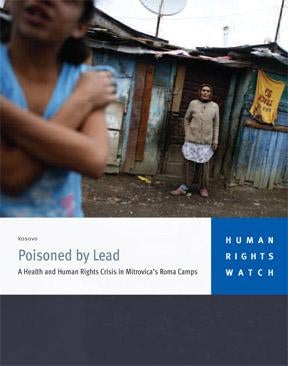
    A Health and Human Rights Crisis in Mitrovica’s Roma Camps

    This 68-page report tells the story of a decade of failure by the UN and others to provide adequate housing and medical treatment for the Roma, and the devastating consequences for the health of those in the camps.
  • June 18, 2009

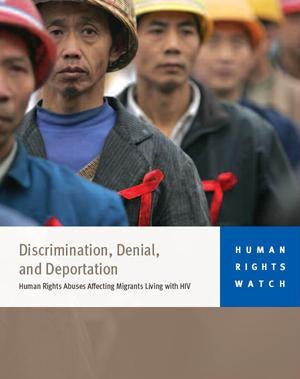
    Human Rights Abuses Affecting Migrants Living with HIV

    This 22-page report describes how discrimination and human rights abuses faced by migrant populations result in increased vulnerability to HIV infection and barriers to care and treatment.

  • June 16, 2009

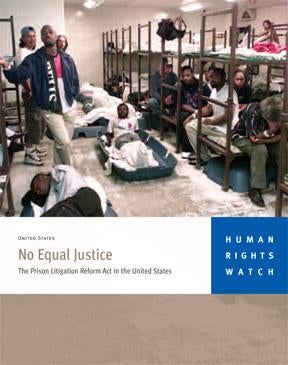
    The Prison Litigation Reform Act in the United States

    This 46-page report addresses a law passed by Congress in 1996 that singles out lawsuits brought by prisoners for a host of burdens and restrictions that apply to no one else.
  • March 24, 2009

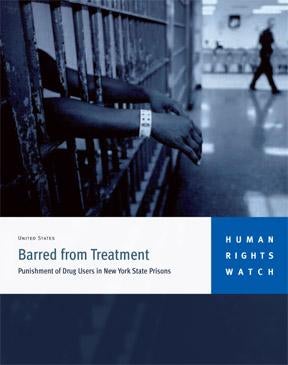
    Punishment of Drug Users in New York State Prisons

    In this 53-page report, Human Rights Watch found that New York prison officials sentenced inmates to a collective total of 2,516 years in disciplinary segregation from 2005 to 2007 for drug-related charges. At the same time, inmates seeking drug treatment face major delays because treatment programs are filled to capacity.

  • March 17, 2009

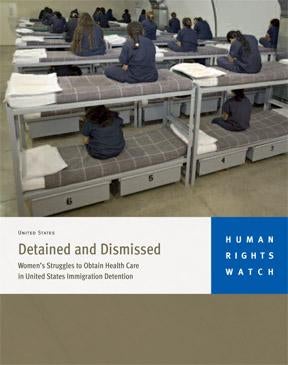
    Women’s Struggles to Obtain Health Care in United States Immigration Detention

    This 78-page Human Rights Watch report documents dozens of cases in which the immigration agency's medical staff either failed to respond at all to health problems of women in detention or responded only after considerable delays.
  • March 3, 2009

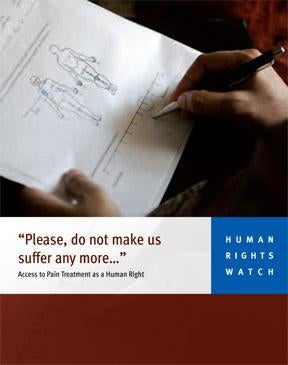
    Access to Pain Treatment as a Human Right

    In this 47-page report Human Rights Watch said that countries could significantly improve access to pain medications by addressing the causes of their poor availability.

  • January 22, 2009

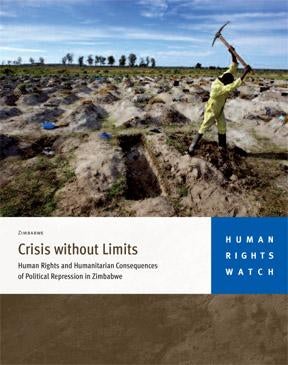
    Human Rights and Humanitarian Consequences of Political Repression in Zimbabwe

    This 33-page report details the Zimbabwean government's responsibility for the country's humanitarian crisis. A cholera epidemic has left over 2,000 Zimbabweans dead and another 39,000 ill. Over 5 million Zimbabweans face severe food shortages and are dependent on international aid.
  • December 16, 2008

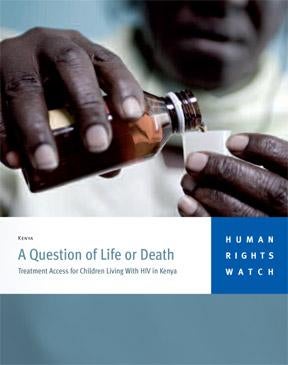
    Treatment Access for Children Living With HIV in Kenya

    In this 100-page report, Human Rights Watch documents how the government's HIV treatment program has failed to get lifesaving drugs to the majority of children who need them. If untreated, half of all children born with HIV will die before their second birthdays.
  • December 8, 2008

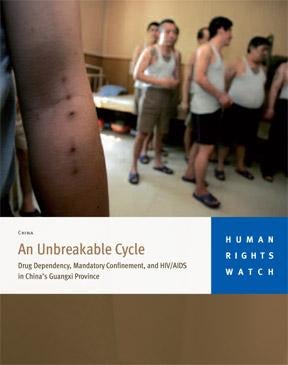
    Drug Dependency Treatment, Mandatory Confinement, and HIV/AIDS in China’s Guangxi Province

    In China, illicit drug use is an administrative offense and Chinese law dictates that drug users “must be rehabilitated.” In reality, police raids on drug users often drive them underground, away from methadone clinics, needle exchange sites, and other proven HIV prevention services.

  • November 18, 2008

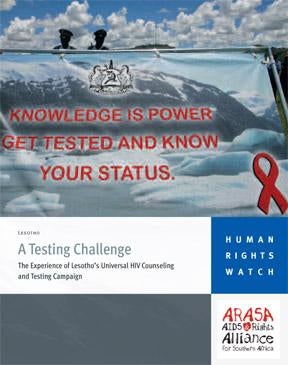
    The Experience of Lesotho’s Universal HIV Counseling and Testing Campaign

    This 60-page report found that the Know Your Status (KYS) campaign, begun in 2005 with the goal of testing 1.3 million people, was underfunded and had tested only 25,000 people by August 2007, four months before the campaign ended. Ambitious goals to train and pay thousands of lay counselors and expand support groups for people living with HIV were largely sidelined.
  • August 19, 2008

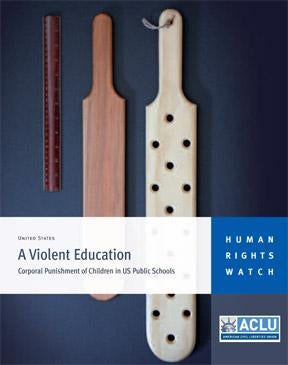
    Corporal Punishment of Children in US Public Schools

    In this 125-page report, the ACLU and Human Rights Watch found that in Texas and Mississippi children ranging in age from 3 to 19 years old are routinely physically punished for minor infractions such as chewing gum, talking back to a teacher, or violating the dress code, as well as for more serious transgressions such as fighting. Corporal punishment, legal in 21 states, typically takes the form of “paddling,” during which an administrator or teacher hits a child repeatedly on the buttocks with a long wooden board. The report shows that, as a result of paddling, many children are left injured, degraded, and disengaged from school.

  • July 8, 2008

    Lack of Access to Therapeutic Abortion in Peru

    This 52-page report documents the difficulties women face in accessing therapeutic abortion – those needed to save the life of the woman or avoid serious health risks – in Peru’s public health system. While no reliable statistics are available on how many women have been turned away from a legal abortion, in interviews with women, healthcare providers, rights activists and government officials, Human Rights Watch found that women in general lack accurate information about their right to a legal abortion, and public health care professionals are often unclear about the intent of laws guaranteeing women access to legal abortions.

  • June 19, 2008

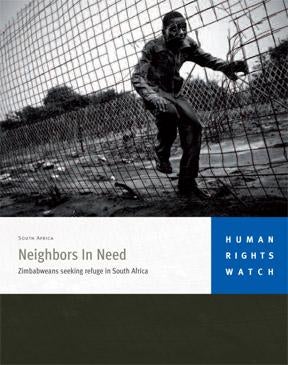
    Zimbabweans Seeking Refuge in South Africa

    This 119-page report examines South Africa’s decision to treat Zimbabweans merely as voluntary economic migrants and its failure to respond effectively to stop the human rights abuses and economic deprivation in Zimbabwe that cause their flight and to address their needs in South Africa. Human Rights Watch spoke to almost 100 Zimbabweans in South Africa about their plight.