Reports

Torture and Other Abuses Against Venezuelans in El Salvador’s Mega Prison

The 81-page report, “‘You Have Arrived in Hell’: Torture and Other Abuses Against Venezuelans in El Salvador’s Mega Prison,” provides a comprehensive account of the treatment of these people in El Salvador. In March and April 2025, the US government sent 252 Venezuelans, including dozens of asylum seekers, to the Center for Terrorism Confinement (Centro de Confinamiento del Terrorismo, CECOT) mega prison in El Salvador, despite credible reports of serious human rights abuses in El Salvador’s prisons. The Venezuelans were subject to refoulement—being sent to where they would face torture or persecution—arbitrary detention, enforced disappearance, torture, inhumane detention conditions and, in some cases, sexual violence.

A person sits inside a cell while a guard with a riot shield stands outside
A woman looks out of the window of a damaged building

Search

  • February 18, 2008

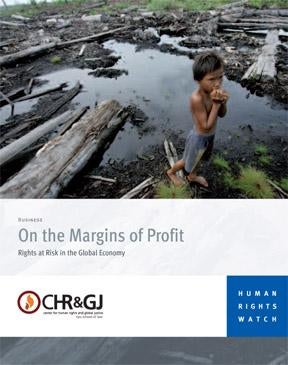
    Rights at Risk in the Global Economy

    This 53-page report was jointly prepared by Human Rights Watch and the Center for Human Rights and Global Justice. It illustrates how everyday business decisions have significant implications for the human rights of workers, local communities, suppliers, and consumers.

  • November 13, 2007

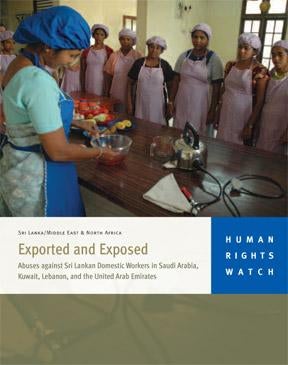
    Abuses against Sri Lankan Domestic Workers in Saudi Arabia, Kuwait, Lebanon, and the United Arab Emirates

    <table cellpadding="3" cellspacing="0"><tr><td><img src=" http://www.hrw.org/images/home/2007/100//slanka17328.jpg&quot; align="left" border="0" /></td> <td valign="top">The 131-page report documents the serious abuses that domestic workers face at every step of the migration process. It also shows how the Sri Lankan government and governments in the Middle East fail to protect these women.</td></tr></table>

  • October 3, 2007

    Submission from Human Rights Watch to the Committee on the Rights of the Child

    In this submission to the Committee on the Rights of the Child, Human Rights Watch provided information to the Committee on violations of the Convention on the Rights of the Child by the Bhutanese government against ethnic Nepali children in Bhutan and Bhutanese refugees in Nepal.
  • July 26, 2007

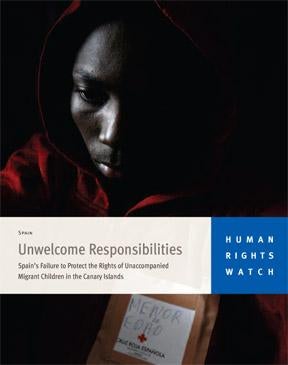
    Spain’s Failure to Protect the Rights of Unaccompanied Migrant Children in the Canary Islands

    This 115-page report documents how children stay in emergency centers for indefinite periods, in often overcrowded and poor conditions. The children told Human Rights Watch that they have been subjected to beatings by staff, and left unprotected from violence by their peers.
  • July 16, 2007

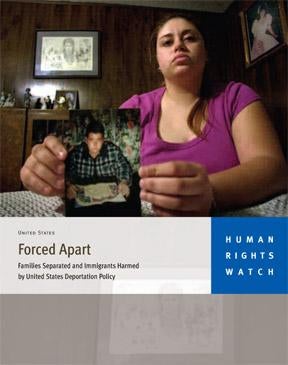
    Families Separated and Immigrants Harmed by United States Deportation Policy

    <table cellpadding="3" cellspacing="0"><tr><td><img src="http://hrw.org/images/home/2007/100/usdom16402.jpg&quot; align="left" border="0" /></td> <td valign="top">This 88-page report is the first comprehensive assessment of the deportation of non-citizens with criminal convictions and the impact on families and communities in the US.</td></tr></table>

  • June 15, 2007

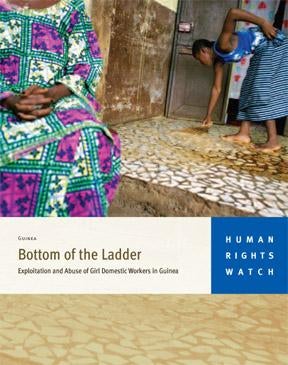
    Exploitation and Abuse of Girl Domestic Workers in Guinea

    This 110-page report documents how girls as young as 8 years old work up to 18 hours a day as domestic workers, frequently without pay, and are often insulted, beaten and raped by their employers.
  • June 1, 2007

    A Teenager Imprisoned at Guantanamo

    In this backgrounder, Human Rights Watch said that although Khadr was just 15 when he was arrested, the United States has completely ignored his juvenile status throughout his detention. The US government incarcerated him with adults, reportedly subjected him to abusive interrogations, failed to provide him any educational opportunities, and denied him any direct contact with his family.
  • February 27, 2007

    Unprotected Migrants in South Africa

    This 115-page report documents how state officials arrest, detain and deport undocumented foreign migrants, particularly those from Zimbabwe and Mozambique, in ways that contravene South Africa’s immigration law. The report also details how commercial farmers ignore basic employment law protections even when they employ documented foreign migrants and South Africans.

  • January 11, 2007

    Protecting Migrant Domestic Workers’ Rights

    While some governments have already started making meaningful reforms to help domestic workers work in greater safety and dignity, others are pursuing superficial changes that fail to address the root causes of exploitation and abuse. Governments around the world have choices to make about the route they will take; this essay identifies some of the positive options available.
  • November 11, 2006

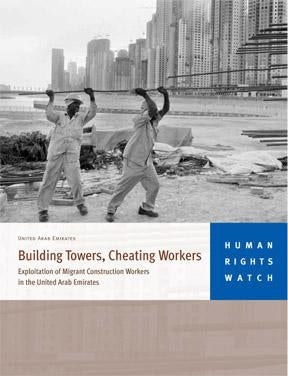
    Exploitation of Migrant Construction Workers in the United Arab Emirates

    Based on extensive interviews with workers, government officials and business representatives, this 71-page report documents serious abuses of construction workers by employers in the United Arab Emirates.
  • September 12, 2006

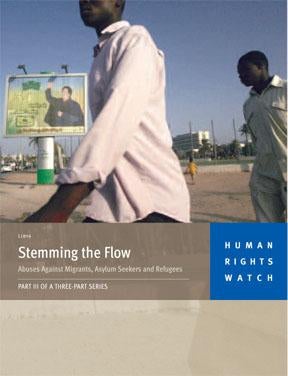
    Abuses Against Migrants, Asylum Seekers and Refugees

    This 135-page report documents how Libyan authorities have arbitrarily arrested undocumented foreigners, mistreated them in detention, and forcibly returned them to countries where they could face persecution or torture, such as Eritrea and S
  • August 8, 2006

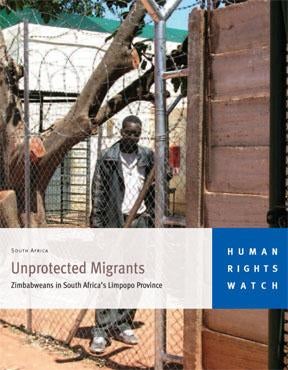
    Zimbabweans in South Africa’s Limpopo Province

    <table cellpadding="3" cellspacing="0"><tr><td><img src="http://hrw.org/images/home/2006/100/safric13923.jpg&quot; align="left" border="0" /></td> <td valign="top">This 54-page report documents how state officials arrest, detain and deport undocumented foreign migrants in the northern border province of Limpopo in ways that flout South Africa’s immigration law.</td></tr></table>

  • July 27, 2006

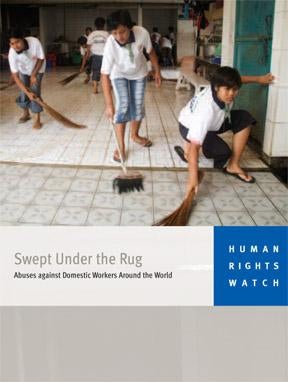
    Abuses against Domestic Workers Around the World

    This 93-page report synthesizes Human Rights Watch research since 2001 on abuses against women and child domestic workers originating from or working in El Salvador, Guatemala, Indonesia, Malaysia, Morocco, the Philippines, Saudi Arabia, Singapore, Sri Lanka, Togo, the United Arab Emirates, and the United States.

  • June 16, 2006

    FNL Child Soldiers in Burundi

    During the thirteen years of civil war in Burundi, children were recruited and used as combatants and general help by all sides in the conflict.