The 75-page report, “No Money, No Care: Obstetric Violence in Sierra Leone,” documents cases of verbal abuse, medical neglect, and abandonment of women and girls facing serious obstetric complications, practices that experts interviewed say are common. Many women interviewed said they were shamed and mistreated by healthcare providers for expressing pain, needing help, or for not having enough money to pay fees. Others described humiliating experiences in which healthcare providers treated them brusquely or withheld important health information. Some cases documented constitute obstetric violence, a largely unaddressed form of gender-based violence prevalent across the world.
Deinstitutionalization of Persons with Intellectual or Mental Disabilities in Croatia
This 74-page report documents the plight of the more than 9,000 persons with intellectual or mental disabilities living in institutions in Croatia and the lack of community-based programs for housing and support.
Government Failure to Provide Palliative Care for Children in Kenya
This 78-page report found that most Kenyan children with diseases such as cancer or HIV/AIDS are unable to get palliative care or pain medicines. Kenya’s few palliative care services provide counseling and support to families of chronically ill patients, as well as pain treatment, but lack programs for children.
Discrimination and Violence against Women with Disabilities in Northern Uganda
This 73-page report describes frequent abuse and discrimination by strangers, neighbors, and even family members against women and girls with disabilities in the north. Women interviewed for the report said they were not able to get basic provisions such as food, clothing, and shelter in camps for displaced persons or in their own communities.
Lack of Accountability for Reproductive Rights in Argentina
This 52-page report documents the many obstacles women and girls face in getting the reproductive health care services to which they are entitled, such as contraception, voluntary sterilization procedures, and abortion after rape.
Mental Disability, Unfair Hearings, and Indefinite Detention in the US Immigration System
This 98-page report says that immigrants with mental disabilities are often unjustifiably detained for years on end, sometimes with no legal limits. The report documents case after case in which people with mental disabilities were prevented from making claims against deportation – including claims of US citizenship – because they were unable to represent themselves.
Barriers to Fistula Prevention and Treatment in Kenya
This 82-page report describes the devastating condition facing women with fistula in Kenya and the wide gap between government's policies to address reproductive health and the reality of women's daily lives.
This 42-page report collected comprehensive testing data from 127 of 264 jurisdictions in Illinois and found that only 1,474 of 7,494 sets of physical evidence, known as "rape kits," booked into evidence since 1995 could be confirmed as tested. That suggests 80 percent of rape kits may never have been examined in the state.
In interviews around the world, hundreds of women and girls have described to Human Rights Watch the pursuit of reproductive health care as an obstacle course. Logistical, cultural, and financial barriers to services and information, discrimination, and abusive health providers block the way.
This 135-page report documents the failure of the Zambian prison authority to provide basic nutrition, sanitation, and housing for prisoners, and of the criminal justice system to ensure speedy trials and appeals, and to make the fullest use of non-custodial alternatives.
Segregation of HIV-Positive Prisoners in Alabama and South Carolina
This 45-page report says that prisoners in the HIV units are forced to wear armbands or other indicators of their HIV status, are forced to eat and even worship separately, and are denied equal participation in prison jobs, programs, and re-entry opportunities that facilitate their transition back into society.
The Illegal Arrest, Arbitrary Detention and Torture of People Who Use Drugs in Cambodia
In this 93-page report Human Rights Watch documents detainees being beaten, raped, forced to donate blood, and subjected to painful physical punishments such as "rolling like a barrel" and being chained while standing in the sun.
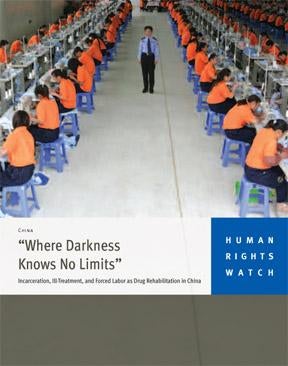
Incarceration, Ill-Treatment and Forced Labor as Drug Rehabilitation in China
This 37-page report based on research in Yunnan and Guangxi provinces, documents how China's June 2008 Anti-Drug Law compounds the health risks of suspected illicit drug users by allowing government officials and security forces to incarcerate them for up to six years. The incarceration is without trial or judicial oversight.
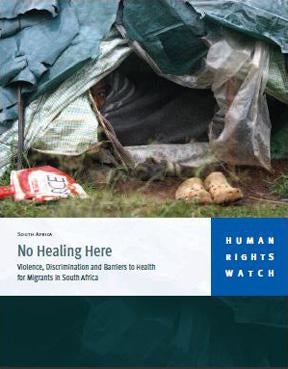
Violence, Discrimination and Barriers to Health for Migrants in South Africa
This 89-page report describes how harassment, lack of documentation, and the credible fear of deportation prevent many newcomers from seeking medical treatment even though South African law and policy state that asylum seekers, refugees, and migrants have a right to care.
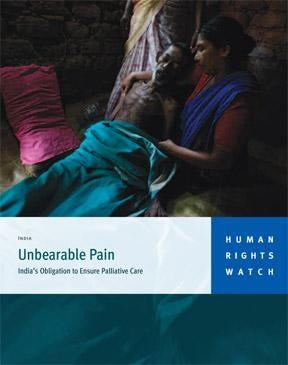
This 102-page report found that many major cancer hospitals in India do not provide patients with morphine, despite the fact that more than 70 percent of their patients are incurable and likely to require pain treatment and palliative care. Health centers offering services to people living with HIV similarly do not have morphine or doctors trained to prescribe it.
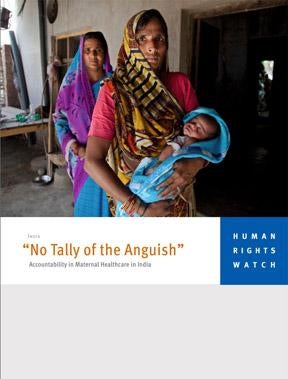
This 150-page report documents repeated failures both in providing health care to pregnant women in Uttar Pradesh state in northern India and in taking steps to identify and address gaps in care.