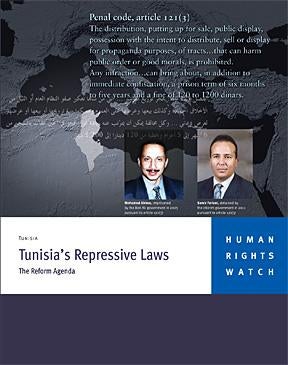
The 49-page report, “‘We Are Living on Borrowed Time’: Repression of Civil Society in Tunisia” documents the Tunisian authorities’ escalating repression of local and international civil society groups, workers, members, and affiliates through the weaponization of abusive prosecutions, arbitrary arrests, detention, financial and criminal investigations, mass suspensions, and threats of dissolution.
This 48-page report presents the stories of 11 prominent Saudi social and political rights activists and their struggles to resist government efforts to suppress them.
Attacks on Journalists under Yemen’s New Government
This 45-page report finds that while Yemenis generally enjoy greater freedom of expression since Hadi replaced Ali Abdullah Saleh as president in February 2012 after three decades of rule, this newfound freedom has been tempered by a rising incidence of threats and violence against the media.
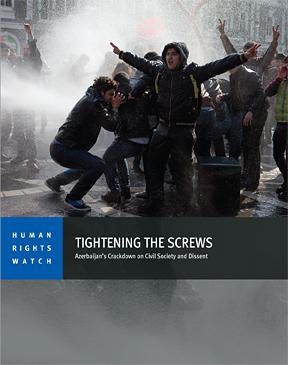
Azerbaijan’s Crackdown on Civil Society and Dissent
This 100-page report documents the dramatic deterioration of the government’s record on freedom of expression, assembly, and association in the past 18 months. The authorities have arrested dozens of political activists on bogus charges, imprisoned critical journalists, broken up peaceful public demonstrations, and adopted legislation imposing new restrictions on fundamental freedoms.
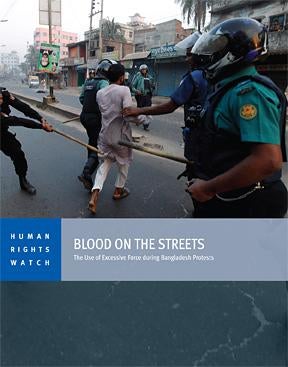
The Use of Excessive Force During Bangladesh Protests
The 48-page report is based on 95 interviews with victims and their family members, witnesses, human rights defenders, journalists, and lawyers. The report documents case after case in which police, the paramilitary Rapid Action Battalion (RAB), and the Border Guards Bangladesh (BGB) opened fire into crowds or beat protesters in a brutal and unlawful manner.
This 87-page report examines restrictive laws and policies that stifle civic and political groups and trade unions. The report shows how authorities use unjust laws to restrict freedom of association by arbitrarily rejecting registration applications and intrusively supervising independent organizations.
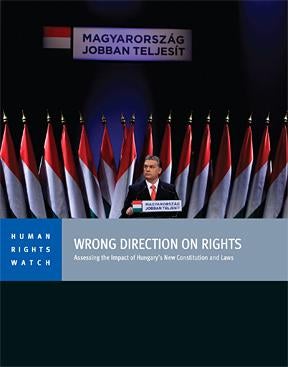
Assessing the Impact of Hungary’s New Constitution and Laws
This 29-page report analyzes the new constitution and laws and their negative effects on human rights and the rule of law. It shows how the government has largely ignored criticism from the EU and the Council of Europe and, through further constitutional changes, sought to reverse binding rulings by Hungary’s Constitutional Court upholding fundamental rights.
Crackdown on Russia’s Civil Society after Putin’s Return to the Presidency
This 78-page report describes some of the changes since Putin returned to the presidency in May 2012. The authorities have introduced a series of restrictive laws, begun a nationwide campaign of invasive inspections of nongovernmental organizations, harassed, intimidated, and in a number of cases imprisoned political activists, and sought to cast government critics as clandestine enemies.
The 107-page report documents the government’s failure to confront militant groups whose thuggish harassment and assaults on houses of worship and members of religious minorities has become increasingly aggressive. Those targeted include Ahmadiyahs, Christians, and Shia Muslims.
Yemen’s Failed Response to the “Friday of Dignity” Killings
This 69-page report found that Yemen's previous government’s criminal investigation government, into the shooting of demonstrators during the so-called Friday of Dignity Massacre on March 18, 2011, was fraught with political interference and ignored evidence implicating government officials.
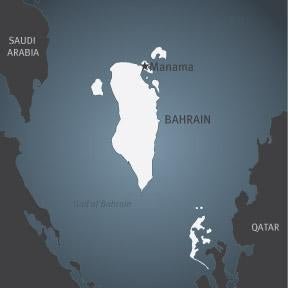
The 60-page report documents the experiences of dozens of rights defenders, journalists and bloggers, and lawyers whom security and intelligence forces targeted because they spoke out against the government.
Intimidation and Obstruction of Civil Society in Uganda
This 50-page report documents increasing government attacks on organizations whose focus includes oil revenue transparency, land acquisition compensation, legal and governance reform, and protection of human rights, particularly the rights of lesbian, gay, bisexual, and transgender (LGBT) people.
The 13-page report describes increasing incidents of political violence and intimidation. Human Rights Watch called on the government of Angola to promptly address these concerns, and urged the Southern African Development Community and the capital's foreign diplomats to raise these issues with the government.
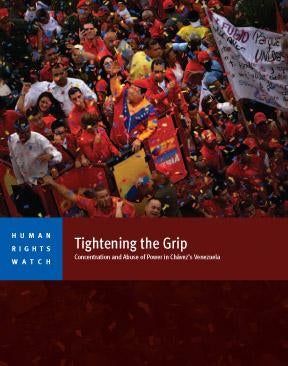
Concentration and Abuse of Power in Chávez's Venezuela
This report documents how the accumulation of power in the executive and the erosion of human rights protections have allowed the Chávez government to intimidate, censor, and prosecute critics and perceived opponents in a wide range of cases involving the judiciary, the media, and civil society.
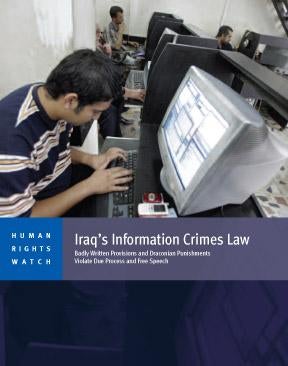
Badly Written Provisions and Draconian Punishments Violate Due Process and Free Speech
This report analyzes Iraq's new draft law on information technology crimes. It finds that the draft law is part of a broad effort by authorities to suppress peaceful dissent by criminalizing legitimate information sharing and networking activities.