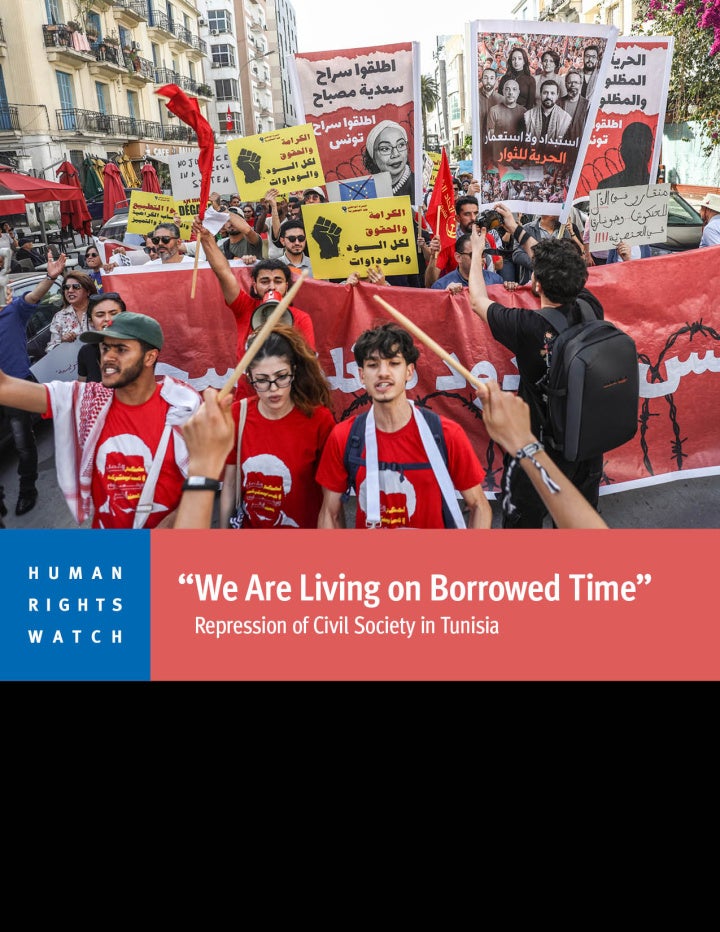
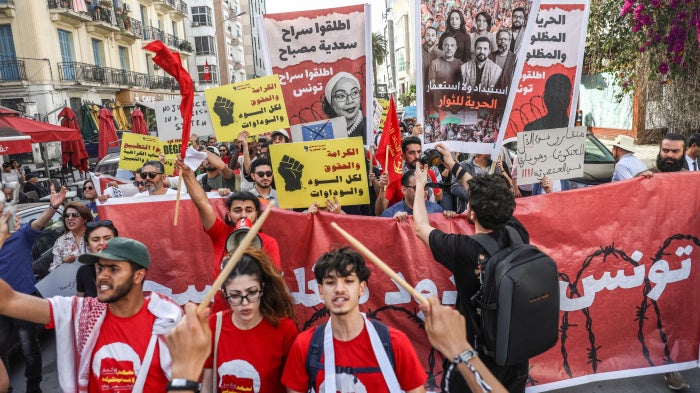
The 49-page report, “‘We Are Living on Borrowed Time’: Repression of Civil Society in Tunisia” documents the Tunisian authorities’ escalating repression of local and international civil society groups, workers, members, and affiliates through the weaponization of abusive prosecutions, arbitrary arrests, detention, financial and criminal investigations, mass suspensions, and threats of dissolution.
A Report Prepared for the Free Media Seminar Commission on Security and Cooperation in Europe
The Free Media Seminar of the Commission on Security and Cooperation in Europe is taking place at a critical time. First, because developments throughout the region suggest that protection for media freedoms fall well short of international standards.
Freedom of expression on campus in Indonesia became a major issue in mid-1993 with national attention focused on three court cases and the banning of a student newspaper. All of the cases illustrate the tight limits that the Indonesian government places on written and spoken criticism.
The apparent intensity of public debate, variety of publications and the wealth of artistic achievements in the Islamic Republic of Iran create an illusion of unrestricted discourse. The limits on expression are defined, however, in complex and often arbitrary ways by a government beset by internal power struggles and intolerance.
Between April 29 and May 28, in a move unprecedented since Lebanon’s civil war, the Hrawi government shut down 4 news organizations and filed criminal charges against 4 journalists for violating Lebanon’s restrictive press regulation. The recent measures recall the fall of 1976, when the newly-arrived Syrian troops forcibly shut down 5 newspapers in Beirut.
Britain has historically been a society with great respect for the tradition of freedom of the press. In recent years, however, there has been a significant increase in restrictions on liberty. Not only have press freedoms been threatened with greater restrictions, but broadcasting has faced similar challenges, and the right to protest has been limited.
The Case of Jakarta, Jakarta and the Dili Massacre
Jakarta, Jakarta, better known as JJ, is a weekly magazine which its editors like to think of as Indonesia's answer to Paris-Match and its reporters treat as something more akin to New York's Village Voice. A brash, colorful, trendy magazine, JJ has been consistently on the limits of what Indonesian authorities regard as acceptable journalism.
On April 8, 1991, Arswendo Atmowiloto, a young newspaper editor in Jakarta was sentenced to five years in prison. His arrest, trial and conviction on charges of insulting a religion raise questions about the relationship between freedom of expression, religious sensitivity, and political manipulation in an overwhelmingly Muslim society.
On January 28, shortly after the start of the Persian Gulf War, the Fund for Free Expression issued "Freedom of Expression and the War," a report on U.S. Defense Department regulations that impede press coverage in the Gulf, and on other U.S. war-related censorship issues. This newsletter updates that information in light of developments to date.
Press and Speech Restrictions in the Gulf and F.B.I. Activity in U.S. Raise First Amendment Issues
War is the most profound action any government can take, and for that reason the decision to wage and conduct it must be subject to the continuing scrutiny of a well-informed public. In recent U.S.
The Committee to Protect Journalists and the the Americas Watch mission to Haiti from August 12-15,1984 to investigate a recent crackdown on the press.
A Fund for Free Expression Report by Meron Benvenisti
In its pre-publication review of Palestinian newspapers and magazines, Israel’s military censor blocks the publication not only of supposed national security secrets or material likely to incite violence. Rather, the censor’s primary concern, as shown through a study of banned materials, is to eradicate expression that could foster Palestinian nationalist feelings; suggests Palestinians are a nation with a national heritage; denies Israel’s legitimacy; or imputes behavior to Israeli officials that suggests illegitimacy. Palestinian editors must submit for review all material meant for publication, including photos, advertisements, and crossword puzzles. The censor’s list of banned books included some 1,600 titles, at the time this report was prepared.