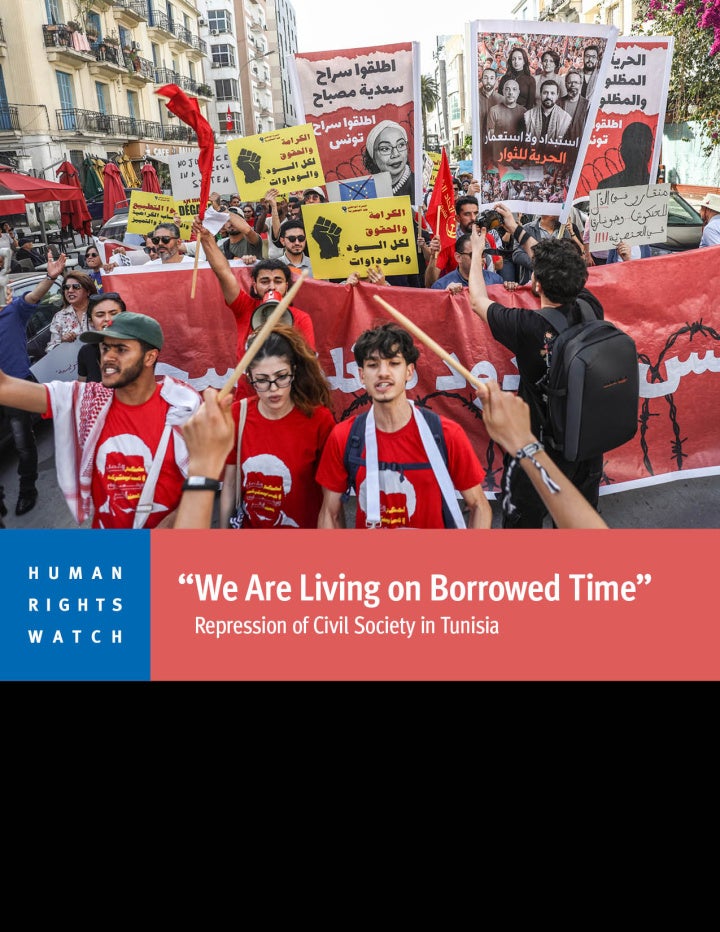
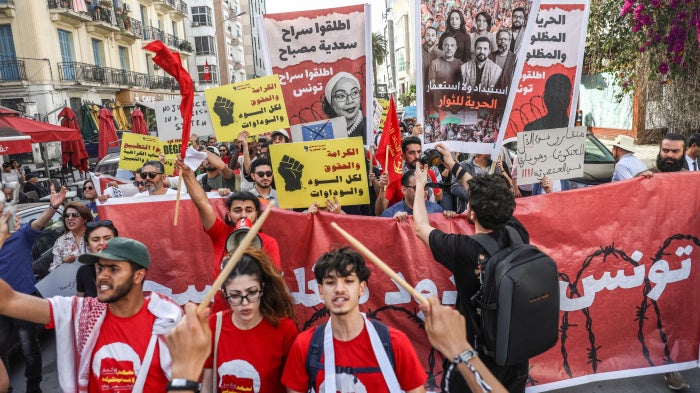
The 49-page report, “‘We Are Living on Borrowed Time’: Repression of Civil Society in Tunisia” documents the Tunisian authorities’ escalating repression of local and international civil society groups, workers, members, and affiliates through the weaponization of abusive prosecutions, arbitrary arrests, detention, financial and criminal investigations, mass suspensions, and threats of dissolution.
Domitien Ndayizeye, a Hutu of the Democratic Front for Burundi (Front pour la Dmocratie au Burundi, Frodebu), will take over the presidency of Burundi from Major Pierre Buyoya, on April 30. The new government must deliver on promises to end a nine-year long war and to deliver justice for the many violations of international humanitarian law committed during the war.
Chile's record on freedom of expression has improved little since the end of military rule, Human Rights Watch charged in this report. Although the country has made great progress in prosecuting the abuses of the Pinochet dictatorship, the same repressive defamation laws that the military regime regularly employed against its critics are still in use.
This report documents the Chinese government’s reaction to the efforts of a small number of democracy activists in 1998 and 1999 to take the first steps toward establishing a legal opposition party.
On December 5, Uzbekistan's voters will go to the polls for the second time since independence in 1991 to elect 250 deputies to the Olii Majlis, or parliament. Despite government claims that elections will be free and pluralistic, the parliamentary and local council elections will be a highly-controlled exercise in Potemkin democracy.
Despite legislation protecting freedom of speech and the press in Tajikistan, in practice freedom of expression is severely limited. For six years major opposition parties and their newspapers were banned. The government of Tajikistan continues to employ a variety of tactics to limit political content in the remaining media.
In a new report released ahead of this week's parliamentary elections in Kazakhstan, Human Rights Watch charged that the government was repeating the manipulation used in the January election of President Nazarbaev. These tactics, which include the banning of opposition candidates and censoring the media will taint the polls for the lower house of parliament, to be elected on October 10.
This report examines the state of free expression in Turkey. It focuses largely on the print and broadcast media, and to a lesser extent on freedom of speech in politics.
The New Amendments to the Press and Publications Law
Since Jordan signed a peace treaty with Israel in 1994, there has been growing tension between the Jordanian government and the independent press, particularly the kingdom's small-circulation weekly newspapers. Journalists and editors have been arrested, detained and prosecuted for violations of both the penal code and provisions of the press and publications law of 1993.
Lebanon's airwaves had long been unregulated, with scores of unlicensed private broadcasters that ranged in political diversity from the radio station of the Lebanese Communist Party to the television station of Hizballah. The broadcasting community included 52 television stations and over 120 radio stations for a population of three million.
Despite the government of Uzbekistan's professed commitment to freedom of the press—made both explicitly and publicly over the past two years—state censorship of the media remains pervasive and intimidation of journalists is rampant. The tone and subject matter of articles published in Uzbekistan is strictly controlled by the government.
Letter from Human Rights Watch and the New Cambodian Press Law
Over the last year, the Royal Cambodian Government has waged a campaign to silence its critics, targeting independent newspapers and political figures for prosecution and harassment. On more than a dozen occasions, it has suspended, shut or confiscated newspapers or brought criminal complaints against journalists.
Heightened political tension has been characterized by physical attacks on journalists critical of the former Meciar government. HRW/Helsinki urges the interim government to give special consideration to the concerns outlined in this report and to disassociate itself from the media policies of its predecessor in order to create an environment in which the independent press can flourish.
Despite the considerable progress that has been made to ensure an independent press both in practice and in law, there is troubling evidence of official harassment of journalists whose views are critical of the ruling powers, ranging from selective denial of press credentials to the imprisonment of a journalist who wrote an allegory considered defamatory of the President of Romania.