How Kazakhstan’s Financing Terrorism List Compounds Human Rights Harms
The 29-page report, “Politically Targeted, Economically Isolated: How Kazakhstan’s Financing Terrorism List Compounds Human Rights Harms,” documents that people on Kazakhstan’s Financing Terrorism List face financial restrictions that cause them significant hardship. The restrictions lead to violations of rights guaranteed by the International Covenant on Economic, Social, and Cultural Rights (ICESCR) to which Kazakhstan is a state party, including the rights to an adequate standard of living and access to work and social security benefits. This is particularly egregious when the prosecutions are for alleged nonviolent “extremist” or “terrorist” crimes, that should not be considered crimes in the first place.
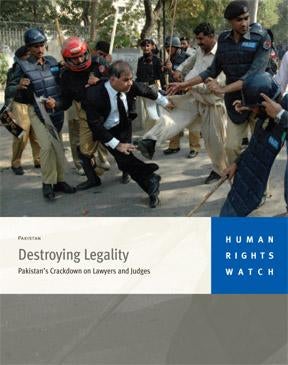
This 84-page report presents eyewitness accounts of police violence, arbitrary arrests, and mistreatment of detained lawyers across Pakistan since November 3, 2007. The report details police beatings of lawyers peacefully protesting government policies from within the grounds of Pakistan’s high courts. It is the most detailed account to date of the November crackdown, showing how Musharraf used the emergency as an excuse to disempower the judiciary, the legal profession and civil society in the name of fighting terrorism and Islamic extremists.
This 26-page briefing paper analyzes Home Office counterterrorism proposals from July in light of the UK’s international human rights obligations. The measures are likely to form part of a draft counterterrorism bill to be presented to parliament later this year.
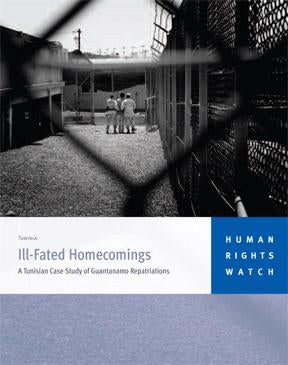
This 43-page report describes the experiences of the two Tunisians returned home 11 weeks ago and urges the US government to set up a process that would give detainees advance notice of their transfer, and allow them the opportunity to contest it before a federal court if they fear torture or ill-treatment upon return to their home countries.
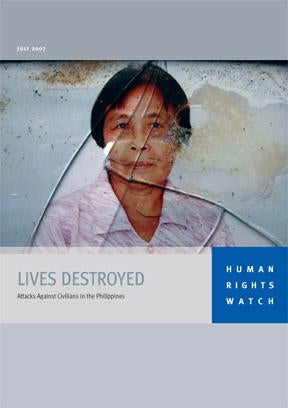
Violent Islamist groups in the Philippines have killed or injured more than 1,700 people in bombings and other attacks since 2000. The attacks, mostly in Mindanao, Basilan, Jolo, and other southern islands, have also included kidnappings, executions, and shootings.
Intervention Submitted by Human Rights Watch and AIRE Centre
The third party intervention by Human Rights Watch and the AIRE Centre in the case of Ismoilov and Others v. Russia analyzes states’ reliance upon diplomatic assurances against torture and ill-treatment in extradition context. The intervention includes relevant international, regional, and national jurisprudence regarding the use of assurances against torture.
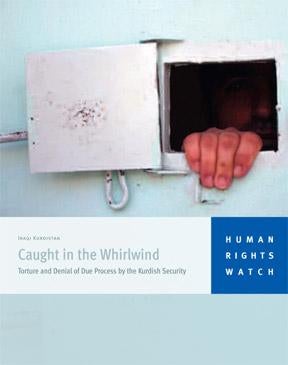
Torture and Denial of Due Process by the Kurdistan Security Forces
This 58-page report documents widespread and systematic mistreatment and violations of due process rights of detainees at detention facilities by Kurdistan security forces. The report is based on research conducted in Iraq’s Kurdistan region from April to October 2006, including interviews with more than 150 detainees.
Since September 11, 2001, Britain has introduced a series of counterterrorism measures that violate human rights. The policies have weakened the global ban on torture and ill-treatment, restricted the right to liberty without appropriate safeguards, and unduly interfered with the right to freedom of expression.
U.S. Responsibility for Enforced Disappearances in the “War on Terror”
This 21-page briefing paper, published by six leading human rights organizations, includes the names and details of 39 people who are believed to have been held in secret US custody abroad and whose current whereabouts remain unknown. The briefing paper also names relatives of suspects who were themselves arrested and detained, including children as young as seven.
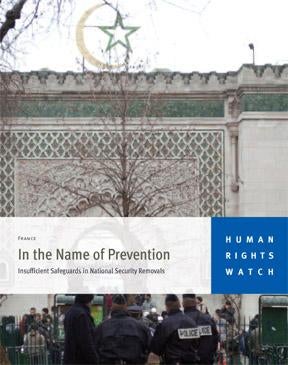
Insufficient Safeguards in National Security Removals
This 92-page report examines administrative expulsions of imams and others deemed to foment extremism. It also documents the criminal deportation of persons convicted of terrorism-related offenses. Based on 19 case studies, the report concludes that the procedures lack the necessary guarantees to prevent serious violations of France’s obligations under international human rights law.
In this backgrounder, Human Rights Watch said that although Khadr was just 15 when he was arrested, the United States has completely ignored his juvenile status throughout his detention. The US government incarcerated him with adults, reportedly subjected him to abusive interrogations, failed to provide him any educational opportunities, and denied him any direct contact with his family.
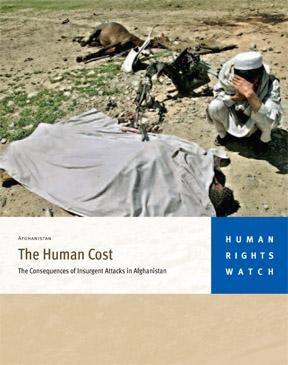
The Consequences of Insurgent Attacks in Afghanistan
This 116-page report describes how Afghan insurgent groups, primarily Taliban and Hezb-e Islami forces, sharply escalated bombing and other attacks in 2006 and early 2007. The report is based on dozens of interviews with civilian victims of attacks and their families and a lengthy review of available documents and records.
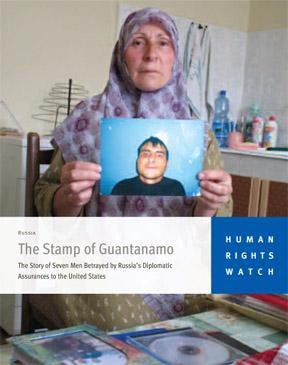
The Story of Seven Men Betrayed by Russia’s Diplomatic Assurances to the United States
This 43-page report reconstructs the experiences of the detainees after being returned to Russia in March 2004, based on interviews with three of the detainees, their family members, lawyers, and others. Access to the ex-detainees is limited because three of them are in prison and the rest have either managed to leave the country or are in hiding.
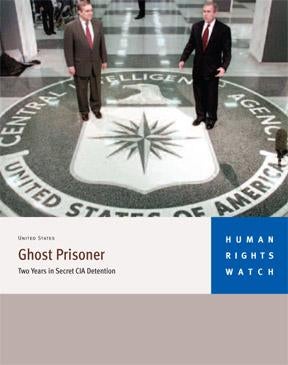
This 50-page report contains a detailed description of a secret CIA prison from a Palestinian former detainee who was released from custody. The report provides the most comprehensive account to date of life in a secret CIA prison, as well as information regarding 38 possible detainees.
This document sets out developments in the use of diplomatic assurances in select individual cases since the publication of our April 2005 report “Still at Risk: Diplomatic Assurances No Safeguard Against Torture.
This 45-page paper documents how the UK government is undermining the torture ban, even as it proclaims its efforts to combat torture worldwide. Torture, including returns to risk of torture, is prohibited by international law. No exceptions are allowed, even in time of war or national emergency.