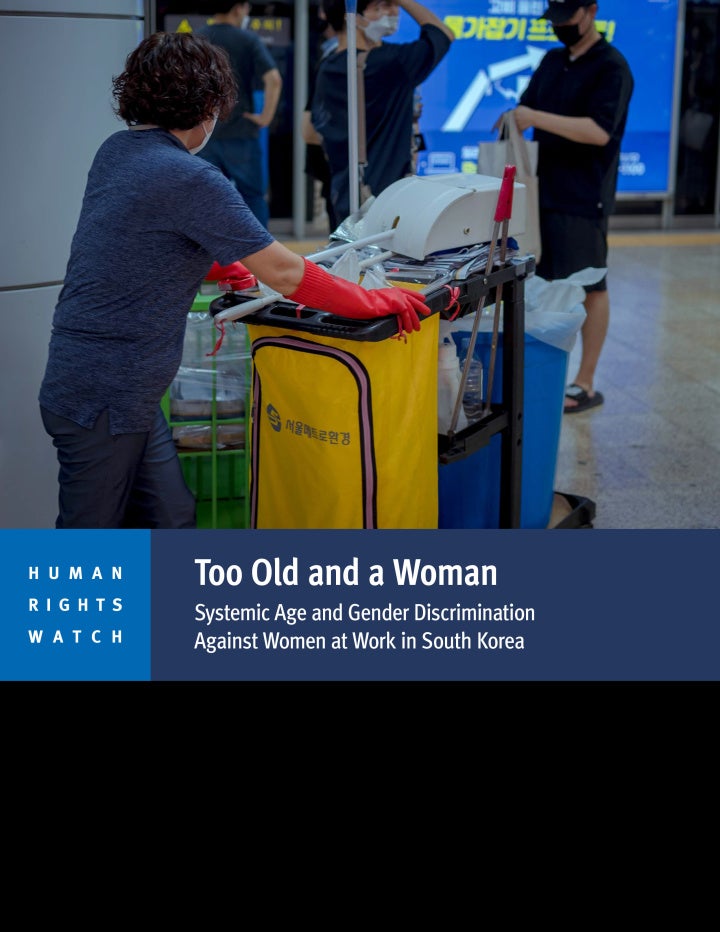
Systemic Age and Gender Discrimination Against Women at Work in South Korea
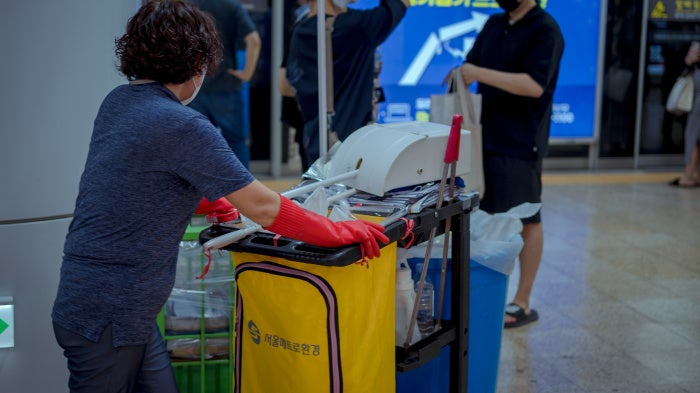
The 92-page report, “Too Old and a Woman: Systemic Age and Gender Discrimination Against Women at Work in South Korea,” documents that social attitudes toward education, unfair treatment in hiring, disrupted careers due to family responsibilities, limited promotion opportunities, glass ceilings, and sexual harassment create a disadvantage for South Korean women throughout their working lives. As women get older, their work opportunities narrow to a handful of low-paid, insecure jobs, and the gender pay gap increases. By the time they are eligible for pensions, women face a significant gender pension gap.
Repression of Women and Girls in Western Afghanistan
Afghan women and girls have suffered mounting abuses, harassment and restrictions of their fundamental human rights during 2002, Human Rights Watch said in a new report.
Trafficking of Women and Girls To Post-Conflict Bosnia and Herzegovina for Forced Prostitution
Traffickers who have forced thousands of women and girls into prostitution in Bosnia and Herzegovina are not being apprehended for their crimes. Local corruption and the complicity of international officials in Bosnia have allowed a trafficking network to flourish, in which women are tricked, threatened, physically assaulted and sold as chattel, the report said.
China must end the forcible return of North Korean asylum-seekers and the arrest and harassment of aid workers who assist them, Human Rights Watch said in a new report released today.
Women's rights activists throughout the world - of every political stripe, faith, sexual orientation, nationality, and ethnicity - mobilized at each step of the International Criminal Court (ICC) process. They have worked to create an independent court to afford women greater protection from violations of human rights and humanitarian law.
As Afghan and United Nations officials prepare for the forthcoming loya jirga (grand national assembly), as called for in the 2001 Bonn Agreement to choose Afghanistan's next government, ordinary Afghans are increasingly terrorized by the rule of local and regional military commanders - warlords - who are reasserting their control over large areas of Afghanistan.
Afghan women continue to face serious threats to their physical safety, which denies them the opportunity to exercise their basic human rights and to participate fully in the rebuilding of their country.
State Participation and Complicity in Communal Violence in Gujarat
State officials of Gujarat, India were directly involved in the killings of hundreds of Muslims since February 27 and are now engineering a massive cover-up of the state's role in the violence, Human Rights Watch charged in a new report released today.
Abuses Against Ethnic Pashtuns in Northern Afghanistan
Since the collapse of the Taliban regime in northern Afghanistan in November 2001, ethnic Pashtuns throughout northern Afghanistan have faced widespread abuses including killings, sexual violence, beatings, extortion, and looting.
Human Rights Watch has reviewed the most recent draft of the Greek trafficking bill and offers these comments to the bill's drafters and to parliamentarians who will debate the law at some time in the near future.
The Human Rights Watch report, "Closed Door Policy: Afghan Refugees in Pakistan and Iran," cautions against a hasty repatriation of Afghan refugees while conditions in Afghanistan remain unstable. Human Rights Watch interviewed many refugees, including members of various ethnic groups, and women and girls, who fear continuing human rights abuses inside Afghanistan.
Women in Guatemala's largest female-dominated labor sectors face persistent sex discrimination and abuse, Human Rights Watch charges in this report. The 147-page report examines two sectors, export processing and private households, which employ tens of thousands of women sewing clothes for sale in the United States and working as live-in domestic workers.
Concern for human rights in Saudi Arabia has ranked extremely low on the agenda of the U.S., although Washington has long been well aware that the country remains a veritable wasteland when it comes to respect for the fundamental human rights of its 22 million residents, including some six to seven million foreign workers and their families.
The report on Turkey, its fourth (including the Progress Reports that pre-dated Turkey's formal candidacy), has become an important annual measure of progress on the political elements of the Copenhagen Criteria for membership, which require "stability of institutions guaranteeing democracy, the rule of law, human rights, and respect for and protection of minorities."
Systematic Violations of Women's Rights in Afghanistan
Women in Afghanistan have suffered a catastrophic assault on their human rights during more than twenty years of war and under the repressive rule of the Taliban.