Reports

France’s Persistent Education Shortcomings in Mayotte

The 73-page report, “Exceptional Failure: France’s Persistent Education Shortcomings in Mayotte,” finds that Mayotte’s municipalities often impose significant and arbitrary barriers to school enrollment, including by demanding documentation not required by law. Children who are enrolled often attend overcrowded schools ill-equipped to meet their basic needs, such as access to drinking water, sanitation, nutritious food, and a safe learning environment. Children living in informal settlements known as bangas, are particularly affected, as are children from migrant families.

A boy looks over a school fence
A woman looks out of the window of a damaged building

Search

  • July 28, 2021

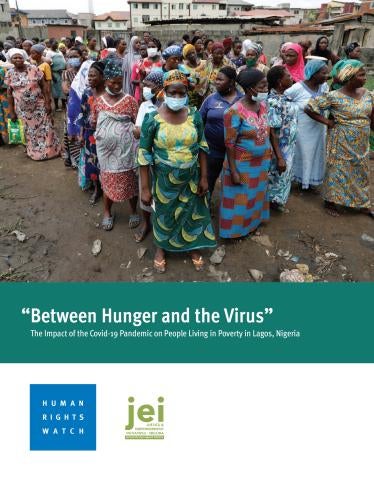
    The Impact of the Covid-19 Pandemic on People Living in Poverty in Lagos, Nigeria

    The 87-page report, “‘Between Hunger and the Virus,’ The Economic Impact of the Covid-19 Pandemic on People Living in Poverty in Lagos, Nigeria,” documents how a five-week lockdown, rising food prices, and a prolonged economic downturn have had a devastating impact on informal workers, slum dwellers, and other urban poor families in Lagos. The absence of a functioning social security system meant that government assistance, including cash transfers and food handouts, reached only a fraction of people going hungry.

    map content
    video content
    202107africa_nigeria_cover
  • July 20, 2021

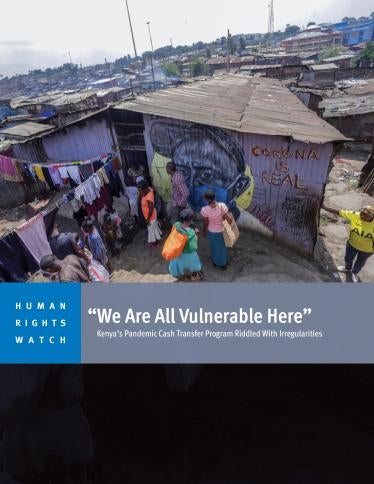
    Kenya’s Pandemic Cash Transfer Program Riddled With Irregularities

    The 66-page report, “‘We Are All Vulnerable Here’: Kenya’s Pandemic Cash Transfer Program Riddled with Irregularities” found that only a small fraction of vulnerable families in Nairobi benefited from the program, which was characterized by lack of transparency, cronyism, nepotism and outright favoritism. Government officials failed to follow the stated selection criteria or to share information that should have enabled more vulnerable families to enroll.

    photo gallery
    map content
    video content
    202107africa_kenya_covidmural_cover
  • March 16, 2021

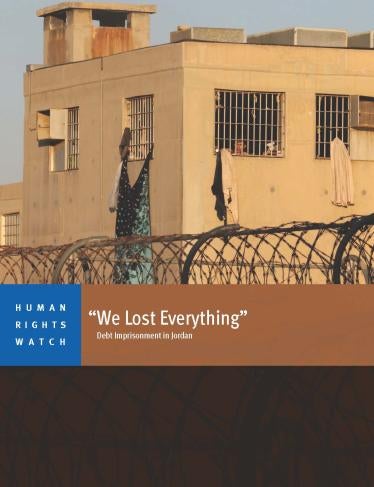
    Debt Imprisonment in Jordan

    In the 47-page report, “‘We Lost Everything’: Debt Imprisonment in Jordan,” Human Rights Watch documents the harsh treatment of people unable to repay their debts. In the absence of an adequate social security net, tens of thousands of Jordanians feel compelled to take out loans to cover utilities, groceries, school fees, and medical bills. They often use unregulated informal lenders. Jordanian authorities should urgently replace laws that allow for debt imprisonment with effective personal bankruptcy legislation and enact social security protections to support indigent people.

    video content
    202103mena_jordan_prison_cover
  • September 30, 2020

    Systemic Police Brutality and Its Costs in the United States

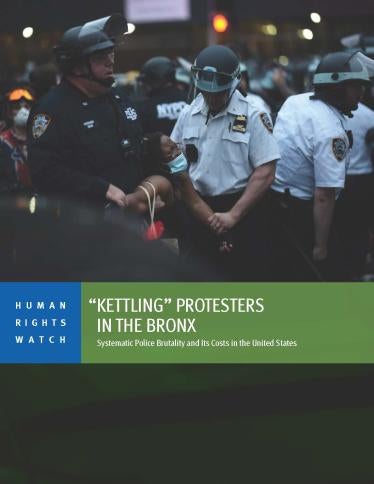
    The 99-page report, “‘Kettling’ Protesters in the Bronx: Systemic Police Brutality and Its Costs in the United States,” provides a detailed account of the police response to the June 4 peaceful protest in Mott Haven, a low-income, majority Black and brown community that has long experienced high levels of police brutality and systemic racism. It describes the city’s ineffectual accountability systems that protect abusive police officers, shows the shortcomings of incremental reforms, and makes the case for structural change.

    map content
    video content
    202009us_mott haven_cover
  • September 29, 2020

    How the Tech-Driven Overhaul of the UK’s Social Security System Worsens Poverty

    The 68-page report, “Automated Hardship: How the Tech-Driven Overhaul of the UK’s Benefits System Worsens Poverty,” details how a poorly designed algorithm is causing people to go hungry, fall into debt and experience psychological distress. Human Rights Watch has also found that the government is failing to address the socio-economic inequalities which prevent people from being able to apply for and manage their benefit online.

    photo gallery
    video content
    202009eca_uk_universal credit_cover