The Inhumane Effects of White Phosphorus Munitions and the Need for Stronger Law
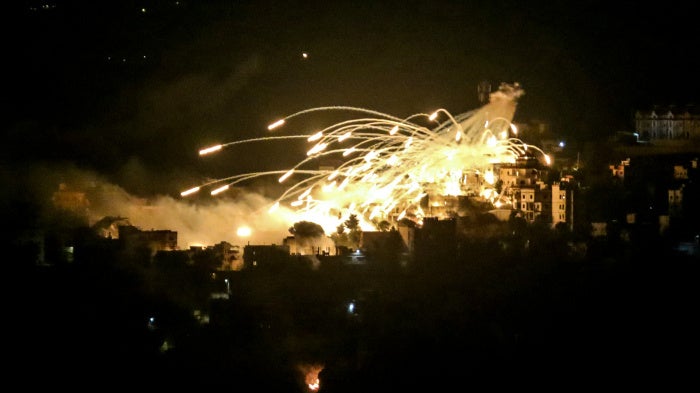
The 45-page report, “Uncontrolled Burn: The Inhumane Effects of White Phosphorus Munitions and the Need for Stronger Law,” documents 23 verified incidents of Israeli use in southern Lebanon between March and May 2026. The report also details the horrific harm the munitions have caused in armed conflicts in recent years. White phosphorus munitions, which produce fire when their payload is exposed to oxygen, are not currently regulated by a specific treaty.
Angola’s “forgotten war,” fueled by a steady supply of weapons to both sides, has claimed an estimated 100,000 civilian lives since the conflict resumed following the September 1992 elections. The government and the UNITA rebels are responsible for an appalling range of violations of the laws of war.
In July 1994, the campaign to expel non-Serbs from Bosnian Serb-held areas of northern Bosnia accelerated. Most of those being displaced came from the northwestern and northeastern parts of the country.
Gross human rights violations continue in Sudan five years after a military coup overthrew the elected civilian government in June 30, 1989, and brought to power a military regime dominated by the National Islamic Front (NIF), a minority party that achieved only 18.4 percent of the popular vote in the 1986 elections.1 The Sudanese have suffered under military rule and single-party dictatorship for
The Egyptian Constitution proclaims Islam the state religion, but also guarantees to all citizens freedom of belief and freedom to practice religious rites.
On September 20, 1993, 3 Roma (Gypsy) men were killed by a mob in the village of Hadareni following the stabbing death of an ethnic Romanian. During the violence, 13 Roma houses were set on fire and destroyed and an additional 4 houses were seriously damaged.
Many of the 18 countries comprising the Asia-Pacific Economic Cooperation (APEC) group came to the 1994 summit in Jakarta with impressive economic growth rates and poor human rights records. The Asia-Pacific region has generated a debate about the relationship between economic development and human rights.
Revisited Threats to Freedom of Expression Continue in Miami’s Cuban Exile Community
In 1992, we released a report (see B407) documenting instances of harassment and intimidation against members of the Miami Cuban exile community who expressed moderate political views regarding the government of Fidel Castro or relations with Cuba. In addition to intimidation by private actors, the report found significant responsibility by the U.S. government at all levels.
In early August 1994, hundreds of Cubans began leaving their country by boat, heading north toward the United States ninety miles away. Initially, the drama of these perilous journeys was localized, and the influx was treated as just a South Florida news story. The flow of Cubans had rapidly become an exodus, and their story of danger and desperation an international news event. For the U.S.
The Work of the Tripartite Commission in Nicaragua
Since the inauguration of Pres. Chamorro in 1990, Nicaragua has been the scene of significant political turmoil and political violence, including violent strikes, destruction of property, politically- inspired kidnappings and the assassination of political figures. Police investigations were marked by irregularities and no suspects have been identified or detained.
Human Rights Abuses Rampant as Nigerian Military Declares Absolute Power
The military government of Gen. Abacha, in a bid to destroy the pro-democracy movement after using abusive and illegal means to break an oil workers’ strike for democracy, is steadily bringing the country closer to chaos and collapse.
Weeks before the opening of the Asia-Pacific Economic Cooperation summit in Jakarta on November 15,1994, the Indonesian government tightened controls on nongovernmental organizations (NGOs) and the press and took harsh anti-crime measures involving what appeared to be extrajudicial executions of suspected criminals.
Every day in Jamaica, children as young as ten years of age are locked in dark, overcrowded, filthy cells which they share with rodents and insects. Sometimes they are held with adults charged with serious crimes. While in the cells, the children are subjected to physical and mental abuse from police and other inmates and are often denied appropriate medical care if they are injured or ill.
In this report, we called upon the government of Tajikistan to release all individuals imprisoned or detained for the peaceful expression of political views, and to provide new and fair trials to those convicted of a crime in the absence of internationally guaranteed rights to due process.
In its 19th session, held on July 20-21, 1994, the Supreme Soviet of the Republic of Tajikistan voted to hold presidential elections and a constitutional referendum on September 25, 1994. We support the transition to a democratic government in Tajikistan, but believed at the time that conditions in Tajikistan did not permit free and democratic elections
During 70 days of conventional warfare between government forces and the separatist southern army, the government army won a military victory over the rebels. This report highlights our concerns regarding both sides as they resorted to unlawful tactics during the conflict.