Discrimination and Violations of the Right to Work for Persons with Albinism in Malawi
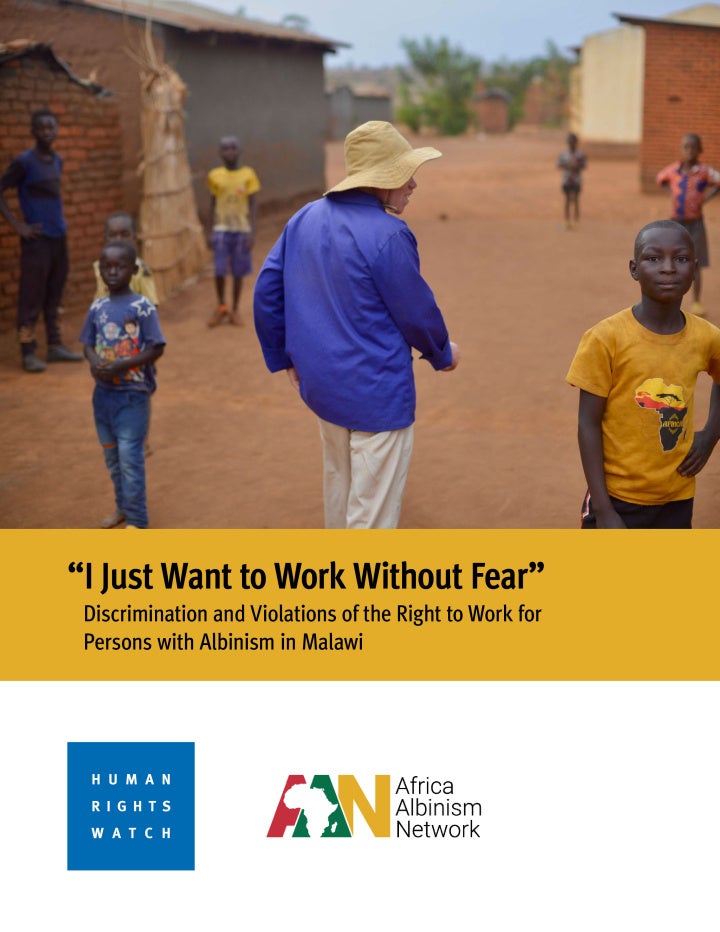
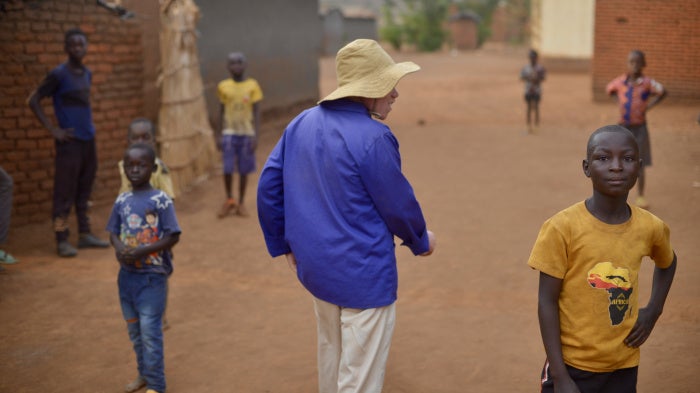
The 65-page report, “‘I Just Want to Work Without Fear’: Discrimination and Violations of the Right to Work for Persons with Albinism in Malawi,” documents how stigma, discrimination, fear of violence, and lack of reasonable accommodation undermine the rights of people with albinism to work, education, health and social security.
This report concerns twenty-one Lebanese imprisoned in Israel and the conditions and indefinite prolongation of their detention. These detainees have been held for up to ten years, some of them in secret locations, denied even the guarantees of due process and humane treatment required by the laws of war.
In this report, Human Rights Watch examines the activities of Israeli military forces and Lebanese guerrillas during the escalation of military activities that raged in Lebanon and parts of northern Israel from April 11 to 27, 1996 -- code-named "Operation Grapes of Wrath" by Israel.
Children Abducted by the Lord's Resistance Army in Uganda
In northern Uganda, thousands of children are victims of a vicious cycle of violence, caught between a brutal rebel group and the army of the Ugandan government.
The situation of religious and ethnic minorities is a neglected aspect of the human rights picture in Iran. With the exception of the persecution of the Baha'i religious minority, little has been written about human rights problems experienced by minorities.
The government of the Federal Republic of Yugoslavia (comprised of Serbia and Montenegro) has demonstrated a blatant disregard for human rights during the past year.
The months of May, June, and July 1997 seemed to mark an intensification of the conflict in East Timor, with guerrilla attacks on both Indonesian military targets and civilians in Dili, Baucau, Ermera, and Los Palos, and intensive operations by the Indonesian army to find and punish those responsible.
Between July 20 and 22, 1997, the Bangladesh government forcibly repatriated some 400 refugees belonging to the Rohingya minority of Burma's northern Arakan state. The repatriations, which drew international protests, highlighted the dilemma facing the United Nations High Commissioner for Refugees (UNHCR) and the international community in addressing the Rohingya situation.
This report focuses mainly on one aspect of the criminal justice system and its handling of violence against women: the performance of those involved in the provision of medical expertise to the courts when it is alleged that women have been abused. Medical evidence is often a crucial element in the investigation and prosecution of a case of rape or sexual assault.
A month after Second Prime Minister Hun Sen's coup, Cambodia bears little resemblance to the society envisioned in the Paris accords of 1991 that laid the framework for an end to conflict and a United Nations peacebuilding effort on an unprecedented scale.
The summer of 1996 was an appropriate time for the Human Rights Watch Children's Rights Project to examine conditions of confinement for children in Colorado's detention and corrections institutions. Several sensational crimes had created an alarming Asummer of violence in 1993. Public fear triggered a call by Governor Roy Romer for an Airon-fisted response to gang violence.
In his three years in office, Belarusian President Aleksandr Lukashenka has reversed nearly all the advances in the field of human rights, freedoms and democratization that had marked the perestroika era and the post-Soviet period.
The Misuse of Authority in Bihac, Cazin, and Velika Kladusa
The Una Sana canton, a province in northwestern Bosnia, is currently controlled by the SDA, with officials loyal to the SDA dominating almost all aspects of government, including law enforcement, public utilities and medical and educational institutions, and the economy.
This report documents the continued systematic violation of internationally recognized human rights by the Burmese military against ethnic minority villagers in Burma’s Karen, Mon, and Shan States during 1996 and 1997.
Israel's Ministry of Justice has drafted a law that would exempt the State of Israel and its security forces from tort liability for the wrongful bodily injury and killing of Palestinians during the period of the intifada.