Discrimination and Violations of the Right to Work for Persons with Albinism in Malawi
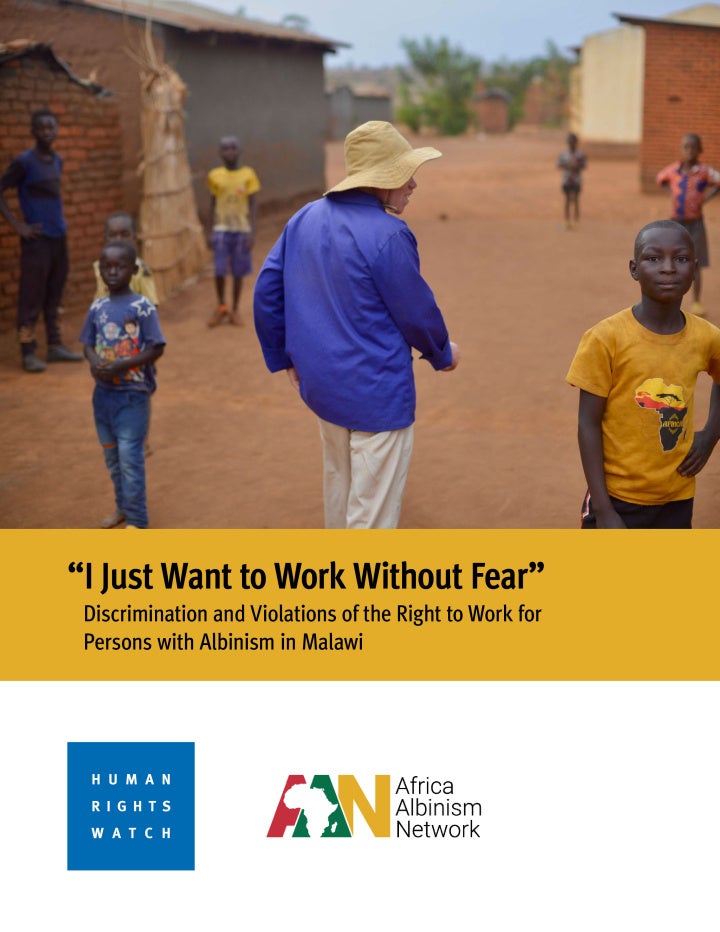
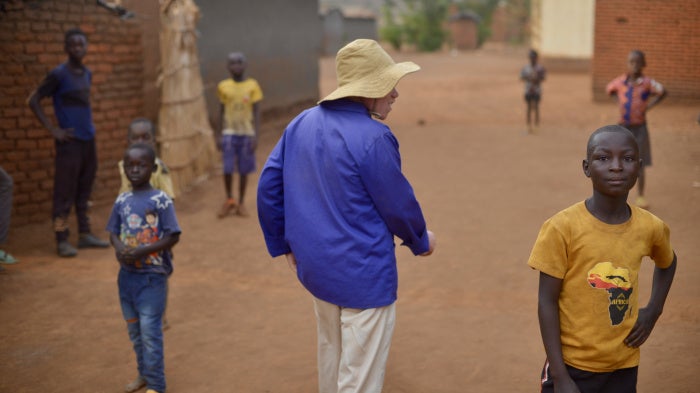
The 65-page report, “‘I Just Want to Work Without Fear’: Discrimination and Violations of the Right to Work for Persons with Albinism in Malawi,” documents how stigma, discrimination, fear of violence, and lack of reasonable accommodation undermine the rights of people with albinism to work, education, health and social security.
On February 5, 2000, Russian forces engaged in widespread killing, arson, rape and looting in Aldi. The victims included an eighty-two-year-old woman, and a one-year-old-boy with his twenty-nine-year-old mother, who was eight months pregnant.
International humanitarian law categorically prohibits hostage-taking. On April 12, 2000 Israel's highest court ruled that the administrative detention of Lebanese nationals as "bargaining chips" -- hostages -- was illegal under Israeli domestic law, making Israel's continued detention of Lebanese nationals as hostages a violation of Israeli domestic law as well.
During May 2000, the Serbian government intensified its efforts to silence opposition to the government of Yugoslav President Slobodan Milosevic. The government has intensified efforts to prevent or break up peaceful assemblies by the opposition, sometimes using brutal means.
Prisoners cannot simply be left to languish for weeks, possibly months, locked up in their cells, and this regardless of how good material conditions might be within the cells. European Committee for the Prevention of Torture, 2nd General Report on the Committee for the Prevention of Torture's activities covering the period January 1 to December 31, 1991.
The current crisis in Sierra Leone, in which rebels with the Revolutionary United Front (RUF) have clashed with U.N. peacekeepers and pro-government forces, suggests that the fragile peace agreed to in July 1999 is rapidly unraveling.
Human rights conditions have taken a significant turn for the worse in Aceh in the past six months. Civilians continue to be caught in the middle of conflict between government troops and rebels belonging to the Free Aceh Movement (Gerakan Aceh Merdeka or GAM).
Return of Displaced Persons and Other Human Rights Issues in Bijeljina
More than four and a half years after the war ended in Bosnia and Hercegovina, many ethnic minorities are still unable to repossess their homes in the Bosnian Serb town of Bijeljina, Human Rights Watch said in a report released today. An estimated 27,000 out of a pre-war population of 30,000 non-Serbs were expelled from Bijeljina during the war.
Vietnam's human rights performance continues to fall far short of international standards, despite economic and socialchanges since the late 1980's. In this 34-page report, "Vietnam: Silencing of Dissent," Human Rights Watch details how the Socialist Republic of Vietnam continues to harass, isolate, place under house arrest, and sometimes imprison its critics.
The U.S. war on drugs has been waged overwhelmingly against black Americans, Human Rights Watchcharged in a new report released today. In ten states, black men are sent to prison on drug charges at 27 to 57 times the rate of white men.
The Rwandan army and its Congolese allies have massacred and raped civilians in eastern Congo, Human Rights Watch said in a report released today. Their opponents, Hutu and Mai Mai armed groups, are also committing atrocities against the civilian population.The RCD launched a rebellion against the government headed by Laurent Kabila in August 1998.
The bleak reality of Tibet under Chinese control, as never before seen in print. Through photographs, history, personal interviews and stories, Tibet Since 1950 looks beyond Tibet's Shangri-la image to the impact of Chinese political repression on Tibetan lives. Fifty years of direct Chinese government control has altered every aspect of the culture, politics, economy, and religion in Tibet.
Human Rights Watch calls on Indonesian authorities to stop harassing organizers of peaceful rallies in Irian Jaya, where a popular pro-independence movement has publicly emerged over the past two years. But the international rights group also welcomed steps the new administration of Abdurrahman Wahid has taken toward respecting basic rights in the province.
In this report, Human Rights Watch describes the key obstacles to the satisfactory resolution of the Rohingya refugee problem. Any resolution must comply with international human rights standards, including those guaranteeing protection of the rights of refugees.
On April 18, the United Nations Security Council will debate the U.N. Panel of Experts report on the sanctions regime against the rebels of the National Union for the Total Independence of Angola (UNITA), which was submitted to the Security Council on February 28. The Security Council is expected to issue a resolution that will shape the future of the sanctions regime in Angola.