The Inhumane Effects of White Phosphorus Munitions and the Need for Stronger Law
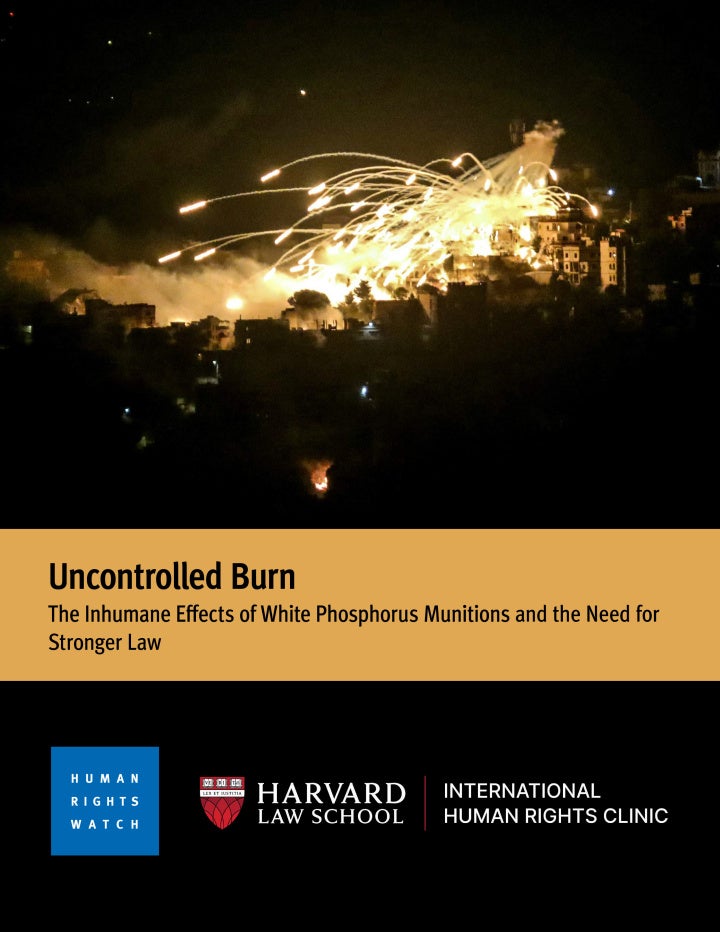
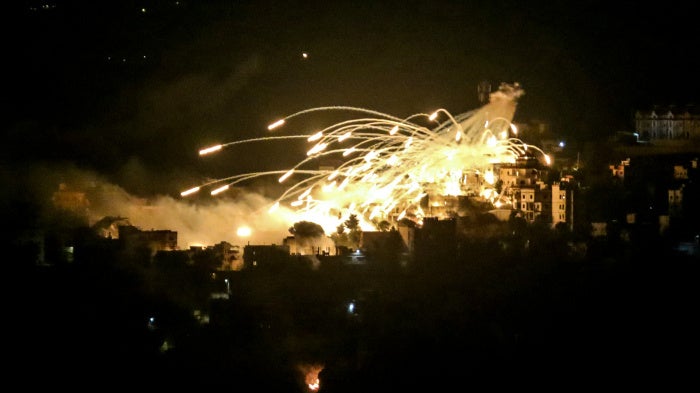
The 45-page report, “Uncontrolled Burn: The Inhumane Effects of White Phosphorus Munitions and the Need for Stronger Law,” documents 23 verified incidents of Israeli use in southern Lebanon between March and May 2026. The report also details the horrific harm the munitions have caused in armed conflicts in recent years. White phosphorus munitions, which produce fire when their payload is exposed to oxygen, are not currently regulated by a specific treaty.
Domitien Ndayizeye, a Hutu of the Democratic Front for Burundi (Front pour la Dmocratie au Burundi, Frodebu), will take over the presidency of Burundi from Major Pierre Buyoya, on April 30. The new government must deliver on promises to end a nine-year long war and to deliver justice for the many violations of international humanitarian law committed during the war.
Child soldiers who fought in the Angolan civil war have been excluded from demobilization programs, Human Rights Watch said in a new report released today. April marks the one-year anniversary of the agreement that brought peace to mainland Angola in 2002.
According to the latest statistics from the U.S. Department of Justice, more than two million men and women are now behind bars in the United States. The country that holds itself out as the "land of freedom" incarcerates a higher percentage of its people than any other country.
Human Rights Watch has received credible first-hand reports of an escalation of repression by Vietnamese authorities against the ethnic minorities known as Montagnards in Vietnam's Central Highlands. Human rights violations have continued unabated since protests for land rights and religious freedom began in February 2001.
The Nigerian government should act immediately to address the political violence and intimidation that occurred during the recent elections, Human Rights Watch said in this report.
Abuses Against Detained Children in Northern Brazil
Children in northern Brazil are routinely beaten by police and detained in abusive conditions, Human Rights Watch charged in a new report released today.
The Triumph of Efficiency over Protection in Dutch Asylum Policy
Critical aspects of Dutch asylum policy violate international refugee standards, Human Rights Watch said in this new report. Human Rights Watch urged the new Dutch government being formed to prioritize reforms to bring asylum policy back in line with international standards.
Last year, as Russian troops in Chechnya were committing hundreds of forced disappearances, extrajudicial executions, and widespread acts of torture and ill-treatment, the U.N. Commission on Human Rights rejected a resolution that would have expressed concern about the Chechnya conflict.
Numerous detainees and prisoners have died in custody as a direct result of torture and ill-treatment by police and security agents in Uzbekistan in recent years.
Consequences of Genocide and War for Rwanda's Children
Rwandan children still suffer the devastating consequences of the 1994 genocide and the war that preceded and followed it, Human Rights Watch said in a report released today. In the 80-page report, “Lasting Wounds: Consequences of Genocide and War for Rwanda’s Children,” Human Rights Watch documents the widespread abuse and exploitation of children in 1994 and since.
West African governments are failing to address a rampant traffic in child labor that could worsen with the region’s growing AIDS crisis, Human Rights Watch charged in a new report released today. The 79-page report, “Borderline Slavery: Child Trafficking in Togo,” highlights Togo as a case study of trafficking in the region.
Children are being abducted in record numbers in northern Uganda by the rebel Lord's Resistance Army (LRA), Human Rights Watch said in a new report released today. The children are subjected to brutal treatment as soldiers, laborers and sexual slaves. Since June of 2002, an estimated 5,000 children have been abducted-a striking increase from 2001, when fewer than 100 children were abducted.
A Human Rights Watch Briefing Paper for the 59th Session of the United Nations Commission on Human Rights
This paper first surveys initiatives taken by U.N., regional, and other intergovernmental bodies in the context of the international campaign against terrorism.