Reports

Cuban and Other Third-Country Nationals Deported from the US to Mexico

The 66-page report, “‘Casting Us Aside to Die:’ Cuban and Other Third-Country Nationals Deported from the US to Mexico,” documents US government abuses against Cubans and other third-country nationals deported to Mexico between January 2025 and March 2026. With no other recourse to obtain permanent residency in Mexico, many Cuban deportees, whose home government refuses to take them back, are trapped in a legal limbo. Since arriving in Mexico, they have received little if any government support, and many are without access to shelter, food, or health care.

A group of deported Cubans gather outside the Juan Graham Hospital in the city of Villahermosa, Mexico, March 2026.
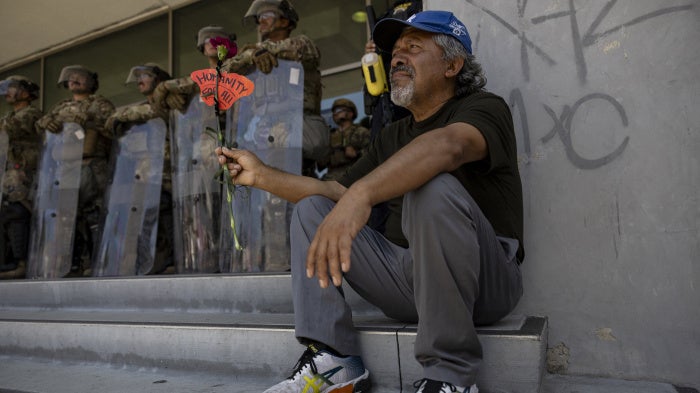
A man holds a flower and the message "Humanity for All" in front of a line of soldiers

Search

  • April 20, 2009

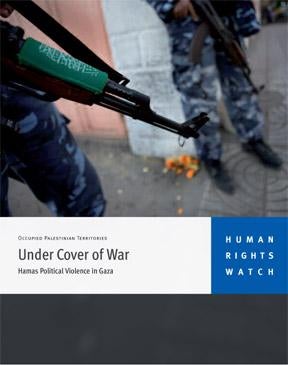
    Hamas Political Violence in Gaza

    This 26-page report documents a pattern since late December 2008 of arbitrary arrests and detentions, torture, maimings by shooting, and extrajudicial executions by alleged members of Hamas security forces. The report is based on interviews with victims and witnesses in Gaza and case reports by Palestinian human rights groups.

  • April 16, 2009

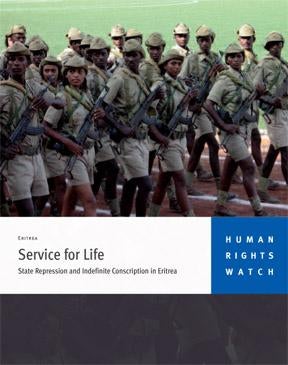
    State Repression and Indefinite Conscription in Eritrea

    This 95-page report documents serious human rights violations by the Eritrean government, including arbitrary arrest, torture, appalling detention conditions, forced labor, and severe restrictions on freedom of movement, expression, and worship. It also analyzes the difficult situation faced by Eritreans who succeed in escaping to other countries such as Libya, Sudan, Egypt, and Italy.

  • April 15, 2009

    Non-Citizens Deported Mostly for Nonviolent Offenses

    The 64-page report uses data from 1997 to 2007 from US Immigration and Customs Enforcement (ICE), to evaluate the effects of sweeping deportation laws passed in 1996. It shows that some of the most common crimes for which people were deported were relatively minor offenses, such as marijuana and cocaine possession or traffic offenses.
  • April 14, 2009

    Use of Cluster Munitions by Russia and Georgia in August 2008

    This 80-page report is the first comprehensive report on cluster munition use by Russia and Georgia in their week-long conflict over the separatist enclave of South Ossetia. Human Rights Watch field investigations in August, September, and October 2008 documented dozens of civilian deaths and injuries from the use of cluster munitions, including casualties after the fighting ended.

  • April 8, 2009

    Illegal Detention and Torture by the Joint Anti-terrorism Task Force in Uganda

    This 89-page report documents the task force's abusive response to alleged rebel and terrorist activity by unlawfully detaining and brutally torturing suspects. Human Rights Watch found that agents of JATT, as it is known, carry out arrests wearing civilian clothes with no identifying insignia and do not inform suspects of the reasons for their arrest.
  • April 6, 2009

    Death Squad Killings in Mindanao

    This 103-page report details the involvement of police and local government officials in targeted killings of alleged drug dealers and petty criminals, street children, and others, and describes the lack of any effort by the authorities to investigate the killings and bring those responsible to justice.

  • March 31, 2009

    The Rape Kit Backlog in Los Angeles City and County

    The 68-page report reveals that the backlog of untested rape kits in Los Angeles County is larger and more widespread than previously reported. Through dozens of interviews with police officers, public officials, criminalists, rape treatment providers, and rape victims, the report documents the devastating effects of the backlog on victims of sexual abuse.
  • March 30, 2009

    Kenya’s Forgotten Somali Refugee Crisis

    This 58-page report documents the extortion, detention, violence, and deportation at the hands of the Kenyan police faced by a record number of Somalis entering Kenya. The new refugees are joining over a quarter of a million fellow refugees struggling to survive in camps designed for one-third that number.
  • March 28, 2009

    Returns from Guantanamo to Yemen

    This 52-page report criticizes US and Yemeni proposals to transfer the detainees to a detention center in Yemen where they could continue to be held indefinitely, ostensibly for rehabilitation.
  • March 25, 2009

    Israel’s Unlawful Use of White Phosphorus in Gaza

    This 71-page report provides witness accounts of the devastating effects that white phosphorus munitions had on civilians and civilian property in Gaza.

  • March 24, 2009

    Punishment of Drug Users in New York State Prisons

    In this 53-page report, Human Rights Watch found that New York prison officials sentenced inmates to a collective total of 2,516 years in disciplinary segregation from 2005 to 2007 for drug-related charges. At the same time, inmates seeking drug treatment face major delays because treatment programs are filled to capacity.

  • March 17, 2009

    Women’s Struggles to Obtain Health Care in United States Immigration Detention

    This 78-page Human Rights Watch report documents dozens of cases in which the immigration agency's medical staff either failed to respond at all to health problems of women in detention or responded only after considerable delays.
  • March 3, 2009

    Access to Pain Treatment as a Human Right

    In this 47-page report Human Rights Watch said that countries could significantly improve access to pain medications by addressing the causes of their poor availability.

  • March 2, 2009

    Drug Arrests and Race in the United States

    This 20-page report says that adult African Americans were arrested on drug charges at rates that were 2.8 to 5.5 times as high as those of white adults in every year from 1980 through 2007, the last year for which complete data were available. About one in three of the more than 25.4 million adult drug arrestees during that period was African American.