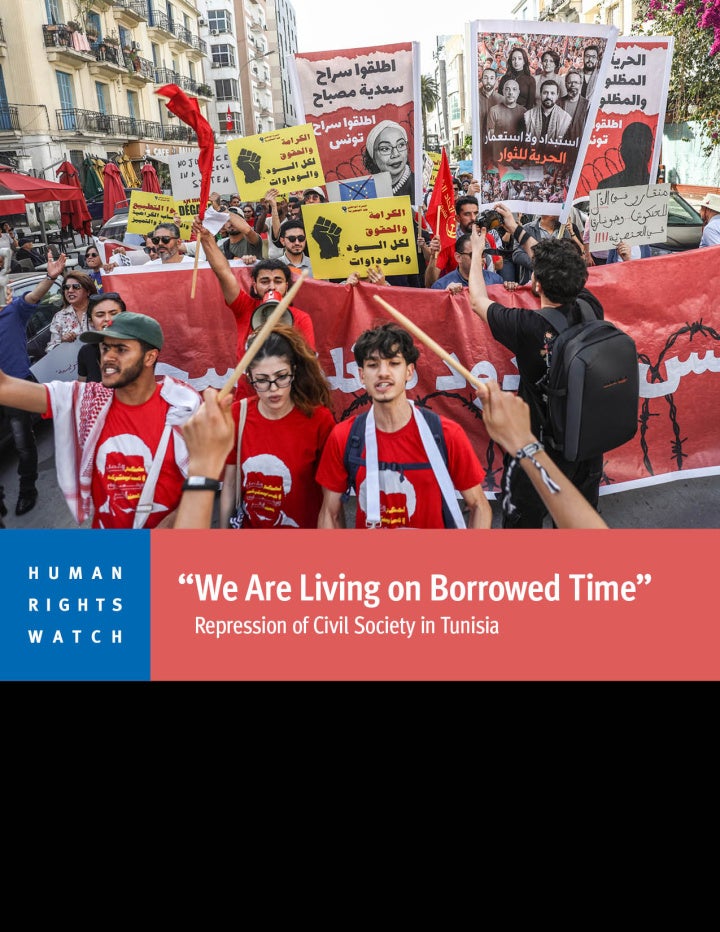
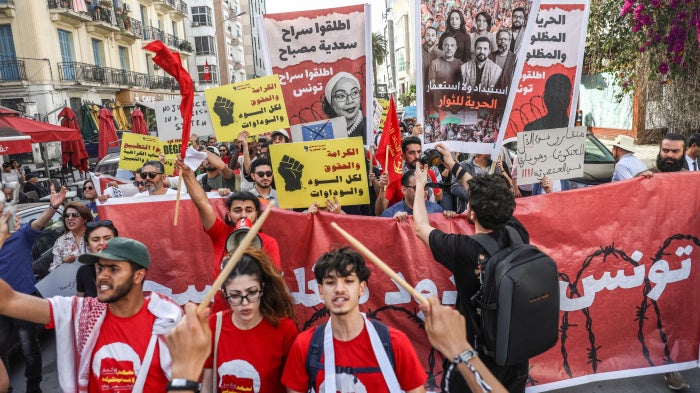
The 49-page report, “‘We Are Living on Borrowed Time’: Repression of Civil Society in Tunisia” documents the Tunisian authorities’ escalating repression of local and international civil society groups, workers, members, and affiliates through the weaponization of abusive prosecutions, arbitrary arrests, detention, financial and criminal investigations, mass suspensions, and threats of dissolution.
The Political Manipulation of Ethnicity in Côte d'Ivoire
Leading government officials in Côte D'Ivoire have incited a violent xenophobia that is threatening to destabilize the country, Human Rights Watch charged in a new report released today.
Proposed Amendments to the 12 July 2001 Draft Programme of Action For Equality and Non-Discrimination Against Racism, Racial Discrimination, Xenophobia, and Related Intolerance (A/CONF.189/PC.3/8) and the Draft Declaration (A/CONF.189/PC.3/7).
As the Internet industry continues to expand in China, the government continues to tighten controls on on-line expression. Since 1995, when Chinese authorities began permitting commercial Internet accounts, at least sixty sets of regulations have been issued aimed at controlling Internet content.
International Humanitarian Law and its Application to the Conduct of the FARC-EP
Whether they live in Bogotá or in remote rural areas, Colombian civilians bear the brunt of the country's violent armed conflict. Thousands have been killed in recent years, and thousands more have been kidnaped for ransom.
Millions of people in Asia, Africa, Europe, and the Middle East have been denied or stripped of citizenship in their own countries solely because of their race, national descent, and gender. In many countries, children born in their mother's country are denied her nationality because women can not transmit nationality.
The State Response to Violent Crime on South African Farms
The South African government is failing to adequately protect residents of commercial farming areas from violent crime, Human Rights Watch charged in a report released today. Black farm residents are most severely affected by this failure, and black women are most vulnerable of all, Human Rights Watch said.
In this report, Human Rights Watch called on both the Indonesian government and armed rebels in Aceh to protect civilians, saying both sides had been responsible for human rights violations.
When, on October 20, 1999, Abdurrahman Wahid became Indonesia's firstdemocratically elected president in more than four decades, he was welcomed at home and abroad as the country's best hope for healing political rifts, building civil society, and revitalizing government.
Human Rights Watch traditionally advocates reparations as part of the remedy for any serious human rights abuse. For example, under traditional human rights law and policy, we expect governments that practice or tolerate racial discrimination to acknowledge and end this human rights violation and compensate the victims. However, the U.N.
Uzbekistan's post-Soviet development, like that in most of the former Soviet Union, has entailed enormous and disproportionate obstacles to women's realization of their human rights. During the past ten years, Uzbekistan's government has attempted to institute some safeguards for women's rights, mainly in the area of social welfare support.
Hundreds of thousands of Sierra Leonean and Liberian refugees along Guinea's border were relocated from the embattled border area in early 2001 to camps in the interior of the country. While the organized movement from the border is a welcome and long overdue step, the long-term safety of the refugees is still under threat.
The political situation in Irian Jaya (also known as West Papua or Papua), Indonesia_s easternmost province, is fundamentally unsettled. Papua is remote from Jakarta and home to only two million of the country's more than 200 million inhabitants, but what happens in the resource-rich province is likely to have great importance for Indonesia.
The United Nations Security Council should impose a comprehensive embargo on all military assistance against all warring factions in Afghanistan, Human Rights Watch urged today. In this report, Human Rights Watch accused Pakistan, Iran, and Russia of providing military support to Afghan factions with a long record of committing gross abuses of human rights.
In this paper, we call on the World Health Organization (WHO) to establish minimum standards for the collection of evidence in cases of sexual and domestic violence. We also call on WHO to draft a policy paper to support the effective implementation of the minimum standards.