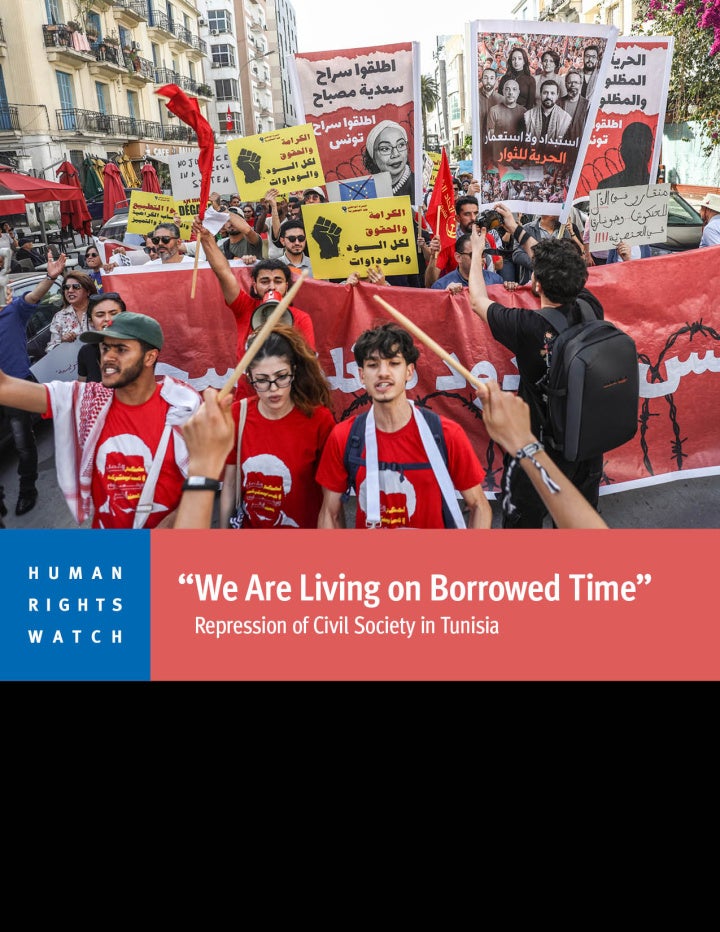
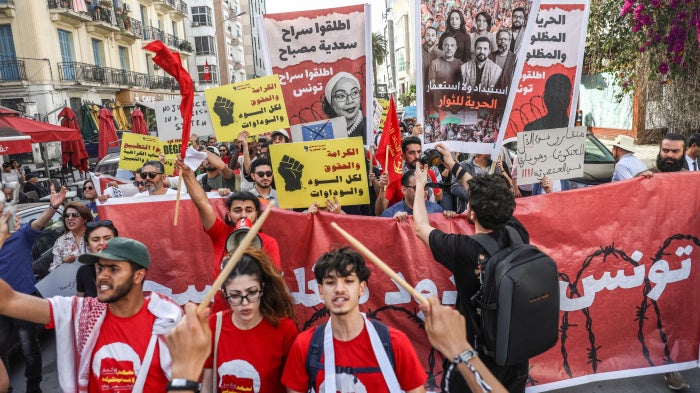
The 49-page report, “‘We Are Living on Borrowed Time’: Repression of Civil Society in Tunisia” documents the Tunisian authorities’ escalating repression of local and international civil society groups, workers, members, and affiliates through the weaponization of abusive prosecutions, arbitrary arrests, detention, financial and criminal investigations, mass suspensions, and threats of dissolution.
Indonesia's Sham Prosecutions, the Need to Strengthen the Trial Process in East Timor, and the Imperative of U.N. Action
The world watched in horror in September 1999 when the Indonesian National Army (TNI) and Timorese militias went on a campaign of murder, arson, and forced expulsion after the people of East Timor voted for independence in a United Nations administered referendum.
This policy paper discusses: the need for justice; principles that should be met regarding any future form of justice to redress the most serious crimes committed by the Iraqi authorities; justice mechanisms that best further those principles; complementary measures to promote justice and accountability in Iraq; and other considerations relevant to justice and accountability.
Repression of Women and Girls in Western Afghanistan
Afghan women and girls have suffered mounting abuses, harassment and restrictions of their fundamental human rights during 2002, Human Rights Watch said in a new report.
This backgrounder was prepared for EU officials to assist them in identifying benchmarks for seeking improvements in the human rights situation in Iran. Human Rights Watch called on the participants in the EU-Iran human rights conference to incorporate these important recommendations in the dialogue.
Many refugees who come uninvited to Australia are compelled to do so because they cannot find effective protection anywhere else, Human Rights Watch said in a new report released to mark International Human Rights Day.
The briefing paper outlines a number of areas in which the Afghan government and international actors have missed opportunities to improve security and protect human rights. Human Rights Watch makes several recommendations to international and Afghan actors to help realize key provisions in the agreement.
Four Years Of Communal Violence In Central Sulawesi
The violence plaguing Central Sulawesi today is a direct result of the Indonesian government's failure to punish the perpetrators of major attacks and protect communities in the province since 1998, Human Rights Watch said in a new report released today.
The visit of U.S. Secretary of State Colin Powell to Colombia on December 3 and 4 marks an important opportunity to advance human rights and the rule of law in that country.
Against a backdrop of start-and-stop negotiations to end the civil war in Burundi, both rebels and the government army have stepped up military activities, killing civilians and raising the risk of widespread slaughter on an ethnic basis. The rebel forces are largely Hutu, as is the majority of the population.
Côte d'Ivoire is facing a political crisis that poses a serious risk that the country could plunge into the sort of brutal war well known to neighboring Liberia and Sierra Leone. The crisis is rooted in well-established divisions within Ivorian society and in particular within the military, divisions that have been deliberately exacerbated by government policy over the last few years.
Trafficking of Women and Girls To Post-Conflict Bosnia and Herzegovina for Forced Prostitution
Traffickers who have forced thousands of women and girls into prostitution in Bosnia and Herzegovina are not being apprehended for their crimes. Local corruption and the complicity of international officials in Bosnia have allowed a trafficking network to flourish, in which women are tricked, threatened, physically assaulted and sold as chattel, the report said.
Refoulement, Militarization of Camps, and Other Protection Concerns
The United Nations Security Council should extend the arms embargo on Liberia to all rebel groups, and closely monitor the compliance of the Guinean government with that embargo, Human Rights Watch said today. The Guinean government’s close relationship with Liberian rebel groups is posing a serious threat to refugees’ security and protection in Guinea.
Refugees Living Without Protection In Nairobi And Kampala
"Hidden in Plain View," is based on 150 in-depth interviews with refugees from Ethiopia, the Democratic Republic of Congo (DRC), Rwanda, Somalia, Sudan and elsewhere. Refugees described being subjected to beatings, sexual violence, harassment, extortion, arbitrary arrests and detention.