The Inhumane Effects of White Phosphorus Munitions and the Need for Stronger Law
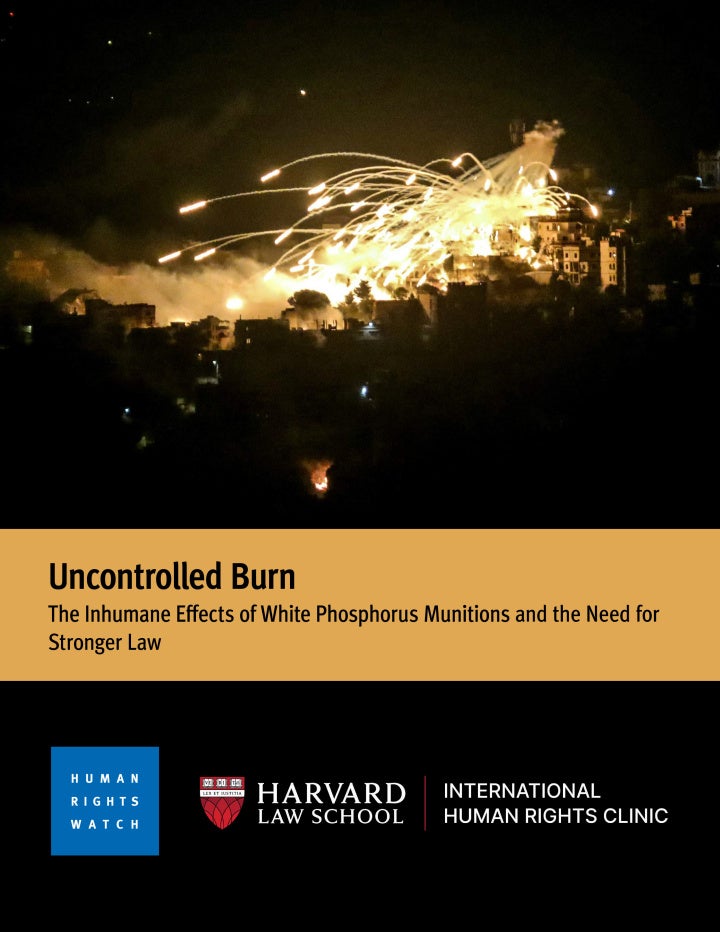
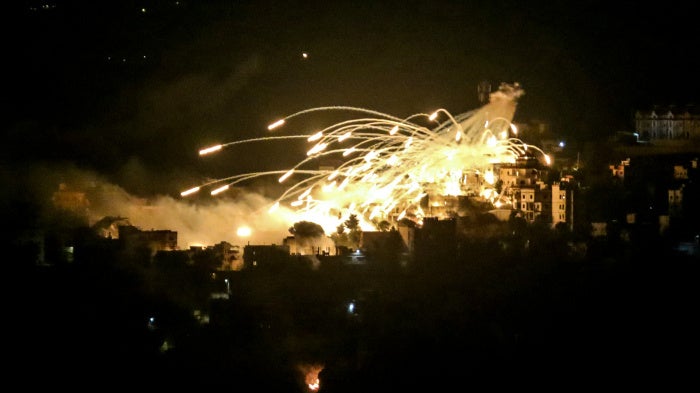
The 45-page report, “Uncontrolled Burn: The Inhumane Effects of White Phosphorus Munitions and the Need for Stronger Law,” documents 23 verified incidents of Israeli use in southern Lebanon between March and May 2026. The report also details the horrific harm the munitions have caused in armed conflicts in recent years. White phosphorus munitions, which produce fire when their payload is exposed to oxygen, are not currently regulated by a specific treaty.
The Official Response to the Rising Tide of Violence
The greatest obstacle to the transition to a peaceful democracy in South Africa is the political violence that continues to rage in the black townships. The violence, which began in 1984 and gained greater momentum after reform initiatives were undertaken in 1990, has resulted in more than 14,000 deaths.
For the first time ever, scientists have been able to prove the use of chemical weapons through the analysis of environmental residues taken years after such an attack occurred.
The Indian state of Assam, located south of Bhutan and east of Bangladesh, is geographically almost cut off from the rest of India, with its only physical link a narrow land corridor to West Bengal. Home to a number of tribes and ethnic groups, Assam has been the site of separatist movements and violent insurgencies since India's independence in 1947.
The Trial of Xanana Gusmao and a Follow-up on the Dili Massacre
The trial of Xanana raised several important human rights issues. It should be noted at the outset that Asia Watch has never taken a position on the political status of East Timor nor on the jurisdiction of Indonesian courts there.
On June 29, 1992, police surrounded a Gypsy neighborhood in Pazarszhik, a town 120 km. east of Sofia, and attacked its inhabitants, conducted abusive house searches, damaged property and confiscated possessions. Many Gypsies suffered serious injuries as well as significant property damage as a result of the police conduct.
Death Penalty, Prison Conditions and Police Violence
This report concerns the application of the death penalty, the conditions in prisons and lockups, and police violence, including acts of coercion to obtain evidence that amount to torture and the excessive use of deadly force.
This report consists of a series of letters on human rights to the government and opposition leaders in Sudan citing concerns about gross violations by all parties to the conflict that have led to massive loss of life and famine.
Dismissals from the workplace as a means of punishing and discouraging critical speech, particularly levelled at members of the political opposition, are occurring all too frequently in Uzbekistan. The administration's attitude toward the opposition has been articulated thus: “It is necessary to straighten out the brains of 100 people in order to preserve the lives of thousands.”
Restrictions on Movement Causing Severe Hardship in Occupied Territories
The hardships caused by Israel’s indefinite ban on the entry of nearly all the 1.8 million Palestinian residents of the West Bank and Gaza Strip into Israel and annexed East Jerusalem include the abrupt loss of income for some 100,000 Palestinians; lack of access to hospitals, mosques, and other vital institutions; the division of the occupied territories into four sectors; and a drastic reducti
Summarizing the findings of an Asia Watch visit to Jakarta and Dili in March 1993, including the results of interviews conducted, direct observation of the trial and an analysis of documents obtained, this report addresses fair trial and human rights issues directly related to the trial of a guerrilla fighter.
One year after elected President Alberto Fujimori suspended Peru’s constitution, closed down the congress, took control of the judiciary, and began to rule by decree, Peru’s already troubling human rights situation has become significantly worse.
Helsinki Watch has been monitoring human rights abuses and violations of the laws of war in both Croatia and Bosnia- Hercegovina since the conflict began two years ago. The original volume in this series documented the appalling brutality inflicted on the civilian population and called on the U.N.
Two Indonesian college students who emceed a rock concert in Yogyakarta, Central Java, were sentenced to two a half years on charges of blasphemy and insulting a group in public for a brief exchange in front of a student audience in which they punned on several phrases from the Quran.
This report describes some of the events that have taken place since Prime Minister Suleyman Demirel’s coalition government took office in November 1991 and their effects on the Turkish Kurds in southeast Turkey.