The Inhumane Effects of White Phosphorus Munitions and the Need for Stronger Law
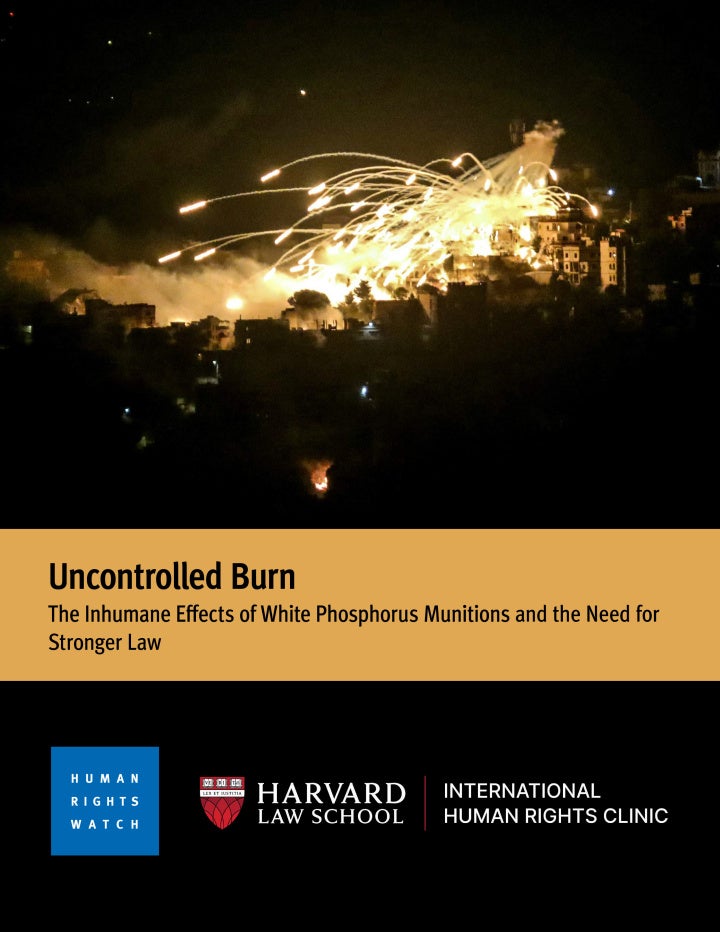
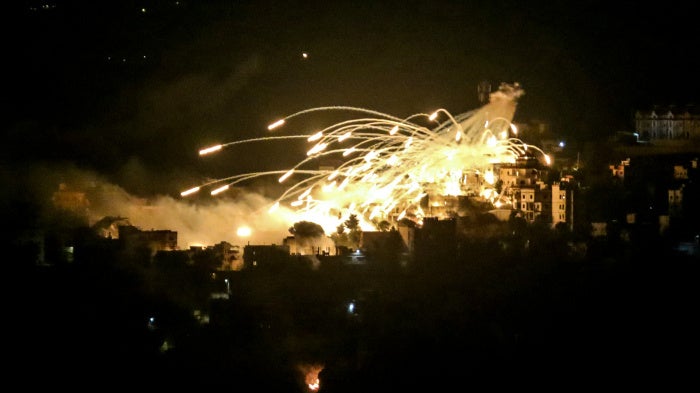
The 45-page report, “Uncontrolled Burn: The Inhumane Effects of White Phosphorus Munitions and the Need for Stronger Law,” documents 23 verified incidents of Israeli use in southern Lebanon between March and May 2026. The report also details the horrific harm the munitions have caused in armed conflicts in recent years. White phosphorus munitions, which produce fire when their payload is exposed to oxygen, are not currently regulated by a specific treaty.
The Chinese government is using new laws and new interpretations of old laws to crack down on the Falungong, Human Rights Watch says in this report. today. Falungong members have been classified with Tibetan and Uighur 'splittists' and unauthorized religious groups as a major threat to the Communist Party, Human Rights Watch said.
The United States plays an important role in Colombia and can contribute to the defense of human rights and international humanitarian law. A concern for human rights motivated the U.S. Congress to condition security assistance on clear and convincing progress by Colombia’s government on protecting human rights.
Torture, Forced Disappearances, And Extrajudicial Killings During Sweep Operations In Chechnya
The Russian government's plan was to normalize the situation in Chechnya by 2001: with most troops withdrawn and most internally displaced persons expected to return to their homes. The events of three weeks in late June and early July 2001 shattered these hopes and painfully illustrated just how far removed Chechnya remained from lasting peace.
On September 8, 2001, the Commonwealth Ministerial Action Group (CMAG), established in 1995 to monitor Commonwealth member states' respect for democracy and the rule of law, brokered an agreement with the Zimbabwe government over the continuing crisis in that country.
This background paper highlights the international law issues surrounding the status and treatment of Taliban and al-Qaeda fighters from Afghanistan in U.S. custody. It cites the need for a formal and individualized determination of prisoner of war status where that status is in doubt.
As Cambodians head to the polls on February 3, for the first time ever they will be democratically electing their own local level representatives. For the last twenty years the leaders of Cambodia's 1,621 communes (administrative units consisting of four to seven villages) have been appointees of the ruling Cambodian People's Party (CPP).
Human Rights Watch calls on international donors meeting in Tokyo to ensure that the promotion of human rights is given a central place in reconstruction efforts in Afghanistan.
Leaders of some forty-six countries are anticipated to attend the North Atlantic Treaty Organization (NATO) summit in Prague, Czech Republic, on November 21 and 22, 2002.
Saadeddin Ibrahim, aged 63, is one of Egypt’s leading voices for political reform and democratic rights. A sociology professor at the American University in Cairo, he founded in 1988 and then directed the Ibn KhaldunCenter for Development Studies until it was closed down by the Egyptian government in June 2000.
In recent weeks Northern Alliance and other anti-Taliban forces in Afghanistan have captured hundreds of foreign fighters with the Taliban or al-Qaeda. The United States has announced that it would detain upwards of 500 captured fighters and has been screening persons taken into custody by Afghan forces.
Both Rwandan government troops and adversary rebel forces of the Army for the Liberation of Rwanda (ALIR) have given civilians greater protection in the conflict in Rwanda’s northwest in 2001, Human Rights Watch said in a report released today.
Concern for human rights in Saudi Arabia has ranked extremely low on the agenda of the U.S., although Washington has long been well aware that the country remains a veritable wasteland when it comes to respect for the fundamental human rights of its 22 million residents, including some six to seven million foreign workers and their families.
The Nigerian government could and should have prevented mass killings in Jos in September. As many as one thousand people are believed to have been killed in just six days as Jos, capital of Plateau State, was rocked by unprecedented violence between Christians and Muslims.
The report on Turkey, its fourth (including the Progress Reports that pre-dated Turkey's formal candidacy), has become an important annual measure of progress on the political elements of the Copenhagen Criteria for membership, which require "stability of institutions guaranteeing democracy, the rule of law, human rights, and respect for and protection of minorities."
The Government-sponsored "Self-defense" Program in Burundi
Government-sponsored paramilitary forces known as “Guardians of the Peace” have committed many killings, rapes, and other crimes over the last four years in Burundi, Human Rights Watch charged today.