The Inhumane Effects of White Phosphorus Munitions and the Need for Stronger Law
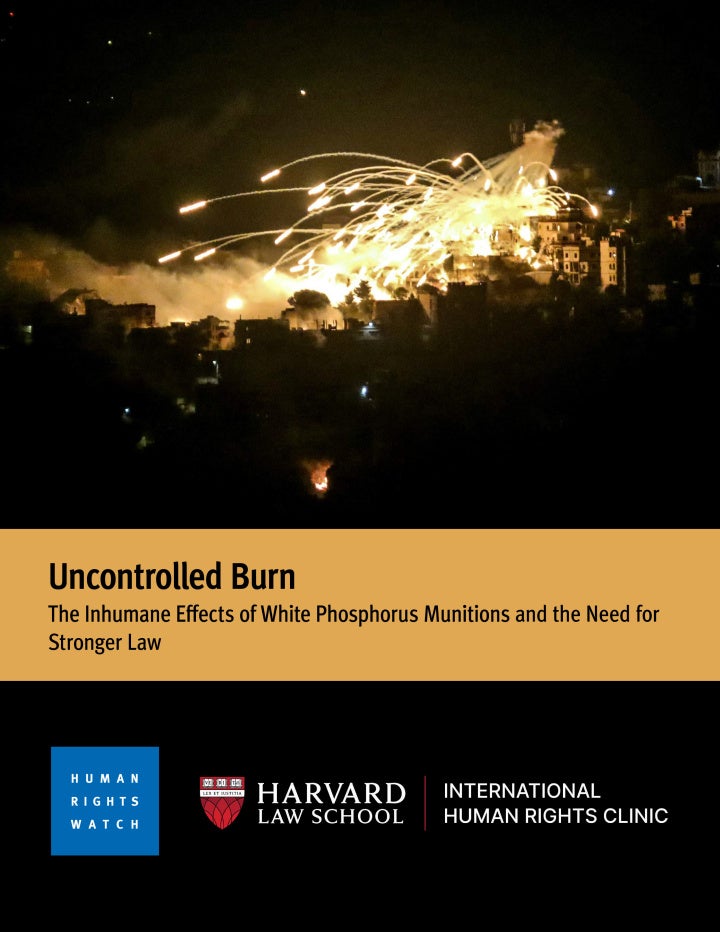
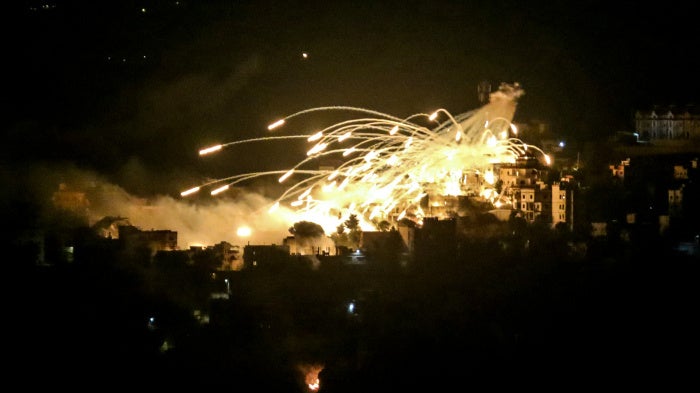
The 45-page report, “Uncontrolled Burn: The Inhumane Effects of White Phosphorus Munitions and the Need for Stronger Law,” documents 23 verified incidents of Israeli use in southern Lebanon between March and May 2026. The report also details the horrific harm the munitions have caused in armed conflicts in recent years. White phosphorus munitions, which produce fire when their payload is exposed to oxygen, are not currently regulated by a specific treaty.
Accountability For Human Rights Violations In Aceh
This report examines the response of Indonesia's National Human Rights Commission (Komnas HAM) to a massacre in Aceh that occurred in August 2001. Thirty men and a two-year-old child, all ethnic Acehnese, were shot and killed by a group of armed men who suddenly appeared on the grounds of the Bumi Flora rubber and palm oil plantation in Julok, East Aceh.
Human Rights Watch has long denounced slavery in Sudan in the context of the nineteen-year civil war. In this contemporary form of slavery government-backed and armed militia of the Baggara tribes raid to capture children and women who are then held in conditions of slavery in western Sudan and elsewhere.
Hassan al Turabi, a graduate of Khartoum University School of Law and of the Sorbonne, became a leader of the Sudanese Muslim Brotherhood in the early 1960s. When Gen.
The "fast track" land resettlement program implemented by the government of Zimbabwe over the last two years has led to serious human rights violations. The program's implementation also raises serious doubts as to the extent to which it has benefited the landless poor.
Human Rights Watch has reviewed the most recent draft of the Greek trafficking bill and offers these comments to the bill's drafters and to parliamentarians who will debate the law at some time in the near future.
President Islam Abduganievich Karimov was born in 1938 in the silk-road city of Samarkand. Raised in a Soviet orphanage, Karimov went on to study engineering and economics. He came to power as First Secretary of the Communist Party of Uzbekistan in 1989 and was named president of the Uzbek Soviet Socialist Republic in 1990.
We recognize the many challenges presented by the pressures of increased migration and the government's commitment to honor international protection obligations. We believe that efficient immigration management and potential national security concerns can be reconciled with the protection of fundamental human rights guarantees for migrants and asylum seekers.
In this briefing, we present new figures documenting racial disparities state-by-state in the incarceration of African Americans and Latinos. We hope they will help state residents and public officials to understand their state-specific incarceration patterns and practices.
The Human Rights Watch report, "Closed Door Policy: Afghan Refugees in Pakistan and Iran," cautions against a hasty repatriation of Afghan refugees while conditions in Afghanistan remain unstable. Human Rights Watch interviewed many refugees, including members of various ethnic groups, and women and girls, who fear continuing human rights abuses inside Afghanistan.
The purpose of this backgrounder is to document the practice established by States Parties since entry-into-force of the treaty with respect to AVM with sensitive fuzes or AHD. It is regrettable that limited progress has been made in clarifying what specific types of AVM and AHD are permissible and which are prohibited under the treaty.
Rights Violations Against Migrants and Asylum Seekers
The government of Spain is violating the rights of migrants and asylum seekers who arrive illegally on Spanish shores, Human Rights Watch said in a new report released today.
The Chinese leadership's preoccupation with stability in the face of continued economic and social upheaval fueled an increase in human rights violations in 2001.
Changes to U.S. Military Assistance After September 11
Since September 11, the U.S. government has extended new military assistance to governments engaged in serious human rights abuse, including torture, political killings, illegal detention, religious persecution, and attacks on civilians during armed conflict, Human Rights Watch said in a report released today. The 15-page report, "Dangerous Dealings: Changes in U.S.
Women in Guatemala's largest female-dominated labor sectors face persistent sex discrimination and abuse, Human Rights Watch charges in this report. The 147-page report examines two sectors, export processing and private households, which employ tens of thousands of women sewing clothes for sale in the United States and working as live-in domestic workers.