The Persecution of Environmentalists and Indigenous Leaders in Indonesia
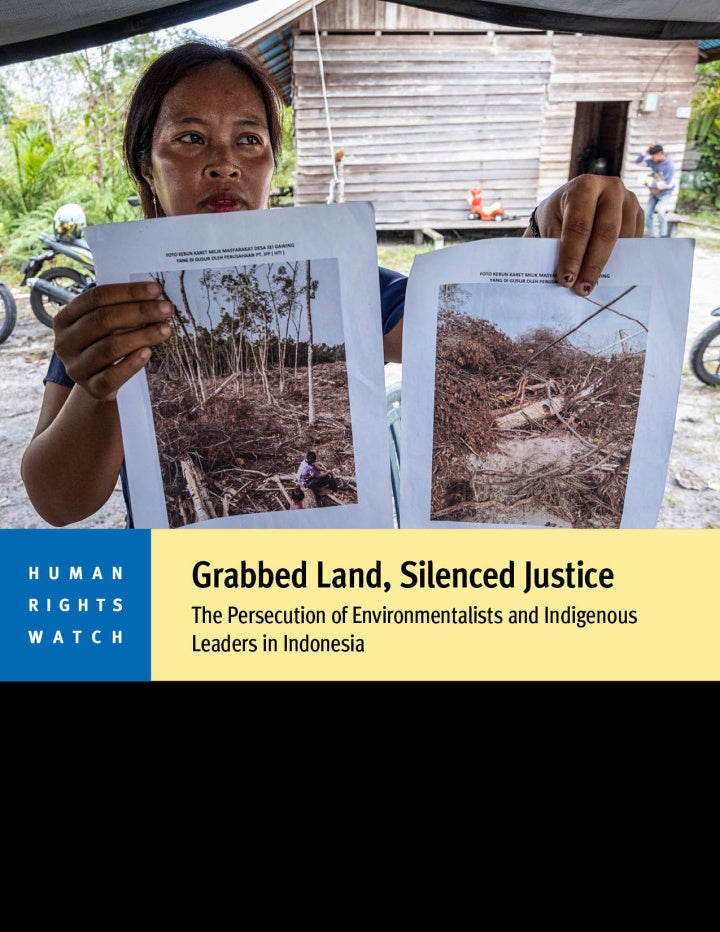
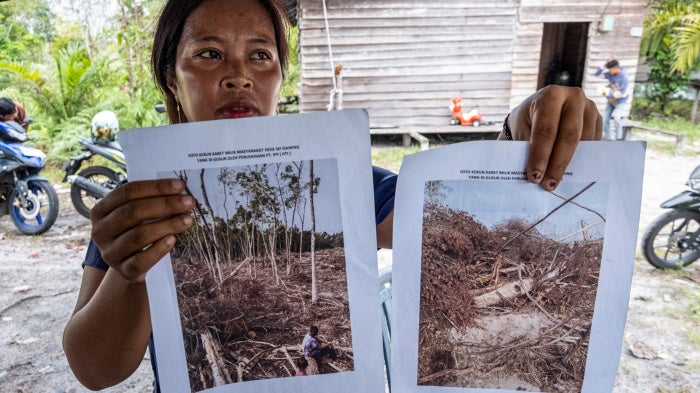
The 70-page report, “Grabbed Land, Silenced Justice: The Persecution of Environmentalists and Indigenous Leaders in Indonesia,” documents how Indonesian police have responded to complaints filed by company officials or politicians by silencing Indigenous villagers who demand their customary land rights and the activists who defend them. The authorities have targeted environmental and Indigenous community defenders using the criminal code and other laws to bring charges ranging from defamation to “spreading communism” to silence protest over environmental harm.
Citizens and residents expelled by both Ethiopia and Eritrea during their
1998-2000 border war should be offered repatriation and the restoration of citizenship, Human Rights Watch
said in a report released today.
The 64-page report, “The Horn of Africa
Russia’s ongoing record of serious human rights abuse in Chechnya impugns its
claim that the war there contributes to the international campaign against terrorism, Human Rights Watch said
in a new report published today
The twenty-seven page report, “Into Harm’s
The Links between Human Rights Abuses and HIV Transmission to Girls in Zambia
Sexual abuse of girls in Zambia fuels the HIV/AIDS epidemic and the strikingly higher HIV prevalence among girls than boys, Human Rights Watch said today. Concerted national and international efforts to protect the rights of girls and young women are key to curbing the AIDS epidemic’s destructive course.
In a 16-page briefing paper, “The Iraqi Government Assault on the Marsh Arabs,” Human Rights Watch documents how systematic bombardment of villages, widespread arbitrary arrests, torture, “disappearances,” summary executions, and forced displacement have reduced the Marsh Arabs from more than 250,000 to as few as 40,000.
This report focuses on three major abuses: repeated, unjustified use of lethal force by security forces to put down political protests by students; continued repression of the independent Ethiopian Teachers' Association, whose members include many of Ethiopia's most distinguished professors; and the stifling of independent thought through denial of university autonomy and government control of act
The Indian government is failing to protect the rights of hundreds of thousands of children who toil as virtual slaves in the country's silk industry, Human Rights Watch said in this new report.
The 85-page report, "Small Change: Bonded Child Labor in India's Silk Industry,"calls on the Indian government to implement its
The Belgian Parliament is currently considering amendments to Belgium's 1993 war-crimes legislation, known as the "anti-atrocity" or "universal jurisdiction" law. The Belgian law, which permits prosecutions in Belgium for atrocities committed abroad, has been severely curtailed by restrictive judicial decisions. The amendments passed today would restore the law to its original scope.
The 75-page report, “'We’ll Kill You If You Cry:' Sexual Violence in the Sierra Leone Conflict,” presents evidence of horrific abuses against women and girls in every region of the country by the rebel Revolutionary United Front (RUF), as well as other rebel, government and international peacekeeping forces.
Human Rights Abuse and Indonesia's Pulp and Paper Industry
Indonesian police and company security forces are responsible for persistent human rights abuses against indigenous communities involved in the massive pulp and paper industry in Sumatra, Human Rights Watch said in a new report released today. Abuses include land seizures without compensation and brutal attacks on local demonstrators.
The “Don’t Ask, Don’t Tell” Policy of the U.S. Military
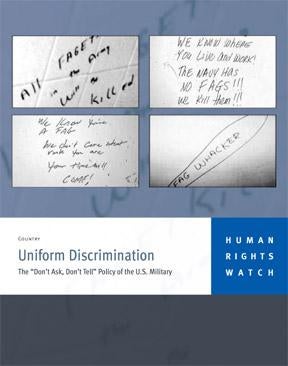
The U.S. military’s “Don’t Ask, Don’t Tell” policy of discharging gay and lesbian servicemembers who reveal their sexual orientation violates human rights and deprives the military of skilled personnel. Under “don’t ask, don’t tell,” any servicemember who acknowledges his or her homosexuality by word or deed is discharged.
State-Sponsored Homophobia and Its Consequences in Southern Africa
In this report, Human Rights Watch and the International Gay and Lesbian Human Rights Commission (IGLHRC) document and analyze the impact of state-sponsored homophobia in Zimbabwe, Namibia, Zambia, and Botswana.
Indonesia's Sham Prosecutions, the Need to Strengthen the Trial Process in East Timor, and the Imperative of U.N. Action
The world watched in horror in September 1999 when the Indonesian National Army (TNI) and Timorese militias went on a campaign of murder, arson, and forced expulsion after the people of East Timor voted for independence in a United Nations administered referendum.
This policy paper discusses: the need for justice; principles that should be met regarding any future form of justice to redress the most serious crimes committed by the Iraqi authorities; justice mechanisms that best further those principles; complementary measures to promote justice and accountability in Iraq; and other considerations relevant to justice and accountability.
Repression of Women and Girls in Western Afghanistan
Afghan women and girls have suffered mounting abuses, harassment and restrictions of their fundamental human rights during 2002, Human Rights Watch said in a new report.