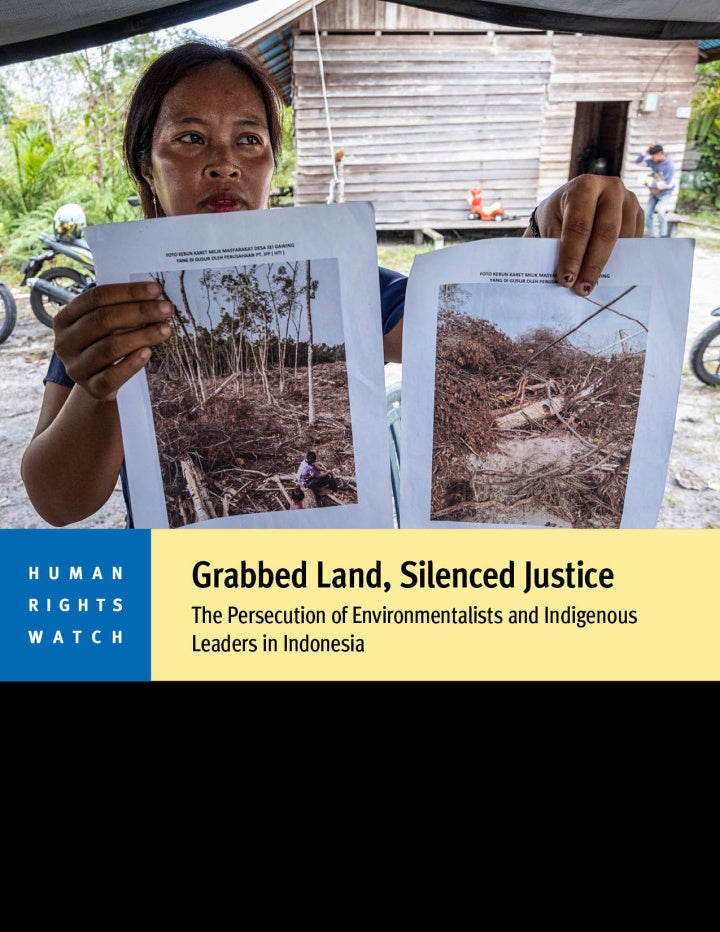
The Persecution of Environmentalists and Indigenous Leaders in Indonesia
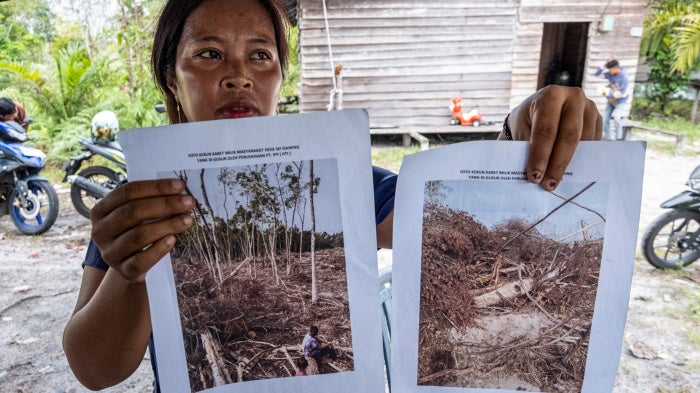
The 70-page report, “Grabbed Land, Silenced Justice: The Persecution of Environmentalists and Indigenous Leaders in Indonesia,” documents how Indonesian police have responded to complaints filed by company officials or politicians by silencing Indigenous villagers who demand their customary land rights and the activists who defend them. The authorities have targeted environmental and Indigenous community defenders using the criminal code and other laws to bring charges ranging from defamation to “spreading communism” to silence protest over environmental harm.
Respect for human rights in the November 2005 parliamentary elections in Azerbaijan fell far short of international standards, with serious violations occurring both prior to and on election day. These shortcomings once again underscored the urgent need for major reforms in the areas of freedom of expression and assembly, the electoral law and its implementation, and accountability mechanisms.
This briefing concerns problematic new measures on speech and detention contained in the draft terrorism legislation—the fifth major piece of counter-terrorism legislation in as many years—currently being debated in the British parliament.
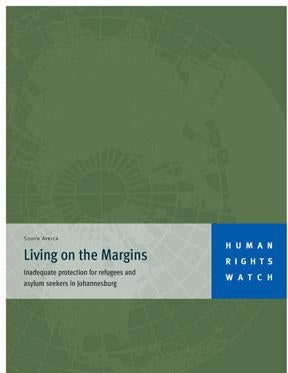
Inadequate Protection for Refugees and Asylum Seekers in Johannesburg
This 66-page report documents how refugees and asylum seekers in South Africa’s largest city often encounter abuse by police and other obstacles throughout the refugee-status determination process. Asylum seekers and refugees in Johannesburg are often subjected to harassment, mistreatment and extortion by the police.
Human Rights Watch respectfully offers the following submission to the Senate Legal and Constitutional Committee’s inquiry into the provisions of the Anti-Terrorism Bill (No. 2) 2005 (hereafter “the Bill”).
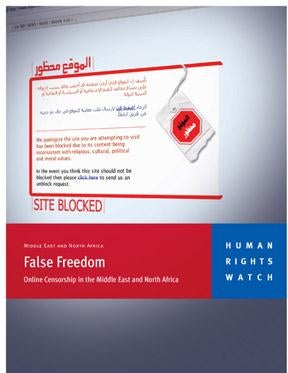
Online Censorship in the Middle East and North Africa
This 144-page report documents online censorship and cases in which Internet users have been detained for their online activities in countries across the region, including Tunisia, Iran, Syria and Egypt.
This briefing paper documents cases where Burundian soldiers summarily executed five civilians and tortured others whom they suspected of being collaborators with the last active rebel group, the National.
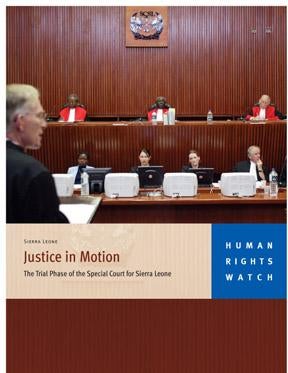
The Trial Phase of the Special Court for Sierra Leone
This 46-page report evaluates the conduct of the U.N.-backed court for war crimes in Sierra Leone during trials, which began in June 2005.The report details concerns regarding court operations that should be addressed to ensure that the court functions as fairly and effectively as possible.
Testimony contradicts government’s version of events
On May 13, 2005 Uzbek government forces killed hundreds of unarmed protesters as they fled a demonstration in Andijan, in eastern Uzbekistan. To date the government has taken no steps to investigate or hold accountable those responsible for this atrocity. Instead it is denying all responsibility and persecuting those who seek an independent and transparent investigation.
Law 975 of 2005 does not contain effective mechanisms to achieve a genuine demobilization and dismantlement of armed groups. At the same time, the Law does not satisfy international standards about truth, justice, and reparation for victims.
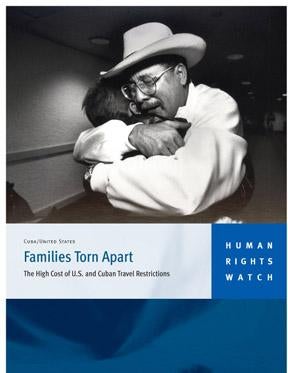
The High Cost of U.S. and Cuban Travel Restrictions
This 69-page report shows how the travel policies of both countries infringe upon the internationally recognized right to freedom of movement, which includes the right to leave and return to one’s own country. In the case of parents and children forced to reside in different countries, the policies also violate the international prohibition on the involuntary separation of families.
This briefing paper provides a concise explanation of human rights concerns arising from the statute of the court created to try Saddam Hussein and others: the Supreme Iraqi Criminal Tribunal (formerly known as the Iraqi Special Tribunal).
The Plight of Internally Displaced Persons in Bogotá and Cartagena
The families interviewed for this 60-page report described fleeing their homes after receiving threats, being subjected to torture, or seeing relatives or neighbors killed. When they flee their communities and seek shelter elsewhere, they may wait weeks or even months for emergency aid, are often denied medical care, and may be unable to enroll their children in schools.
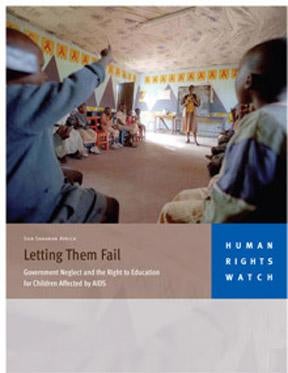
Government Neglect and the Right to Education for Children Affected by AIDS
This 55-page report is based on firsthand testimony from dozens of children in three countries hard-hit by HIV/AIDS: South Africa, Kenya, and Uganda. It documents how governments fail children affected by AIDS when they leave school or attempt to return.
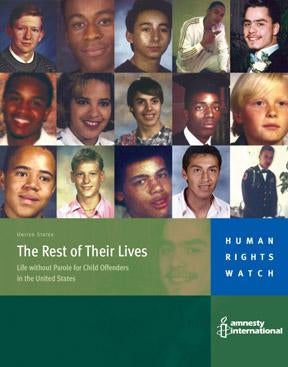
Life without Parole for Child Offenders in the United States
The United States is one of the few countries where a crime committed by a juvenile regularly results in a life sentence without any possibility of parole. This 167-page report documents state and national trends in this type of sentencing and analyzes the race, history and crimes of the young offenders and is a joint project with Amnesty International.
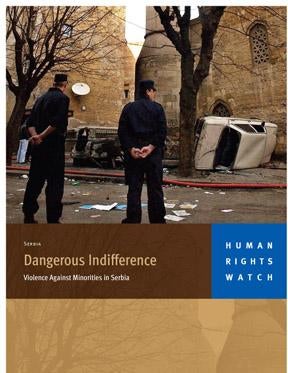
This 52-page report documents a range of crimes against minorities since 2003, including physical assaults, attacks on religious and cultural buildings, and cemetery desecration. The Serbian government’s response to these attacks has been inadequate.