On March 3, Belgium’s Federal Prosecutor’s Office announced the arrest of four individuals—three of whom remain in detention—as part of an investigation into alleged war crimes and crimes against humanity by an armed separatist group in Cameroon’s Anglophone regions.
The investigation focuses on individuals in Belgium suspected of holding leadership roles in the Ambazonia Defence Forces,the armed wing of the Ambazonia Governing Council, a movement seeking independence for Cameroon’s minority English-speaking regions. While officials have not yet publicly identified the suspects, they confirmed the men are members of the Ambazonia Defence Forces.
Authorities believe that “instructions for attacks” were issued from Belgium.
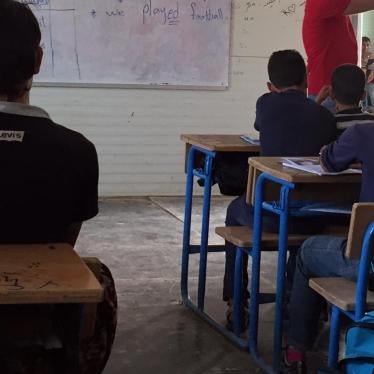
Since 2015, armed separatist groups in Cameroon’s Anglophone regions have carried out serious abuses: killing civilians and using violence to enforce school boycotts that have deprived thousands of children of an education.
The four arrests in Belgium are not the first efforts to pursue accountability for alleged crimes by Cameroonian separatist leaders abroad. In April 2025, a US grand jury issued an indictment against Eric Tataw, a Cameroonian living in the United States. Tataw is charged with offenses including threatening violence against civilians in the Anglophone regions. In September 2024, Norwegian police arrested Lucas Cho Ayaba, leader of the Ambazonia Governing Council, on suspicion of inciting crimes against humanity in Cameroon.
Since the 2015 Anglophone crisis began, Cameroon’s security forces have also been implicated in grave abuses, including extrajudicial killings, the burning of homes, arbitrary arrests, and torture of suspected separatists. Yet efforts to hold government forces accountable have been weak.
A recent ruling on the 2020 Ngarbuh massacre illustrates the problem. In February, a Cameroonian military court convicted three soldiers and a pro-government militiaman for killing 21 civilians but issued lenient sentences and neither investigated those who ordered the attack nor provided reparations to victims’ families.
Justice for Cameroon’s Anglophone crisis cannot be selective. All those responsible for serious international crimes should face credible investigations and prosecutions.