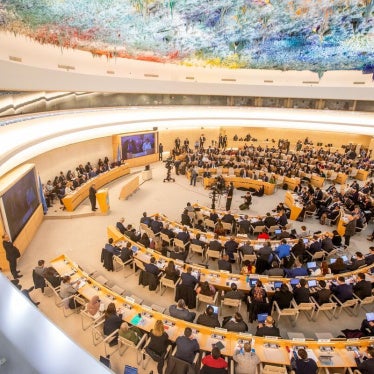
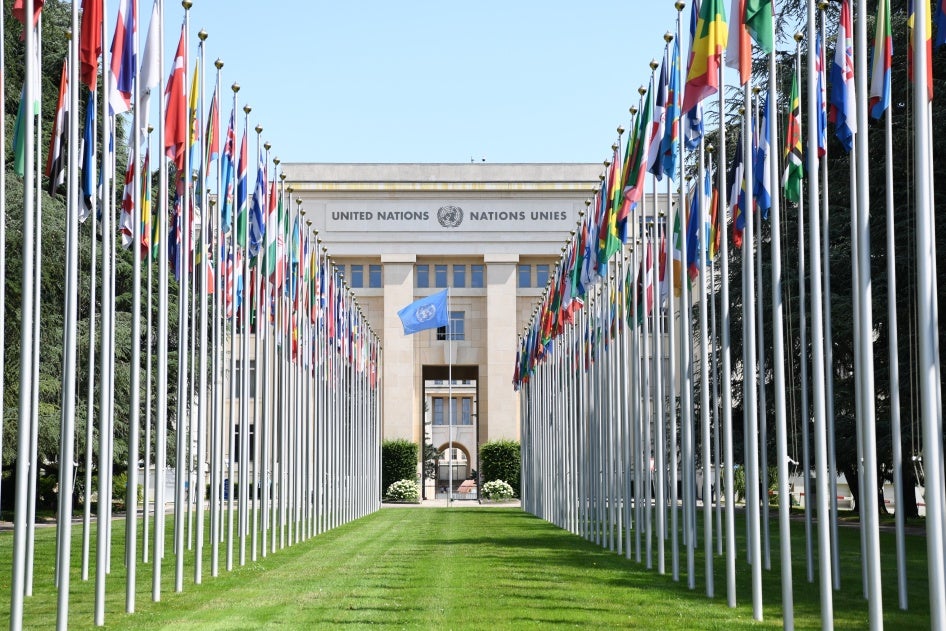
In Geneva on 9 February, the United Nations deputy human rights chief gave an alarming update on the dramatic impact of the financial crisis on the UN’s ability to promote and protect human rights around the world. She described a human rights system at breaking point – with travel cutbacks, atrocity investigations grinding to a halt, and even pro bono human rights experts prevented from working as their shoestring budgets are slashed. This follows a stark warning by UN Secretary-General Antonio Guterres last month that the UN faces collapse by the summer unless member states pay their dues.
In response, UN member states continued to focus on “efficiency” measures and areas of work to be cut, with little reflection on the root causes or sustainable solutions to the crisis. The deputy rights chief warned, however, that “there is no longer any fat in the system,” and now “I am afraid we are cutting into the bone.” Last week, her office reported that its monitoring work had been reduced by over 50 percent in 2025. UN Special Procedures, treaty bodies and independent investigative mechanisms have also issued stark warnings about the impact of the financial crisis on their work.
The Office of the UN High Commissioner for Human Rights in Geneva also told member states it will have to drastically cut back on interpretation and translation support, including international sign language and live captioning, dramatically undermining accessibility. The UN committee on disability rights has warned that such cost-saving measures would not only impede its work, but amounted to discrimination because of the denial of reasonable accommodation and accessibility. It will also have a significant impact on the ability of UN experts to do crucial country visits.
“The human cost of underinvestment”
While the latest financial crisis is threatening to decimate the UN’s human rights work, it has been chronically and significantly underfunded for many years – receiving less than 1 percent of the UN budget despite human rights being one of the organization’s three “pillars.” Nonetheless, the work has been disproportionately impacted by recent budget cutting exercises in New York.
As noted by the UN human rights chief Volker Türk in a recent funding appeal, while the cost of the work is relatively low, “the human cost of underinvestment is immeasurable.”
The combined work of the UN Human Rights Office and various independent mechanisms and bodies that make up the UN human rights pillar have a real impact on people’s daily lives around the world – preventing and responding to human rights violations, providing a lifeline of support to victims, survivors and affected communities, working to strengthen national law and policy to better protect rights, supporting access to justice, and raising the alarm about emerging crises. The work of Special Procedures and Treaty Bodies, in complement to the UN Human Rights Office, has resulted, for example, in countless individuals being released from arbitrary detention, the dropping of harassment cases against human rights activists, strengthening national legal protections, and the repeal of problematic laws and policies. Together, their work also offers important guidance in addressing pressing human rights issues – for example in relation to new technologies and artificial intelligence, transnational repression, legal capacity and social security systems. Special procedures are often referred to as the “eyes and ears” of the human rights system, due to their ability to bring new issues to the table, and provide a valuable early warning system.
The international human rights system is sometimes criticised for being too “complex,” and duplicative – particularly in the drive to “rationalise” and “streamline” in the context of the financial crisis and UN80 reform process. However, it is often that complexity, and the development of different tools over time, that allows for an effective and multipronged approach to complex human rights challenges and crises.
Where grave abuses and atrocity crimes occur, robust independent human rights investigations offer concrete support to criminal and other justice processes, elevate the voices of victims, survivors and affected communities, and also have an important deterrent effect, putting perpetrators on notice they may be held accountable for their actions. Their independent reporting can inform and guide the international community in its response, including on protection, accountability and through targeted sanctions, and is also frequently used, along with other evidence they gather, to initiate or support cases in national and international courts. Their very existence can open up space for the UN Human Rights Office to take a different and complementary approach – to seek access and engagement with the authorities and parties to a conflict that would likely be denied to those collecting evidence to support criminal prosecutions.
Despite the importance of their work, many of those investigative bodies currently report operating at between 30-60 percent of anticipated staffing, while the Commission of Inquiry set up to investigate atrocities in eastern Democratic Republic of Congo, created in an emergency session held in February 2025, had not been staffed by the end of the year.
Notably, commissioners leading independent investigations, special procedures mandate holders and treaty body experts are often top human rights lawyers and experts (e.g. former judges and academics), working on a pro bono basis (though their work is supported by paid UN staff). Their voluntary work to protect and promote human rights should be taken into account as states consider how best to mobilise resources. While cutting a mandate may reduce costs, the UN also loses the valuable volunteer work being offered by these experts.
Addressing the root causes of the financial crisis
Efficiency will of course be important as the UN and its member states navigate this serious financial crisis. Clearly, states should consider the added value and impact of all initiatives being created or renewed at the UN Human Rights Council, in close consultation with civil society, human rights experts and affected communities.
But efficiency should not be pursued at the cost of the core mandate of the institution itself, nor at the cost of the mechanisms and tools built up over decades that offer concrete results. Some experts recently warned that some proposals being floated “[risk] sacrificing individual justice on the altar of administrative efficiency,” underscoring that “history will judge the UN human rights system not by the pragmatism of its organizational design, but by the prison doors it opens for those who should never have been there.”
Furthermore, cosmetic measures are no longer enough to protect the system from collapse. Member states should address the root cause of the current crisis – long-term chronic underfunding of the human rights pillar, compounded by the failure of many states to pay their dues in full and on time.
The United States holds the greatest responsibility for the current crisis, with its non-payment of assessed contributions accounting for around 95 percent of the current shortfall. By the end of 2025, 42 countries had not paid their assessed membership dues, including 8 members of the UN Human Rights Council. The late payment of membership dues by China and other countries has also created significant cash flow challenges for the organization. In line with the requirement to return funds unspent by the end of the calendar year, the UN had to return US$300 million in 2026 (nearly 10 percent of its 2026 regular budget), largely as a result of China’s late payment on 27 December 2024.
Some contributions from the US may be coming, which may offer a lifeline to the UN. But as the US increasingly becomes an unreliable international actor and retreats from multilateralism, others need to urgently mobilise to galvanise support and sufficient multi-year funding to the human rights pillar, including the UN Human Rights Office and independent mechanisms, to ensure its long-term sustainability.
Investing in a strong international human rights system that protects everyone
Rather than continuing to simply slash budgets and activities of a system already operating on a shoestring, states should take concrete steps to reverse the trend.
In March 2025, a cross-regional group of over 70 states, identifying themselves as “Friends of Multilateralism”, pledged to "prioritize securing adequate, sufficient and sustainable funding for the UN human rights pillar." This group, and others, should now mobilise to do just that.
They should ensure their own 2026 assessed membership contributions are paid in full without further delay, take steps to increase penalties for non or late payment of dues, and mobilise to address counterproductive rules that reward late payment. They should work to ensure that the human rights work is adequately resourced within a “slimmed down” UN and ensure the timely availability of resources to independent mechanisms established by the Human Rights Council to address emergency situations.
To save the system from collapse, states will also need to step up their voluntary support and contributions for human rights work where possible – and mobilise to support the high commissioner’s appeal for support for the entire human rights ecosystem, ensuring the shortfall is plugged as a matter of urgency.
In the face of this crisis, UN leadership should also do all they can to protect the integrity of the system – working to defend its complexity and complementarity, and to ensure accessibility for all, without discrimination. The UN secretary-general should support the UN high commissioner for human rights in advocating for the human rights pillar to receive enough of the organization’s budget to ensure all its human rights work is adequately resourced. Civil society can be key allies in this regard.
As attacks on human rights and multilateralism intensify, and atrocities are committed with an expectation of impunity amid proliferating global crises and conflicts, never has it been more important for states to stand together to protect and bolster the international human rights system – which protects us all. Investment in human rights is an investment in stable, resilient societies, which can help build and preserve durable peace, and prevent conflict and crises.
In this moment of crisis, states committed to human rights, multilateralism and the rule of law need to invest both politically and financially in the system. Failing to do so risks bringing the entire UN human rights protection system crashing down, with all that it entails for the protection of people’s rights around the world.