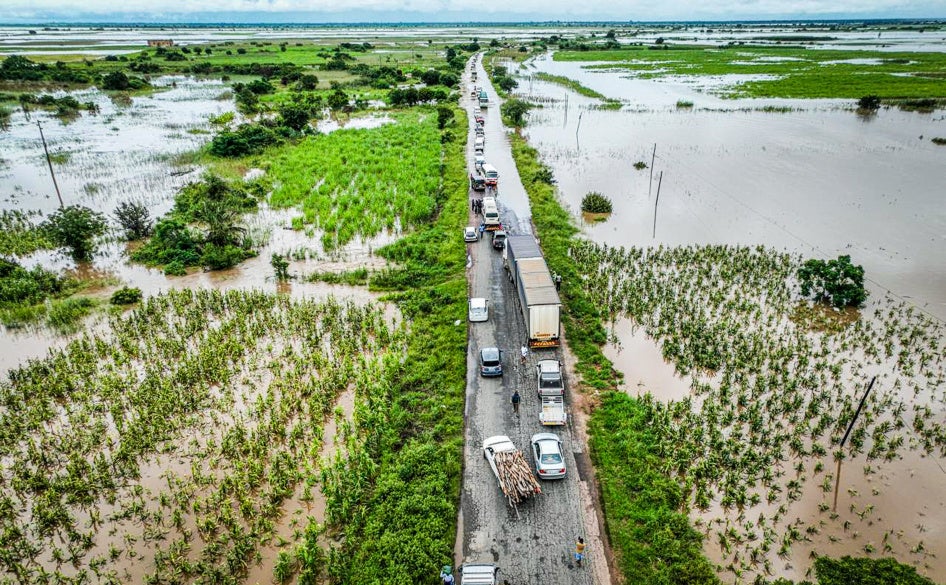
Prolonged heavy rains have caused deadly flooding across Southern Africa. Hundreds of people have reportedly been killed, most of them in Mozambique, where more than half a million have already been displaced. Gender inequality already leads to women being disproportionately affected by climate disasters.
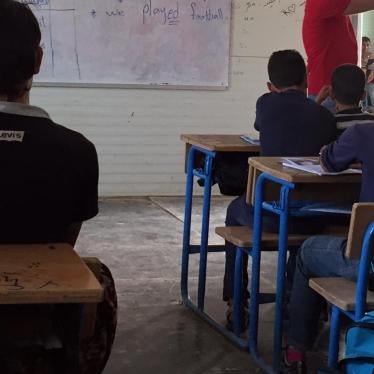
This week, I visited some of the school buildings that are being used as accommodation centers for flood-affected people in the Mozambican capital, Maputo, and the situation is alarming. Women with babies and young children make up most of the displaced communities. Official statistics show that over half of those affected are children, and at least 11,000 are pregnant women.
The centers I visited are overcrowded and face shortages of essential household items, lack of food and clean water, limited supply of hygiene products and private washing facilities, and inadequate or no access to health services and protection support. For women and girls, this exacerbates the risk of gender-based violence, exploitation, and abuse.
As more accommodation centers are opened across the country, Mozambican authorities should step up their efforts and provide displaced people with access to basic services. Even where capacity is strained, authorities remain responsible for prioritizing the safety, health, and dignity of women and girls and for coordinating available national and international support. Monitoring and accountability mechanisms should also be in place so that women and girls can safely report wrongdoing.
The floods have also damaged critical infrastructure, including roads and bridges, worsening access conditions, hampering rescue efforts, and limiting access to clinics and hospitals. Mozambican media has already reported cases of women who gave birth in precarious conditions while they desperately waited for rescue teams to save them from the flooded areas.
Disaster management authorities and international partners should focus on the specific needs of pregnant women and girls and access to sexual and reproductive health services during flood recovery efforts across the region. Disaster risk reduction efforts should respect the Maputo Protocol on the rights of women in Africa and ensure that women participate in the management and mitigation process.
The authorities should recognize the special needs of women and girls affected by the flooding and act decisively to meet those needs.