
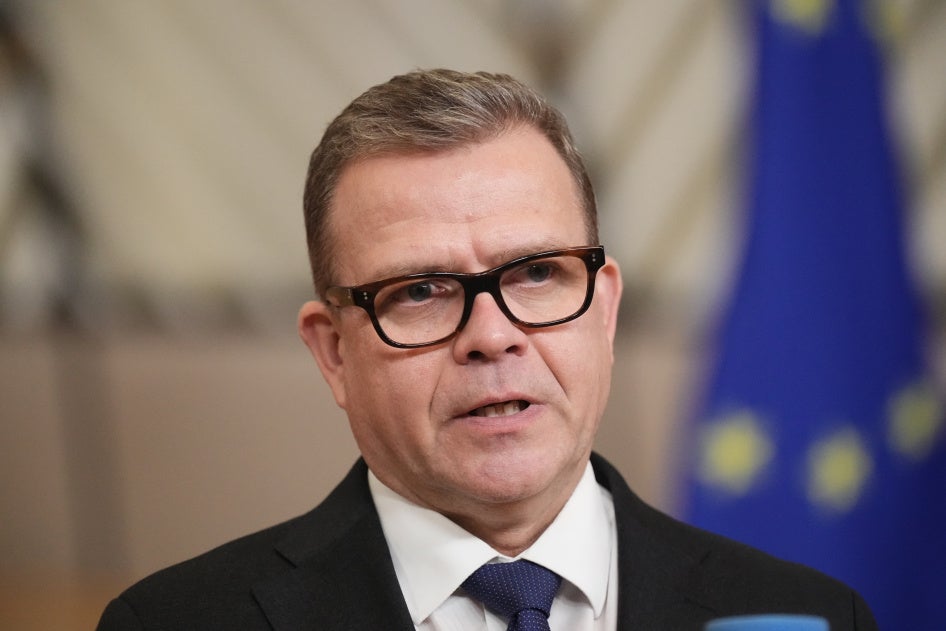
Finnish Prime Minister Petteri Orpo’s scheduled January 25-28 visit to China, accompanied by over 20 Finnish business leaders, is the latest in a wave of trips by democratic governments seeking closer trade relations with Beijing. Recent visits by leaders from Ireland, Sweden, France, Germany, and Canada follow a familiar script: trade and investment dominate the agenda while human rights concerns receive little more than symbolic mention.
This renewed push for engagement reflects a wider challenge among democracies hoping to diversify economic relationships and reduce dependence on the United States. But if democratic backsliding and coercive politics from the Trump administration are causing unease, aligning more closely with an openly authoritarian China should provoke even stronger alarm across Europe.
Finland’s Joint Action Plan with China (2025–2029) exemplifies this imbalance. It outlines ambitious cooperation on innovation, green technology, and trade, with only vague references to human rights. This approach ignores the growing ways in which China’s repression affects Finland directly.
The Chinese government remains one of the world’s most abusive, both at home and abroad. Its ongoing crimes against humanity in Xinjiang involves arbitrary detention, pervasive surveillance, and forced labor of Uyghurs and other Turkic Muslims. This poses problems for Finnish industries. Finland’s clean energy and tech sectors risk exposure to tainted supply chains, even with the European Union regulation prohibiting forced labor imports scheduled to take effect in late 2027.
China’s labor rights abuses extend well beyond Xinjiang. Its low-rights development model has helped drive a global race to the bottom in labor rights, contributing to localized job losses that fuel resentment and populism in Europe and the United States.
In Hong Kong, where people previously enjoyed liberties comparable to those in Helsinki, they now fear long prison sentences for criticizing the government. In Tibet, religious and cultural rights remain under attack. China’s muzzling of dissent increasingly targets activists abroad, including in Europe. This undermines open debate and policymaking, especially crucial these days considering China’s role in supporting Russia’s war on Ukraine.
Orpo’s visit is more than a diplomatic engagement; it is a test of whether Finland can navigate between two major powers while defending its own core interests, which should include a defense of democratic values and human rights.