The Cambodian government has issued formal instructions that will allow it to arbitrarily strip Cambodians of citizenship without any judicial review or appeal. The government’s longtime crackdown on peaceful dissent and the political opposition heightens concerns that these new powers will be abused.
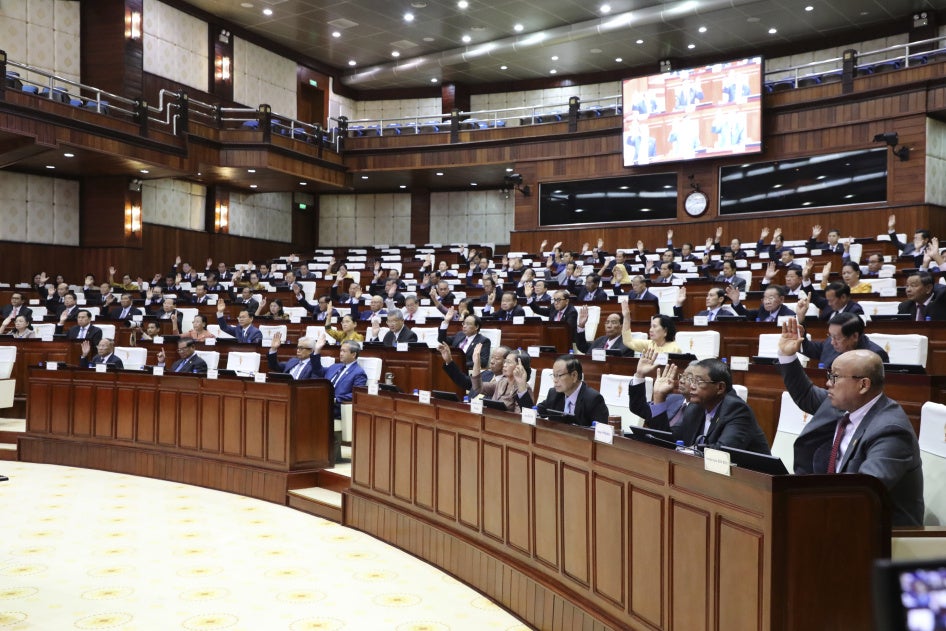
The instructions, the “Sub-Decree on Implementing the Law on Nationality,” were posted on Prime Minister Hun Manet’s Facebook page on January 22. Several months earlier the National Assembly approved amendments to the Cambodian Constitution and the Law on Nationality that allowed Cambodian authorities to deprive a citizen of their nationality. Previously the constitution specifically prohibited deprivation of citizenship.
The sub-decree outlines four criteria the government can use to revoke a Cambodian national’s citizenship: committing treason, colluding with foreign countries, undermining national sovereignty or national security, or being convicted by the courts of various crimes, including treason or insulting the king.
The ruling Cambodian People’s Party frequently uses the judicial system to file politically motivated charges, such as treason, against opponents. Kem Sokha and Sam Rainsy, the two leaders of the now-dissolved opposition party, the Cambodia National Rescue Party, have both been convicted of treason, as have the award-winning Mother Nature Cambodia environmental activists.
Under the new sub-decree, a criminal conviction isn’t necessary to strip someone of their citizenship. Instead, a newly established committee, made up of various government officials and led by the interior minister, will investigate, collect evidence, and recommend whether citizenship should be revoked. Revocation would then occur at the request of the prime minister through a royal decree. The process lacks even basic procedural standards called for under international law, such as administrative or judicial review, or the right to appeal a decision.
Although the sub-decree instructs the committee to consider whether the person “may acquire another nationality or receive protection from a foreign state,” the ill-defined process raises serious concerns about Cambodians being made stateless, which runs counter to international standards on citizenship rights.
Governments should raise their concerns with the Cambodian authorities and stress that that stripping individuals of their citizenship should never be used as a weapon against political opponents.