Human Rights Watch welcomes the opportunity to provide input to the Special Rapporteur on the Human Rights of Migrants to inform his second report on the externalization of migration management. This submission summarizes recent relevant research and analysis by Human Rights Watch, with findings related to multiple topics in the call for inputs (recent trends and human rights violations; legislation; motivations of third states; transparency / monitoring; impacts on children), in the following contexts:
| Externalizing states / institutions | Cooperating states |
| United States | Americas: Panama, Costa Rica, El Salvador; Africa: Eswatini, Ghana, Rwanda, South Sudan |
| European Union (EU); Spain | Mauritania |
| EU; Italy; Germany; Spain; United Kingdom | Tunisia |
| EU; Cyprus | Lebanon |
| Australia | Nauru |
United States: Panama, Costa Rica, El Salvador; Eswatini, Rwanda, Ghana, South Sudan
Since the start of his second term, United States president Donald Trump has cracked down on irregular migration, unlawfully blocked access to asylum in the US for those entering through the southern border, and pursued externalization measures including soliciting the cooperation of other countries to accept third-country nationals expelled from the US.
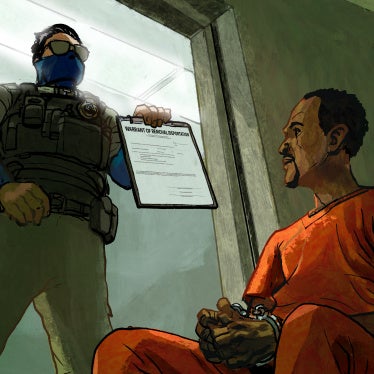
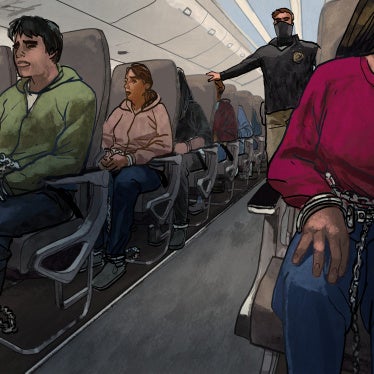
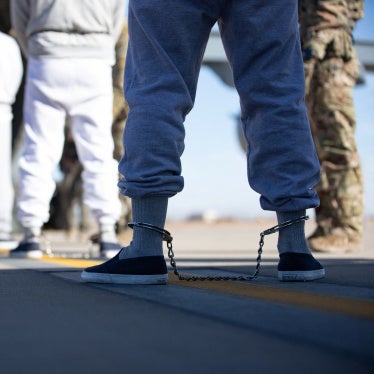
Human Rights Watch reports in April and May 2025 documented the wrongful mass expulsions by the US in February 2025 of hundreds of third-country nationals (asylum seekers and migrants), including children, to Panama and Costa Rica. The reports document that these individuals were denied due process and the right to seek asylum in the US, faced abusive detention conditions in the US, and experienced arbitrary detention in Panama and Costa Rica. All three countries detained children for weeks in violation of international norms. None of the three governments made details of the expulsion agreements public. Panama accepted 299 people, including at least six families with children, from 13 countries. Costa Rica accepted 200 people, including 81 children, from at least 10 countries. Many subsequently returned to their home countries in circumstances that call into question whether their choices were truly voluntary.
The US also expelled over 250 Venezuelans in March and April to El Salvador, where they were transferred to the Center for Confinement of Terrorism and held incommunicado. After four months, they were released as part of a prisoner exchange and sent to Venezuela. A November 2025 Human Rights Watch report documents the serious abuses they experienced during detention in El Salvador, including arbitrary detention, enforced disappearance, systematic torture, and sexual violence.
Human Rights Watch also tracked the impact of 2025 US agreements with multiple African states – including Rwanda, Eswatini, Ghana, and South Sudan – for the expulsion of third-country nationals. The implementation of these opaque agreements, often including promised US financial assistance, subjected people to arbitrary detention, ill-treatment, and risks of refoulement. For example, after Ghana accepted over 40 West Africans deportees, its onward expulsion of some to their countries – including a bisexual Gambian man – likely violated the principle of nonrefoulement due to persecution- or torture-related risks. In Eswatini, deportees were reportedly held in harsh conditions at the Matsapha Correctional Complex.
For more information:
- November 2025 report: “‘You Have Arrived in Hell’: Torture and Other Abuses Against Venezuelans in El Salvador’s Mega Prison,” https://www.hrw.org/report/2025/11/12/you-have-arrived-in-hell/torture-and-other-abuses-against-venezuelans-in-el
- September 2025 news release: “US/Africa: Expulsion Deals Flout Rights,” https://www.hrw.org/news/2025/09/23/us/africa-expulsion-deals-flout-rights
- May 2025 report: “‘The Strategy Is to Break Us’: The US Expulsion of Third-Country Nationals to Costa Rica,” https://www.hrw.org/report/2025/05/22/the-strategy-is-to-break-us/the-us-expulsion-of-third-country-nationals-to-costa
- April 2025 report: “‘Nobody Cared, Nobody Listened:’ The US Expulsion of Third-Country Nationals to Panama,” https://www.hrw.org/report/2025/04/24/nobody-cared-nobody-listened/the-us-expulsion-of-third-country-nationals-to
EU, Spain: Mauritania
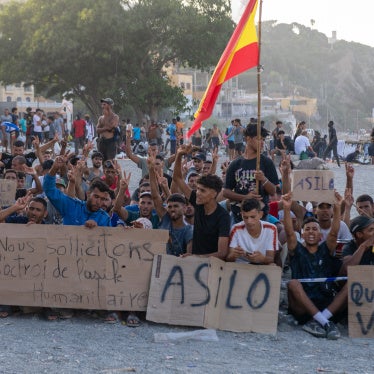
Between 2020 and 2024, increasing numbers of migrants and asylums seekers attempted boat journeys from Africa’s northwest coast towards Spain’s Canary Islands. Tens of thousands arrived in the Canaries; tens of thousands more died at sea or were intercepted and prevented from leaving the African continent. In Mauritania, a transit and departure country along the route, the EU and Spain (bilaterally) ramped up their efforts to outsource migration controls, while Mauritanian authorities cracked down on irregular migration. An August 2025 Human Rights Watch report documents serious human rights violations between 2020 and early 2025 by Mauritanian security forces against migrants and asylum seekers (men, women, and children) and people accused of migrant smuggling, including violence, arbitrary arrests, inhumane detention conditions, extortion, and collective expulsions. Responsible security forces, notably the police, coast guard, and gendarmerie, continued to receive equipment, training, and other support from the EU and Spain. Access to justice and legal aid for migrants in Mauritania is limited.
The report traces border externalization measures by the EU and Spain in Mauritania that exacerbated and disregarded rights violations, including: Spain’s bilateral migration control support (equipment and training) to Mauritania’s coast guard and police; deployment of Spanish police and civil guard to Mauritania; EU funding and projects aimed at bolstering migration/border control in Mauritania, without adequate human rights safeguards; the European Commission’s attempts to negotiate an agreement for Frontex operational deployment to Mauritania; and the 2024 EU-Mauritania migration partnership and €210 million EU funding package for the Mauritanian government.
For more information:
- August 2025 report, “‘They Accused Me of Trying to Go to Europe’: Migration Control Abuses and EU Externalization in Mauritania,” https://www.hrw.org/report/2025/08/27/they-accused-me-of-trying-to-go-to-europe/migration-control-abuses-and-eu
EU, Italy, Germany, Spain, UK: Tunisia
In a report and news release in July 2023, Human Rights Watch documented serious human rights violations by the Tunisian police, military, and national guard between 2019 and 2023 against migrants, refugees, and asylum seekers of multiple African nationalities. Violations included violence, arbitrary arrests and detention, life-endangering actions at sea, forced evictions, theft of money and belongings, and—since July 2023—collective expulsions of men, women and children, including asylum seekers and people with regular immigration status, to life-threatening conditions in the desert along Tunisia’s borders with Libya and Algeria. In October 2023, we reported on collective expulsions of adults and children by the national guard to the Tunisia-Algerian border, following their interception at sea in September 2023. Abuses against migrants have since continued while the Tunisian government has sought to suppress civil society organizations and limit assistance for migrants, refugees, and asylum seekers, including through arrests and prosecutions of members of non-governmental organizations.
EU migration cooperation with Tunisia has largely disregarded the ongoing violations against migrants. In 2023, the EU signed a Memorandum of Understanding (MoU) with Tunisia for a new “strategic partnership” and funding package of up to €1 billion, including €105 million to curb irregular migration. The MoU failed to include safeguards to prevent rights violations and ensure that EU support would not reach entities responsible for violations. In 2024, the European Ombudsman criticized the European Commission for its lack of transparency about the human rights information it relied on before signing the MoU, emphasizing the need for complaint mechanisms and explicit criteria for suspending EU funding. Previously, between 2015 and 2022, the EU had already dedicated €93 to €178 million in migration-related funding to Tunisia (including support to Tunisian security forces) under the EU Trust Fund for Africa, which the European Court of Auditors found did not comprehensively address human rights risks.
Bilaterally, EU member states including Italy, Germany, and Spain also spent millions on border control equipment and technical assistance for Tunisian security forces. The United Kingdom in 2025 announced a multi-million-pound deal with Tunisia to “target the root causes of migration” and said it had supplied equipment to help the Tunisian national guard “intercept small boats carrying irregular migrants.”
For more information:
- November 2025 news release: “Tunisia: Abusive Prosecutions of Refugee Group,” https://www.hrw.org/news/2025/11/24/tunisia-abusive-prosecutions-of-refugee-group
- October 2024 joint statement: “Tunisia is Not a Place of Safety for People Rescued at Sea,” https://www.hrw.org/news/2024/10/04/joint-statement-tunisia-not-place-safety-people-rescued-sea
- October 2023 news release: “Tunisia: African Migrants Intercepted at Sea, Expelled,” https://www.hrw.org/news/2023/10/10/tunisia-african-migrants-intercepted-sea-expelled
- September 2023 opinion: “EU Commission Should Stop Ignoring Tunisia’s Abuses Against Migrants,” https://www.hrw.org/news/2023/09/28/eu-commission-should-stop-ignoring-tunisias-abuses-against-migrants
- July 2023 report: “Tunisia: No Safe Haven for Black African Migrants, Refugees,” https://www.hrw.org/news/2023/07/19/tunisia-no-safe-haven-black-african-migrants-refugees
EU, Cyprus: Lebanon
A 2024 Human Rights Watch report documents how the Lebanese Armed Forces and Cypriot Coast Guard and other authorities worked together to keep Syrian refugees from reaching Europe by intercepting people in boats and pushing them back or deporting them to danger in Syria between 2021 and 2024. Children were among those impacted. The report shows how the EU and its member states provided Lebanese security authorities with at least €16.7 million in funding from 2020 to 2023 for border/migration management, in addition to a broader €1 billion EU package to Lebanon for 2024-2027 that included money to the “Lebanese Armed Forces and other security forces with equipment and training for border management and to fight against smuggling.”
For more information:
- September 2024 report, “‘I Can’t Go Home, Stay Here, or Leave’: Pushbacks and Pullbacks of Syrian Refugees from Cyprus and Lebanon,” https://www.hrw.org/report/2024/09/04/i-cant-go-home-stay-here-or-leave/pushbacks-and-pullbacks-syrian-refugees-cyprus
Australia: Nauru
In November 2024, Australia passed new legislation expanding its offshore detention regime, which Human Rights Watch said seeks to further evade Australia’s international obligations and marks an escalation in Australia’s existing mistreatment of refugees, migrants, and asylum seekers. Under three new laws amending the Migration Act (Migration Amendment, Removal and Other Measures, and Prohibiting Items in Immigration Detention Facilities), the government now has the authority to pay third countries to accept noncitizens, including refugees. Contrary to international standards, the laws do not include adequate safeguards to protect refugees from abuses or onward refoulement.
In January 2025, the UN Human Rights Committee found Australia responsible for the arbitrary detention of asylum seekers held offshore in Nauru. Nonetheless, in August 2025, the Australian government struck a A$400 million deal with Nauru for the expulsion/transfer of about 350 non-citizens (third-country nationals and stateless people). The government had previously been forced to release these individuals after a 2023 high court ruling found their indefinite immigration detention illegal; they could not be deported to their countries of origin due to statelessness or risks at home. Previous Human Rights Watch research has found that refugees and asylum seekers forcibly transferred to Nauru suffered severe abuse, inhumane treatment, and neglect. Some died from medical neglect and suicide.
For more information:
- September 2025 opinion: “Australia Should Halt Plan to Deport Refugees, Migrants to Nauru,” https://www.hrw.org/news/2025/09/03/australia-should-halt-plan-to-deport-refugees-migrants-to-nauru
- November 2024 opinion: “Australia Passes Harsh New Anti-Migration Laws,” https://www.hrw.org/news/2024/11/28/australia-passes-harsh-new-anti-migration-laws
Recommendations
To externalizing states and institutions (Australia, US, UK, EU institutions & member states):
- Respect the right of everyone to seek asylum under international law, regardless of immigration status; uphold due process rights; and ensure humane treatment during any immigration-related arrests, detention, deportations, or other operations.
- Ensure no migration-control funding is disbursed to external governmental entities committing human rights violations against migrants or asylum seekers. Suspend financial support to and cease joint operations with security forces in contexts where serious violations have been documented; set human rights benchmarks for future support.
- Reduce deterrence and securitization approaches to migration policy. Instead, redirect personnel and resources to expand legal pathways for migration and asylum; humanitarian aid and protection services; search-and-rescue operations at sea; and support to locally designed and managed projects in countries of origin and transit focused on development, jobs, legal aid, and reintegration support for returned migrants.
- Cease all expulsions/transfers of noncitizens to third countries and any efforts toward such deals. Allow people wrongfully removed to return and seek asylum in line with international obligations. Process asylum claims at borders and within the territory, rather than outsourcing this responsibility to countries with limited capacity to assess claims or provide protection, to ensure respect for the principle of nonrefoulement: the obligation not to return people to a country where they face risks of persecution or other harm.
To cooperating states:
- Ensure respect for the rights of migrants, asylum seekers, and refugees. Hold to account any security force personnel who commit violations. Cease collective or arbitrary/summary expulsions and ensure due process in immigration proceedings, including individual case reviews and access to asylum procedures.
- Cease accepting third-country nationals expelled or transferred from other states. If any such transfers take place, they should only occur under a formal agreement ensuring strict adherence to due process and international law, including access to full and fair asylum procedures and protection from arbitrary detention and refoulement.