(Beirut) – The Israeli military’s repeated attacks on reconstruction-related equipment and other civilian facilities in southern Lebanon throughout 2025 violate the laws of war and are apparent war crimes, Human Rights Watch said today.
Residents and local municipal authorities told Human Rights Watch that the attacks have hampered reconstruction efforts and the ability of tens of thousands of displaced people to return to their homes in southern Lebanon. Over 10,000 buildings were heavily damaged or destroyed there between October 2023 and January 2025.
“Amid the ceasefire, Israeli forces have carried out attacks that unlawfully target reconstruction-related equipment and facilities,” said Ramzi Kaiss, Lebanon researcher at Human Rights Watch. “After reducing many of Lebanon’s southern border towns to rubble, the Israeli military is now making it much more difficult for tens of thousands of residents to rebuild their destroyed homes and return to their towns.”
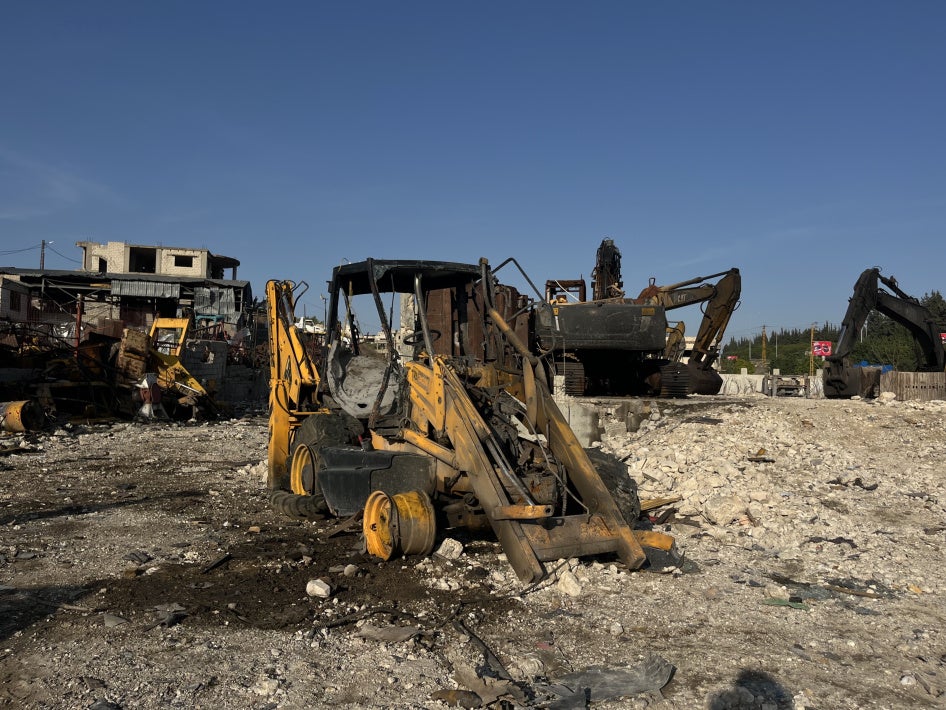
Human Rights Watch investigated four attacks on reconstruction-related sites, including three on six outdoor showrooms and maintenance facilities for bulldozers, excavators, and heavy-machinery in the southern Lebanese towns of Deir Seryan, Msayleh, and Ansariyeh, as well as an attack on a cement and asphalt factory in Sinay. The strikes, between August and October 2025, months after a ceasefire between Israel and Hezbollah, killed 3 civilians and injured at least 11 people.
Researchers visited the sites and interviewed 13 people, including owners of the storage and maintenance facilities, mayors of the towns, a manager at the cement and asphalt factory, a government contractor, and three people working at an international nongovernmental organization providing aid in southern Lebanon. Human Rights Watch also reviewed inventory documents and contracts provided by three site owners.
The four attacks destroyed over 360 heavy machines, including bulldozers and excavators, in addition to an asphalt and cement factory. Owners of heavy machinery sites said that they sold or rented machinery throughout various areas of Lebanon, and that some of the machines that they sold or rented were used for civilian reconstruction efforts, including rubble clearing.
“We can’t even clear the rubble [from our sites] because we’re afraid that, if we clear it, more of the machines we’re using for rubble-clearing might be struck,” said Ibrahim Karim, owner of a site in Deir Seryan. “So here, we’ve moved the rubble with our own hands.”
For each of the attacks, Israeli forces had issued statements that the equipment and materials were used by Hezbollah or “allowed,” “enabled” or were “intended” to be used by Hezbollah to “rebuild” or “reestablish” its “assets,” “activity,” or “infrastructure,” without revealing any details.
Human Rights Watch did not find evidence of military targets in and around the sites. Researchers were able to verify that some of the machinery and supplies were being utilized for civilian purposes. Researchers were unable to verify the use of all machinery and materials that were attacked but did not find any evidence of their use for military purposes by Hezbollah.
Owners and employees all said that they did not know whether they were working with Hezbollah’s military wing. They said that they do not typically ask clients for their political affiliations and that they sell and fix heavy machinery to whoever requests their services.
Hezbollah has both a military wing (known as the Islamic Resistance, or al-Muqawama al-Islamiyya) and nonmilitary organizations, such as its political party, its healthcare institutions, and its social welfare organizations. Like other Lebanese political parties, Hezbollah has thousands of members who are not actively involved in any aspect of its military operations.
However, even in instances in which civilian equipment was being sold or maintained for people with links to Hezbollah, that would not in itself make the sites or the machinery legitimate military targets.
Based on the evidence Human Rights Watch gathered, the possible contributions that the targeted machinery and sites may have been able to confer on Hezbollah’s military capability is too vague or tenuous to make these objects lawful targets. Permitting such attacks could effectively make all heavy machinery and factories producing materials for construction military objectives subject to attack.
Israeli forces have also repeatedly carried out unlawful attacks on heavy machinery for reconstruction and other vital civilian infrastructure and hampered reconstruction efforts in the Occupied Palestinian Territory.
Human Rights Watch sent a letter outlining its findings and posing questions to the Israeli military on December 3. The Israeli military responded with a question, which Human Rights Watch responded to, but subsequently the Israeli military did not provide any further response to the questions posed.
The International Committee of the Red Cross’ authoritative study of customary laws of war provides that warring parties can only target legitimate military objectives: that is, objects that by their nature, location, purpose or use “make an effective contribution to military action and whose total or partial destruction, capture or neutralization, in the circumstances ruling at the time, offers a definite military advantage.”
The mere possibility that equipment could be used in an undefined, future contribution for military purposes, such as to build fortifications, does not constitute a legitimate military target. Individuals who order deliberate attacks on civilian objects and infrastructure are responsible for war crimes.
Israel’s key allies, including the United States, the United Kingdom, and Germany, should urgently act to press Israel to cease all attacks on civilian objects and reconstruction-related efforts, including by immediately suspending military assistance and arms sales to Israel and imposing targeted sanctions on officials credibly implicated in grave crimes. Lebanon’s judicial authorities should initiate domestic investigations of serious international crimes, and the government should accede to the International Criminal Court’s Rome Statute and submit a declaration accepting the court’s jurisdiction prior to the date of accession, including since at least October 7, 2023.
“The return of tens of thousands of Lebanon’s displaced residents to their homes and villages hinges upon the ability of governments to press Israel to halt its attacks on reconstruction efforts,” Kaiss said. “They should immediately suspend arms to Israel and impose targeted sanctions on officials credibly implicated in ongoing grave crimes.”
Since the ceasefire between Israel and Hezbollah went into effect in November 2024, more than 64,000 people in Lebanon remain displaced. Ongoing Israeli strikes have killed at least 127 civilians since the ceasefire, according to the Office of the United Nations High Commissioner for Human Rights (OHCHR), and have destroyed civilian infrastructure. According to UN experts, there have been “four incidents of projectiles fired from Lebanon toward Israel since the ceasefire, none of which resulted in casualties.”
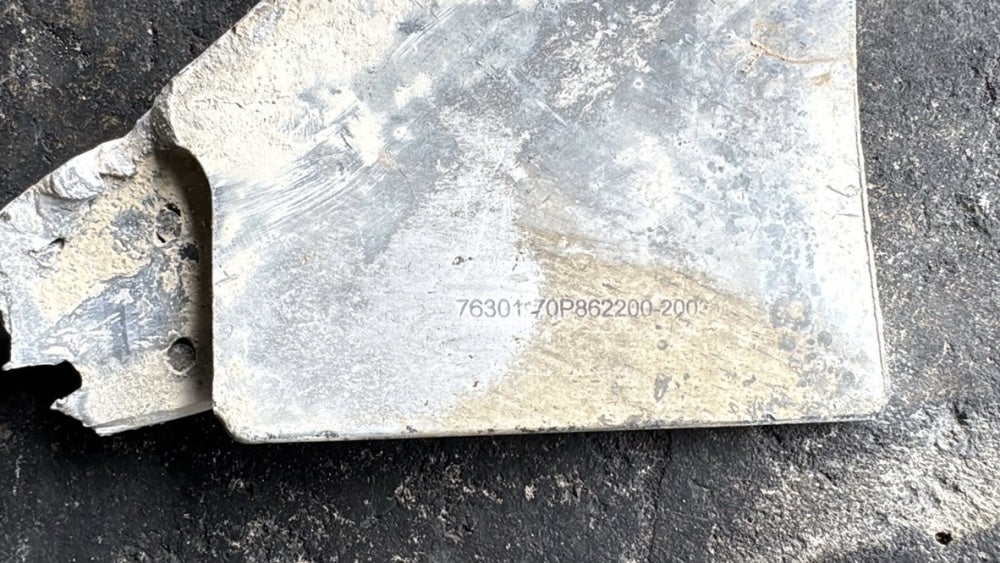
The owners of two sites said that they had sold some machines to international organizations, including the UN Development Programme (UNDP), or to municipalities that were funded by donations from UNDP and USAID. At two of the sites, researchers found remnants consistent with a US-produced Joint Direct Attack Munition (JDAM) guidance kit, including a tail fin remnant with markings displaying a CAGE code for Boeing and a JDAM tail unit assembly.
In addition to the attacks Human Rights Watch documented, other media outlets have reported additional Israeli strikes that, they said, have destroyed reconstruction equipment and efforts. Public Works Studio, a Lebanese research and design studio working on issues related to reconstruction, housing, and public spaces, said that between December 2024 and November 2025, the Israeli military conducted 46 attacks on vehicles working to remove rubble and clear roads in southern Lebanon, 32 attacks on prefabricated rooms and houses set-up by residents returning to their villages, and 6 on concrete mixers, quarries, stone and aluminum factories, and wood sawmills.
On November 25, the spokesperson for the United Nations High Commissioner for Human Rights, Thameen Al-Kheetan, said Israeli forces had “severely hampered reconstruction efforts and attempts by internally displaced people to go back to their homes in southern Lebanon,” including through attacks on the cement and asphalt factory. He said that Israeli attacks have “destroyed and damaged civilian infrastructure, including housing units, roads, factories and construction sites,” and that Israel’s recent construction of a wall, which crosses into Lebanese territory, has “affect[ed] people’s right to return to their lands.”
Deir Siryan: August 6, 15 Machines
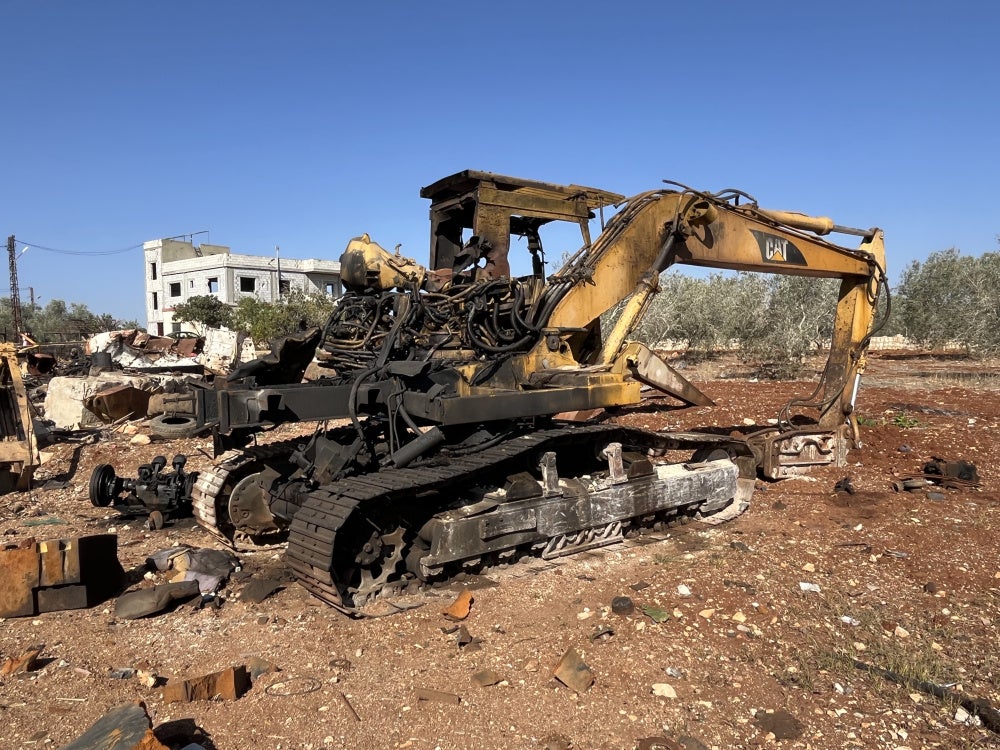
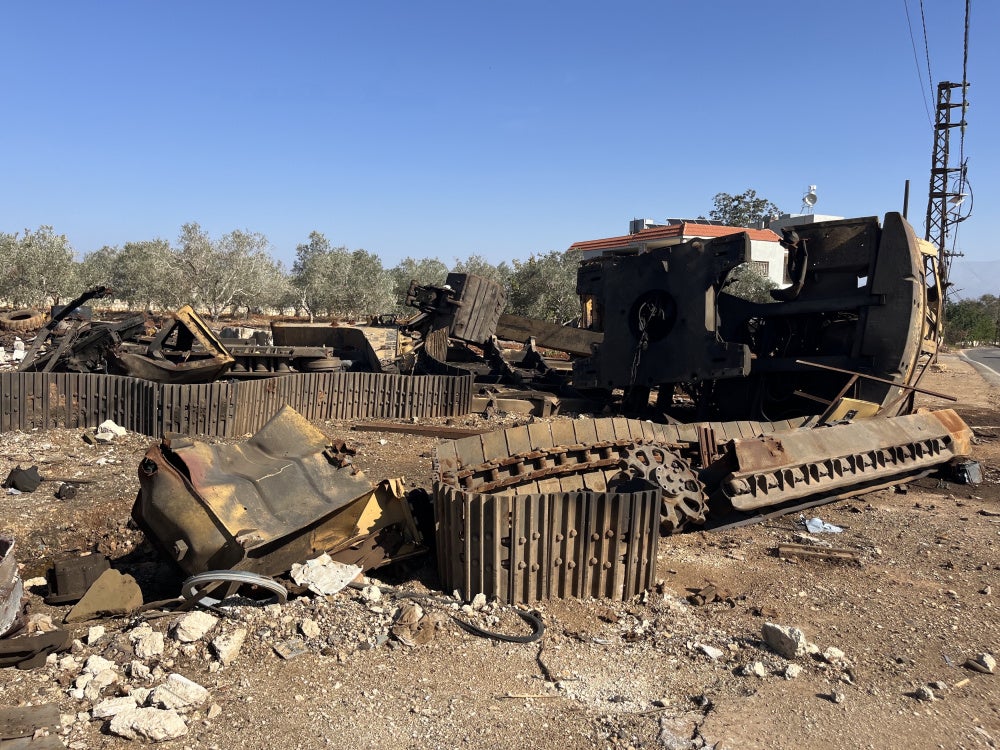
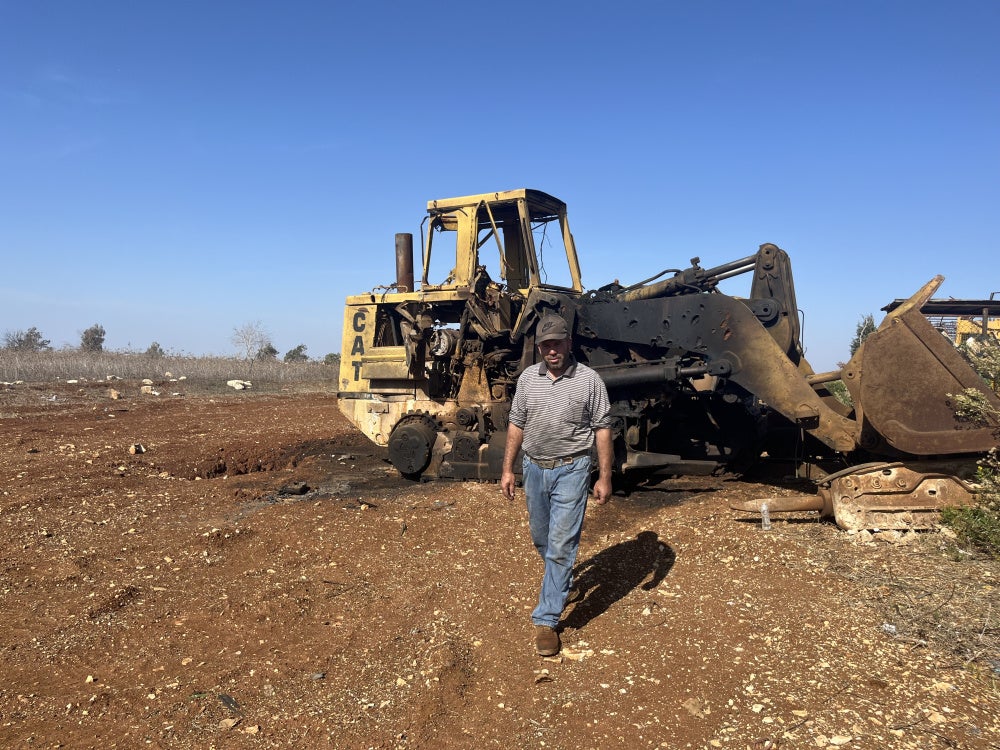
On the night of August 6, 2025, Israeli forces struck two bulldozer maintenance facilities in Deir Seryan in southern Lebanon. The strikes killed one person, a Syrian worker at one of the sites, and injured two others, according to the owners and Lebanon’s Ministry of Health.
Researchers visited the two sites on November 21 and observed destroyed bulldozers, excavators, and other heavy machinery, as well as damaged homes. Human Rights Watch spoke to the owners of the two sites, Ibrahim Karim and Hussein Khalil Karim, who are cousins, as well as Ibrahim’s nephew, Hussein Mohammed Karim, who works with him.
Both Ibrahim and Hussein Khalil own several heavy machines, including bulldozers, excavators and cement rollers that they rent out to municipalities and private individuals working in construction and agriculture. They also own hundreds of spare parts that they use to fix machines that others bring to them. The strikes damaged all of their machinery and spare parts, as well as about a dozen machines owned by others that were on site for maintenance. The strikes also destroyed their personal vehicles and damaged their homes.
They estimated the damage to the machines and spare parts at US$1.3-1.4 million.
At one of the sites, researchers found remnants of a Boeing-produced Joint Direct Attack Munition (JDAM) tail unit assembly.
Ibrahim said that most of their clients were from the South Lebanon Council, a government entity established in 1970 to carry out projects aimed at “meeting the needs of [southern Lebanon] and providing means of safety and stability.” He said that individuals had also been renting their machines to remove rubble from destroyed villages, which he had witnessed as he had gone to check on the machines while they were rented out.
“When we rent our machines, we go almost every day to check on them, to fill them with diesel, and fix any issues with them,” Ibrahim said.
The Syrian worker killed was living in the bottom floor of Khalil’s home. The strike also injured Ibrahim’s wife and brother Hussein Khalil, who were both at their homes. Six children, ages 5-12, were at one of the homes, Ibrahim said. “Our house is 40 meters away from the site,” he said. “My wife was injured as a result of the shattering glass.”
Hussein Khalil, Ibrahim, and Lebanese media all reported that that the initial strikes were followed by others.
“When the strikes happened, I was nearby in the village on my motorcycle and heard the strikes that happened on our place and our cousin’s place,” Hussein Khalil Karim said. “I quickly came with my motorcycle, and I took my sister from the house and dropped her off in the neighboring village. And then I came back and saw that there were additional strikes on the machines. One of the strikes “hit a bulldozer and the metal shrapnel from the missile killed a Syrian worker.”
He said that the strikes had destroyed 14 heavy machines at his site, including excavators, bulldozers, six-wheeler trucks, and pick-up trucks, in addition to spare parts used in maintenance operations.
The day of the strike, the Israeli military stated on its Telegram channel that its forces had “struck Hezbollah terrorist infrastructure sites in southern Lebanon,” including “Hezbollah weapons storage facilities, a missile launcher and Hezbollah terrorist infrastructure which stored engineering tools that allowed for the reestablishment of terrorist infrastructure in the area.” The statement did not specify whether it was referring to the attacks in Deir Siryan.
Human Rights Watch did not find evidence of military targets at or around the site, and the possibility that equipment could be used in an undefined, future contribution to military purposes does not in itself make it a legitimate military target.
Ansariyeh: September 3, 46 Machines
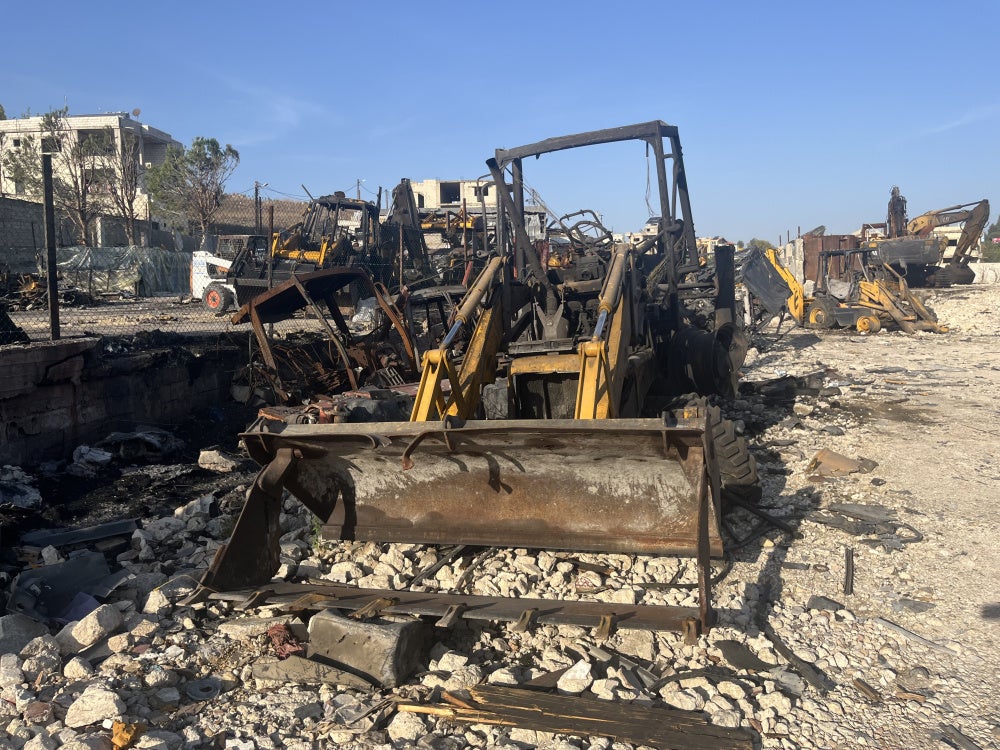
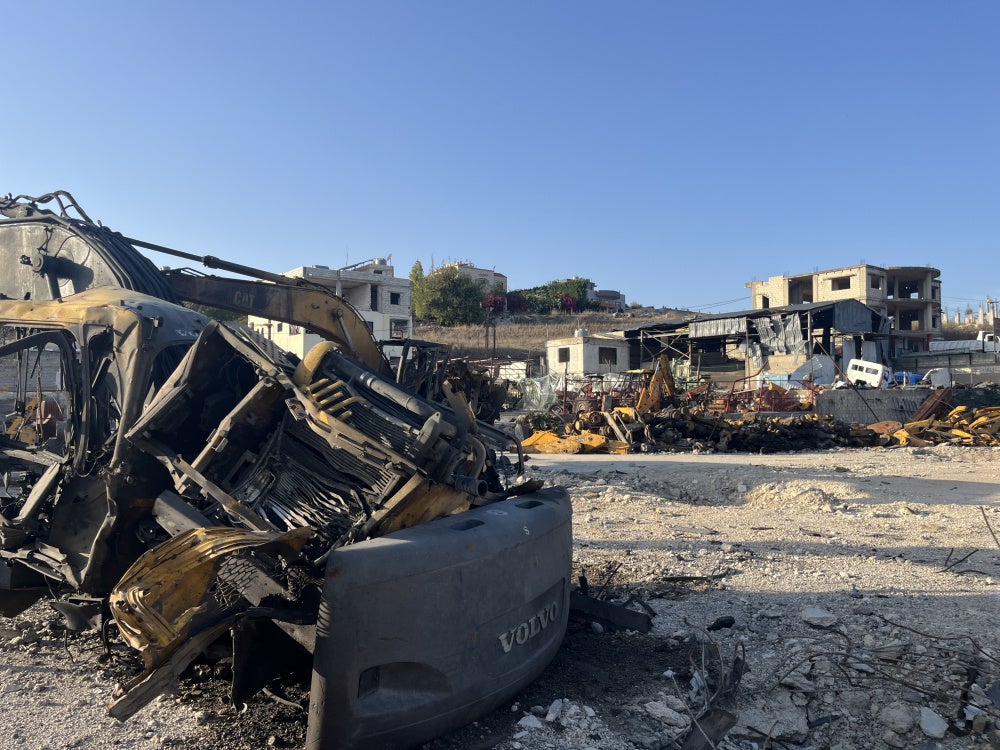
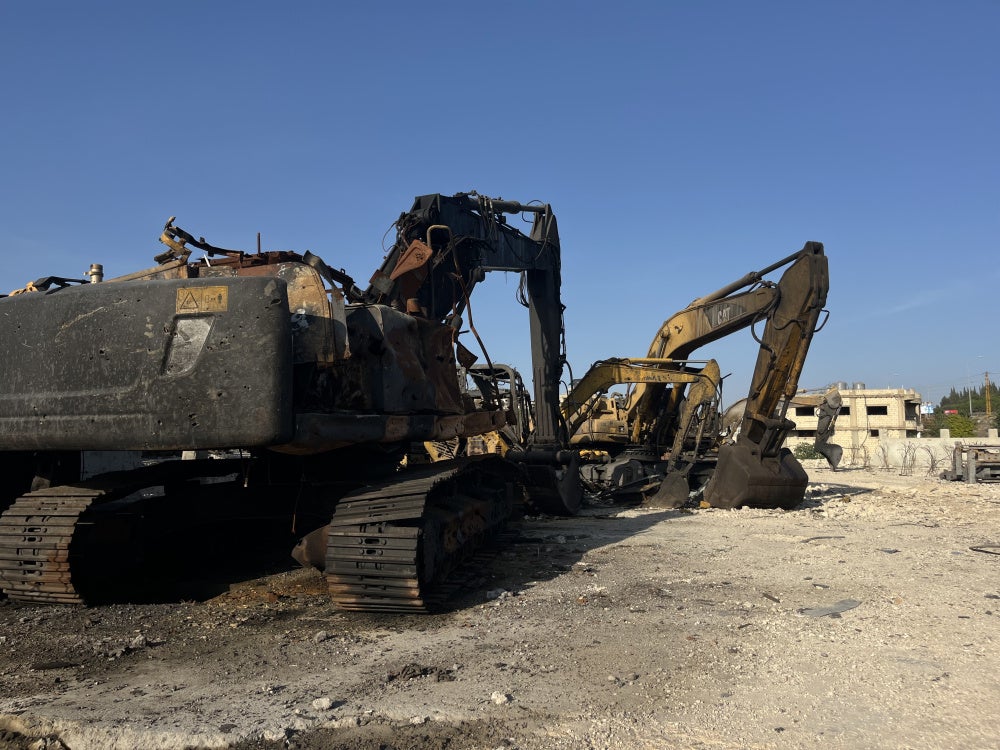
At about 10:00 p.m. on September 3, the Israeli military struck a heavy machinery showroom and maintenance facility in the southern Lebanese village of Ansariyeh, destroying 46 heavy machines, including bulldozers and excavators, in addition to hundreds of spare parts, according to the owner. While 12 of the destroyed machines belonged to Mohammed Kiniar, the owner, the rest belonged to customers who had sent their machines for repair, he said.
A building on the site had been hit by Israel a year earlier, on September 27, 2024, Kiniar said.
Researchers visited the site on November 21 and observed dozens of destroyed bulldozers, excavators, and other heavy machinery, as well as hundreds of spare parts and equipment used to restore machinery. The owner said that machinery destroyed in the September 3, 2025, strike included agricultural bulldozers, smaller “Bobcat” bulldozers, and excavators.
A Syrian man was killed in the strike, said Kiniar and the mayor of the town, Abbas Fakih, and three people were lightly injured.
Fakih and Kiniar both said that the strike happened just over an hour after workers at the site had finished unloading two containers of Bobcat bulldozers and other spare parts that the company had imported to Lebanon. The day of the strike, workers had also been repairing bulldozers belonging to the Zahrani Union of Municipalities, which includes 15 municipalities, in addition to an excavator belonging to another Lebanese contractor, Kiniar said.
“That day we heard drones over our head the entire day,” the mayor said. “We heard two different drones. The drones must have seen them emptying the containers.”
At the site, researchers saw dozens of burned or damaged bulldozers, excavators and spare parts.
Kiniar said that the strikes destroyed 46 heavy machines, with damages amounting to $3.6 million. He said that he established the site in 2003 and has sold various heavy machinery to international organizations, such as UNDP and municipalities, and has repaired heavy machinery for government contractors and a UN peacekeepers battalion.
“I’m a trader,” Kiniar said. “I sell to everyone, and I try to fix every machine that comes here. My customers come from all over Lebanon.”
On November 21, Human Rights Watch spoke to a Lebanese contractor and owner of the contracting company South for Construction S.A.L., Riad al-Assaad, who had sent an excavator to the site for repairs two days before the site was struck. Al-Assaad described himself as someone who has consistently “held political positions against Hezbollah” and their allies.
“We’ve always sent equipment there for maintenance,” he said. “Kiniar is an expert on electric systems. I had sent an excavator there on Monday and it was struck on Wednesday.”
“We used to sell equipment to international organizations, to municipalities and the union of municipalities. We’ve been here at this site since 2003,” Kiniar said.
The Israeli military stated that its forces had “struck a Hezbollah site in the Ansariyeh area of southern Lebanon, which stored engineering vehicles intended to rebuild the terrorist organization’s capabilities and support its terrorist activity.” The Israeli military did not specify how the site supported Hezbollah’s military activities or capabilities.
Human Rights Watch did not find evidence of military targets at or around the site, and the possibility that equipment could be used in an undefined, future contribution to military purposes does not in itself make it a legitimate military target.
Msayleh: October 11, 300 Machines
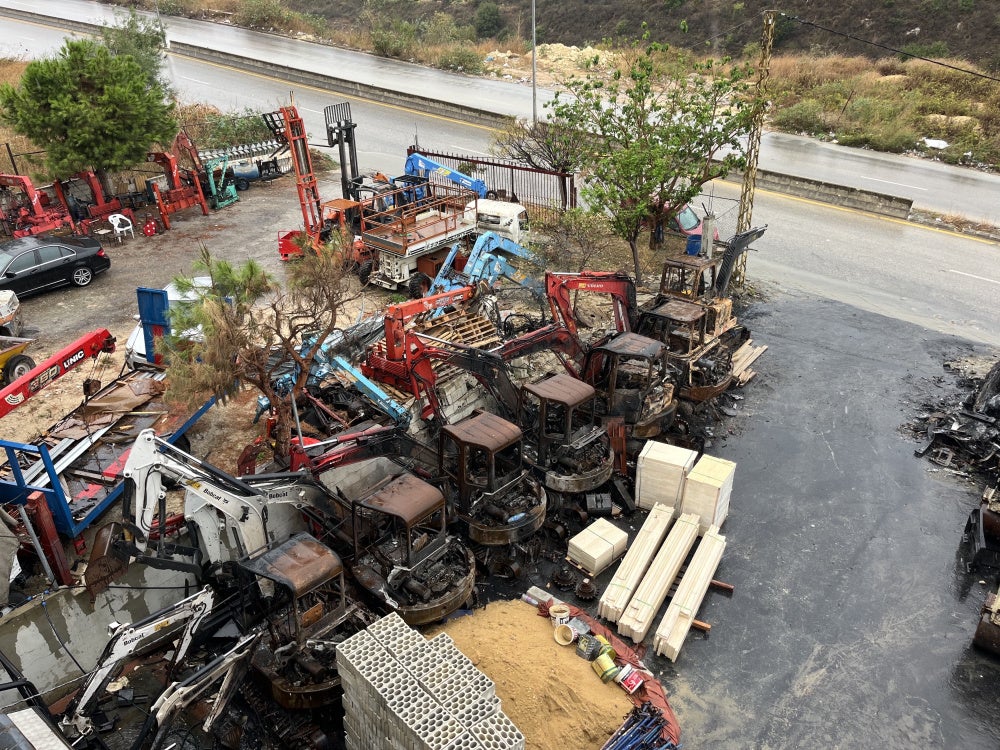
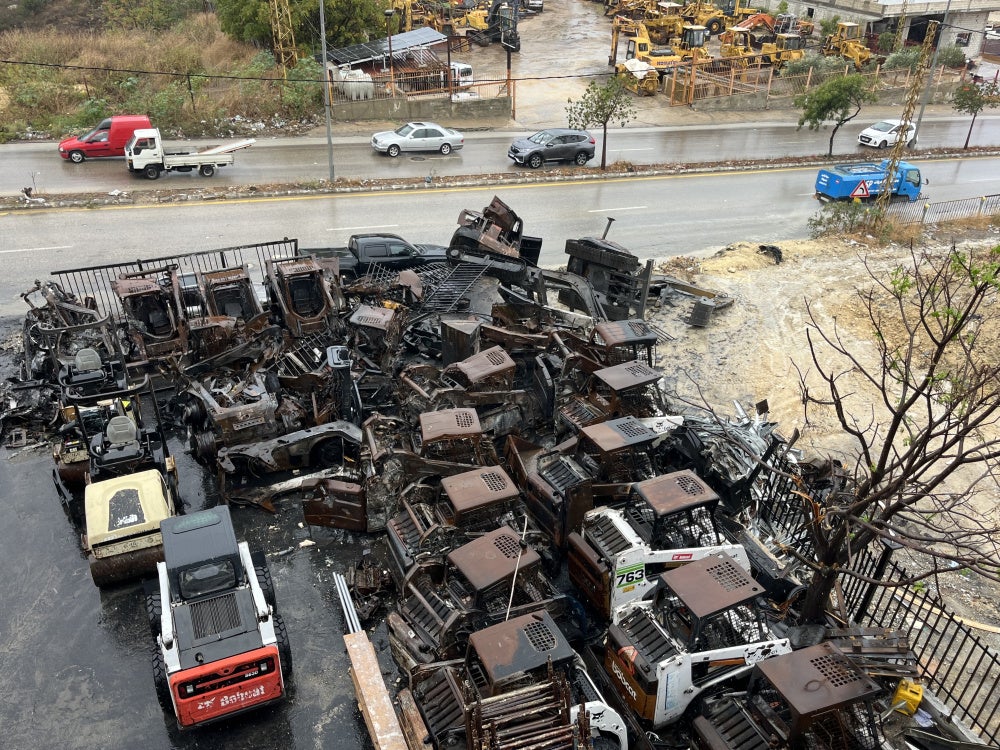
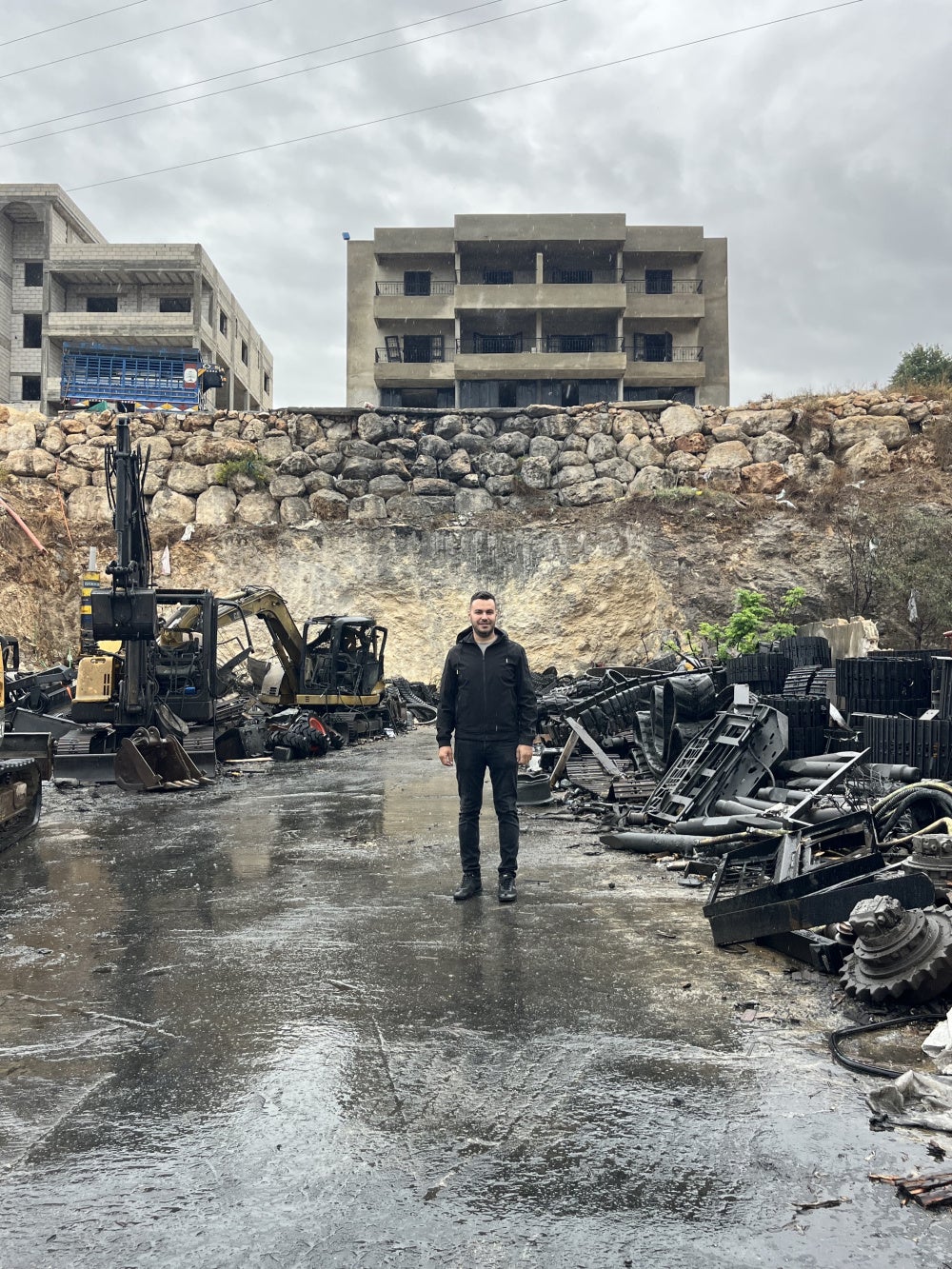
Israeli forces struck several sites containing bulldozers, excavators, “Bobcat” bulldozers, and other machinery in Msayleh in the middle of the night on October 11. The strikes killed one person, a Syrian national, and injured seven others.
Lebanon’s National News Agency reported that just after 4:00 a.m. on October 11, “more than 11 strikes directly targeted a group of bulldozer and excavator showrooms” resulting in “the destruction of more than 300 vehicles, including bulldozers and excavators, among them more than 100 small ‘Bobcat’ vehicles.” The agency reported that the five sites that were completely destroyed “are considered among the largest machinery showrooms in Lebanon” and that five other separate sites were also damaged from the attacks.
On November 14, Human Rights Watch researchers visited four of the outdoor showrooms and interviewed the four owners, including Ahmad and Imad Tabaja, a father and son who said they lost 139 machines and spare parts worth a total of about $4.7 million in the attack, as well as the owners of two other showrooms targeted.
At the two plots owned by the Tabaja family, Human Rights Watch saw dozens of machines and hundreds of spare parts that had been completely destroyed in the attack. Most machines were completely burned and their metal had been warped by the blast. At one of the family’s sites Human Rights Watch also found weapons remnants and determined that they were consistent with a JDAM guidance kit assembled and sold by a US company.
Researchers reviewed documents provided by the owners, including a detailed inventory of 139 destroyed pieces of equipment, among them heavy machines, generators and various spare parts, and the owners’ estimates of damages.
Ahmad Tabaja, the father, said that he has imported machines for use in the agricultural sector, including tractors, excavators, rollers, and bobcat bulldozers since 1967.
He and his son, Imad, said that their clients have included government contractors working with the Energy and Water Ministry and the Public Works Ministry, as well as municipalities. He said that UN agencies and USAID had provided the funding for some municipalities to purchase equipment from them. Researchers also reviewed receipts issued by the Tabaja family company, between 2018 and 2025, for heavy machinery and spare parts purchased from the site by municipalities, Lebanese and international companies, in addition to the US-based Near East Foundation.
Imad said that they sold equipment across all of Lebanon, but that since October 2023, much of their sales had been to individuals and contractors outside of southern Lebanon due to hostilities there. Ahmed added that about 10 percent of their sales were also international.
“All our shipment containers have come in legally through customs,” Imad said. “The government typically estimates the price of each imported container. In total, the price of our imports is $4.7 million. Everything was destroyed [in the strikes].”
The owner of another site, Ali Tarhini, said that eight of his ten six-wheeler trucks were completely destroyed, and two partially destroyed, in the strikes, resulting in between $400,000 to $500,000 in losses. “I’ve been working in this business for nearly 30-35 years, and I’ve been in Msayleh for 4 years,” he said. “I just sell to regular people. Whoever comes and wants to buy [trucks], we sell to them.”
Another owner, Mohammed Chahine, showed researchers the damage on his site, which borders the Tabaja family’s site. Chahine provided an inventory of the damages at his site, including three damaged hydraulic winches, used in digging and preparing water wells, in addition to a car, a prefabricated house, submersible water pumps, generators, solar panels, lithium batteries and spare parts, which totaled $770,000 in losses.
Chahine said that he has been working at this site in Msayleh since 1990 and has worked with municipalities, government contractors, the South Lebanon Council, and the South Lebanon Water Establishment, the public utility responsible for supplying water across southern Lebanon. On the site, researchers found damaged vehicles, solar panels, a container that stored salvaged spare parts for solar panel systems, in addition to a hangar where Chahine stored other spare parts for the hydraulic winches.
The Israeli military stated on Telegram on the day of the strike that its forces had “struck and dismantled Hezbollah terrorist infrastructure in the area of southern Lebanon, where engineering machinery used to reestablish terrorist infrastructure in the area they were located." The statement did not specify whether it was referring to the attacks in Msayleh.
Human Rights Watch did not find evidence of military targets at or around the site, and the possibility that equipment could be used in an undefined, future contribution to military purposes does not in itself make it a legitimate military target.
Sinay: October 16, Cement and Asphalt Factory
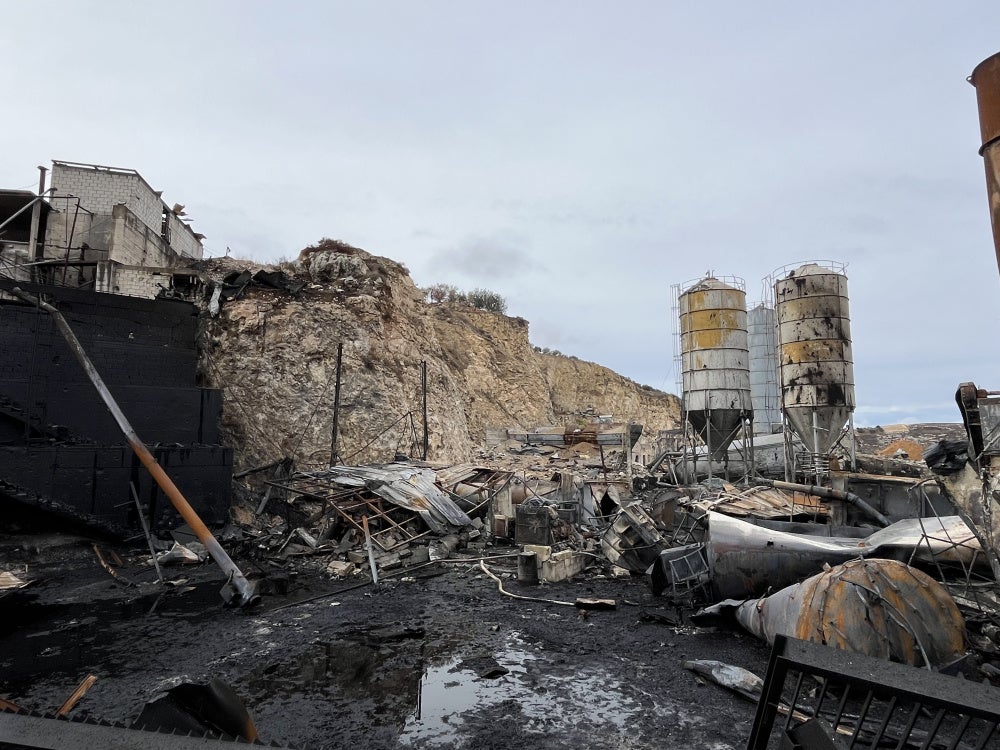
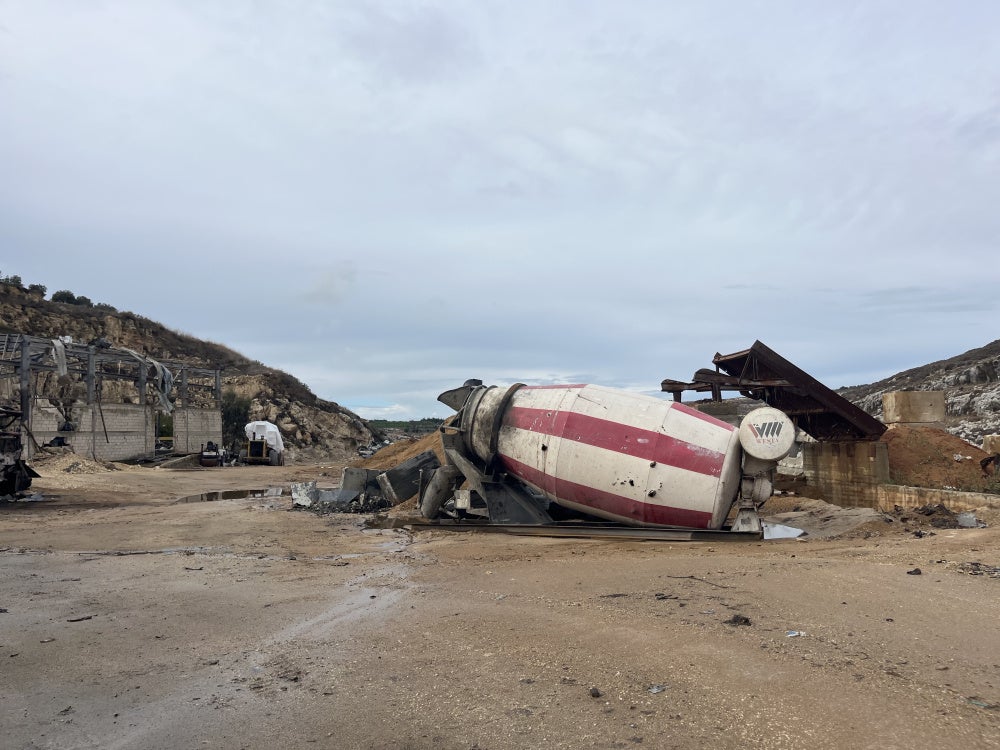
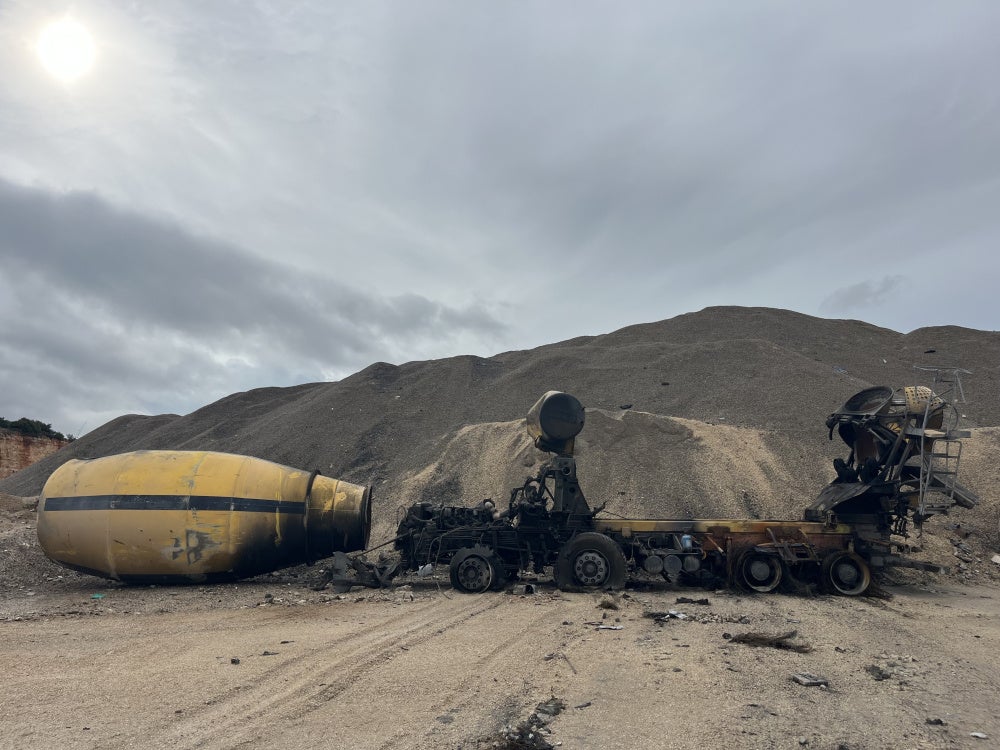
Israeli forces attacked a large cement and asphalt factory in Sinay on October 16. The factory was established in the village in 1992, and was reportedly one of the largest cement factories in Lebanon.
Human Rights Watch researchers visited the factory on November 14 and spoke with a manager. Human Rights Watch also interviewed the mayor of the town.
Researchers walked through the area and observed several areas at the site that were either destroyed or significantly damaged, including an administrative building, cement silos, crushers, an asphalt mixing factory, and dozens of destroyed vehicles, including concrete mixer trucks, excavators, pick-up trucks, and bulldozers.
The attack, which consisted of over 10 strikes according to both the mayor and the administrative manager, destroyed the whole industrial area, approximately 70,000 square meters and included an asphalt factory, a cement factory, and 50 machines on the factory’s premises, including bulldozers, excavators, crushers, concrete mixers, pumps, and cement trucks. According to both the mayor and the administrative manager, the cost of the destruction totaled over $10 million.
“After the ceasefire we had about a 30 percent increase in our work, probably all related to reconstruction,” the manager at the site said. “But we don’t ask people why are you buying this cement or this asphalt. We just sell it to them.
He said that the factory’s clients include contractors, the Public Works Ministry, municipalities, and individuals working on construction projects. He said that their cement and asphalt had been used to build the village school and much of the public infrastructure in a neighboring village.
The factory employed about 60 people from the area who the manager said were all “directly affected” by the strikes as the factory shut down.
In a statement published on October 16, the Israeli military said that Hezbollah “produced cement to rebuild and reestablish its assets and terrorist infrastructure that were struck and dismantled” and that the “infrastructure enabled Hezbollah's continuous activity and the reestablishment of its terrorist activity under civilian disguise in Lebanon.” The statement did not specify whether it was referring to the attacks in Sinay.
Human Rights Watch did not find evidence of military targets at or around the site, and the possibility that materials could be used in an undefined, future contribution to military purposes does not in itself make it a legitimate military target.