(Johannesburg) – Thousands of civilians displaced by Islamist armed group attacks in northeastern Mozambique have been sheltering in overcrowded and inadequate conditions, Human Rights Watch said today. Mozambique’s government should work with international agencies to provide sufficient support for people in need.
Between November 10 and 23, 2025, an armed group linked to the Islamic State-Mozambique, known as Al-Shabab or Mashababos, killed 12 civilians in Cabo Delgado and 21 in Nampula provinces, according to the Armed Conflict Location & Event Data, a nongovernmental monitoring group. The International Organization for Migration reported that during this period, the attacks forced about 108,000 people, including about 70,000 children, to flee their homes in Nampula’s Memba district for already overcrowded areas in Eráti and other coastal localities.
“Displaced people in northern Mozambique, including many children, are living in extremely precarious conditions without adequate food, health care, shelter, and mental health support,” said Sheila Nhancale, Africa researcher at Human Rights Watch. “Mozambican authorities need to take immediate measures to meet their needs and protect them from further risks.”
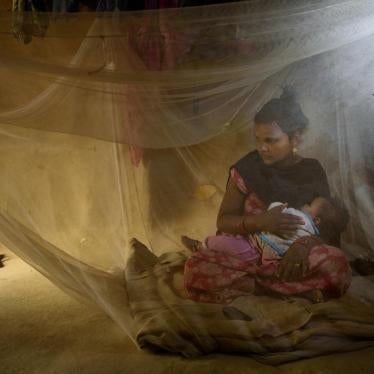
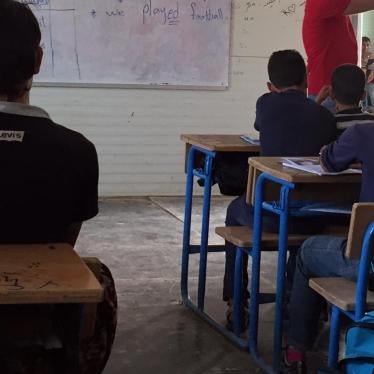
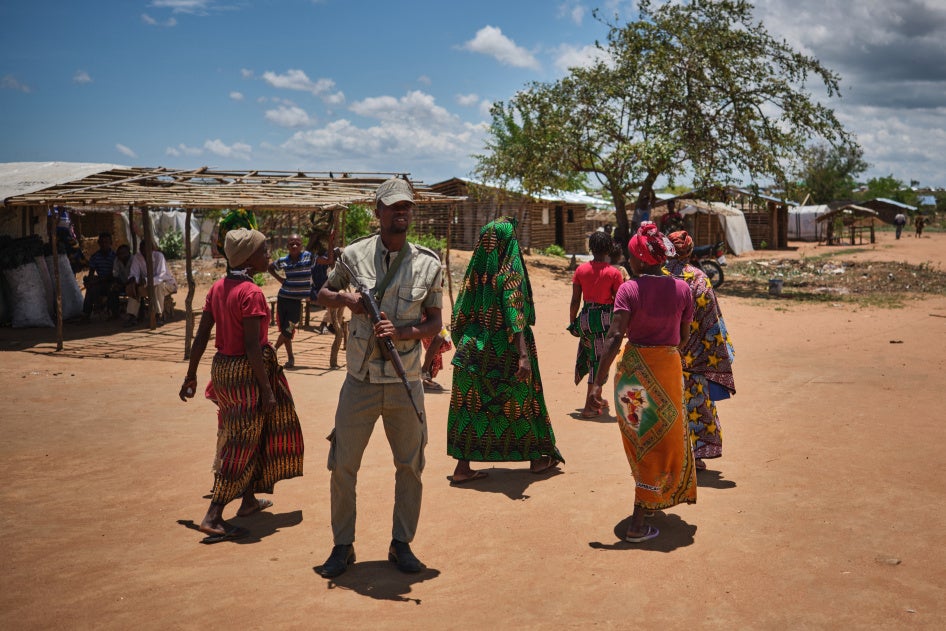
Local media reported children being separated from their families due to the displacement; older people being abandoned; and dozens sleeping outdoors, exposed to rain and cold and without shelter or adequate food, including women who are pregnant and nursing. Many are living in schools, administrative buildings, and other spaces not designed to shelter people. Hygiene and sanitation conditions at these sites have deteriorated with outbreaks of diarrheal diseases and malaria.
“We are living under trees, without a safe place to stay,” said a displaced woman in Alua Sede, Eráti district, who has not heard from her husband in more than two weeks since she escaped with her children from Mazua, Memba district. “We urgently ask for help because the situation is becoming unbearable.”
“Some of the displaced are housed in crowded tents,” said a displaced man at a shelter in Alua Sede. “There are not enough tents, and children are mixed with everyone else. Food is insufficient.”
The United Nations Office for the Coordination of Humanitarian Affairs (OCHA) had previously reported that as of late October, about 90,000 people, including 52,000 children, had been displaced by attacks beginning in September across both provinces. The children had limited access to health care, education, and safe shelter. Girls have been exposed to gender-based violence.
While the Mozambican government has taken steps to respond to the crisis, including mobilizing resources and coordinating with humanitarian partners, its capacity has been overstretched because of the number of people displaced, Human Rights Watch said.
“The state’s legal responsibility in these situations is to ensure security and guarantee minimum conditions for survival,” said Isidro Júlio, chairperson of the Provincial Council of the Mozambique Bar Association in Nampula. “This implies arranging a place for these people to live and ensuring access to food, water, and other basic needs.”
On December 3, Nampula’s governor, Eduardo Abdula, met with civil society organizations, businesspeople, and local authorities to discuss urgent solutions to the humanitarian crisis. The government and humanitarian partners, including UN agencies and international nongovernmental organizations, have begun delivering food and safe water and providing emergency shelter, sanitation and hygiene facilities, some healthcare services, and protection assistance. However, resources remain overstretched as newly displaced people arrive daily.
OCHA reported that during a three-week period in November, the Nampula provincial government mobilized 100 tons of food, which could only support about 13,500 people for 15 days. The National Institute for Disaster Management also distributed food kits to 8,000 people. During the same period, humanitarian agencies provided assistance to 8,500 people, delivering a package of food, shelter, non-food items, and water and sanitation support. However, the supplies don’t meet the scale of the need.
Mozambique’s constitution guarantees the rights to life, security, and adequate living conditions, which reinforce regional and international conventions protecting internally displaced people.
Mozambique is party to the African Union Convention for the Protection and Assistance of Internally Displaced Persons in Africa (Kampala Convention), which provides that governments “shall provide sufficient protection and assistance to internally displaced persons, and where available resources are inadequate to enable them to do so, they shall cooperate in seeking the assistance of international organizations and humanitarian agencies, civil society organizations and other relevant actors.”
Since October 2017, Al-Shabab has attacked numerous villages, killed more than 2,500 people, and destroyed extensive civilian property and infrastructure including schools and health centers in Cabo Delgado. The conflict began in Cabo Delgado and has since spread to neighboring provinces, including some districts in Nampula province, displacing over 1.3 million people, according to the Office of the UN High Commissioner for Refugees. In 2025, armed groups began striking multiple areas simultaneously, putting some longstanding host communities at risk.
“The Mozambican government, with additional support from donor countries and humanitarian agencies, should urgently meet the protection and assistance needs of all those displaced, in line with its international obligations,” Nhancale said. “The government should also investigate and appropriately prosecute those responsible for abuses in the current fighting.”